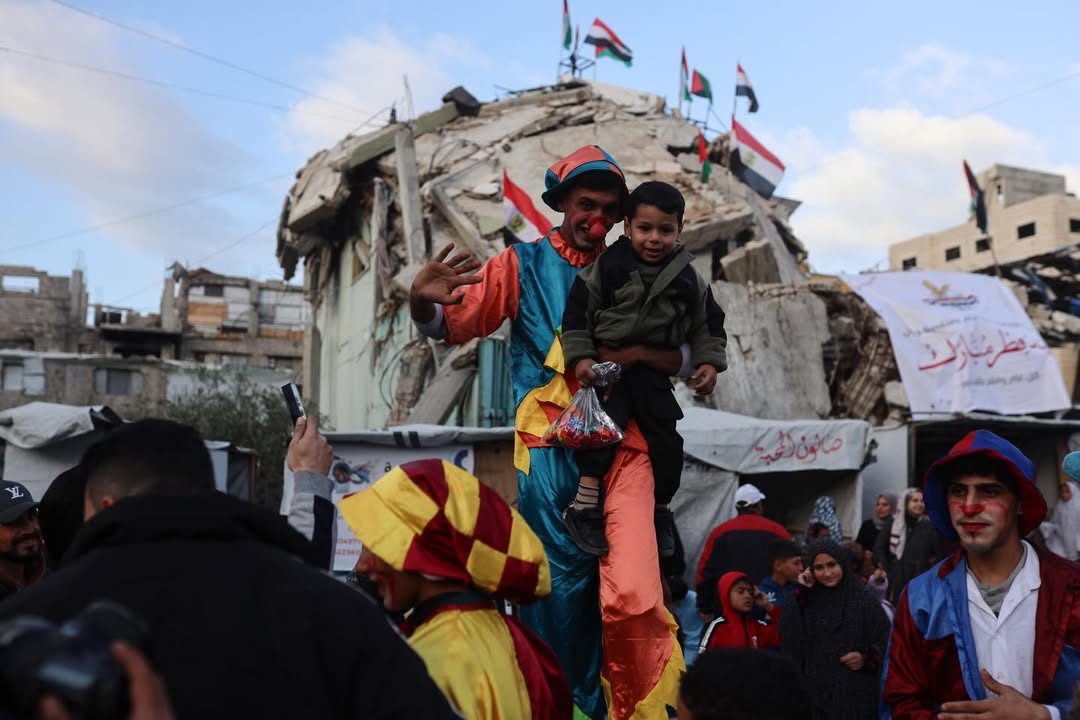
 Eid Mubarak Gaza
 US-Israel Drags The World Into a Global Crisis
 Eid Mubarak
 Pezeshkian: ‘Iran Will Not Surrender to Bullies’




Eid Mubarak Gaza
 CrossFireArabia
- March 20, 2026
 CrossFireArabiaCrossFireArabiaCrossFireArabiaCrossFireArabiaCrossFireArabiaCrossFireArabiaCrossFireArabiaCrossFireArabiaCrossFireArabiaCrossFireArabiaCrossFireArabiaCrossFireArabiaCrossFireArabiaCrossFireArabiaCrossFireArabiaCrossFireArabiaCrossFireArabiaCrossFireArabiaCrossFireArabiaCrossFireArabiaCrossFireArabiaCrossFireArabiaCrossFireArabiaCrossFireArabiaCrossFireArabiaCrossFireArabiaCrossFireArabiaCrossFireArabiaCrossFireArabiaCrossFireArabiaCrossFireArabiaCrossFireArabiaCrossFireArabiaCrossFireArabia
 Saleem Ayoub QunaCrossFireArabiaCrossFireArabiaCrossFireArabiaCrossFireArabiaCrossFireArabiaCrossFireArabiaCrossFireArabiaCrossFireArabiaCrossFireArabiaCrossFireArabiaCrossFireArabiaCrossFireArabiaCrossFireArabiaCrossFireArabiaCrossFireArabiaCrossFireArabia
By Dr Marwan Asmar
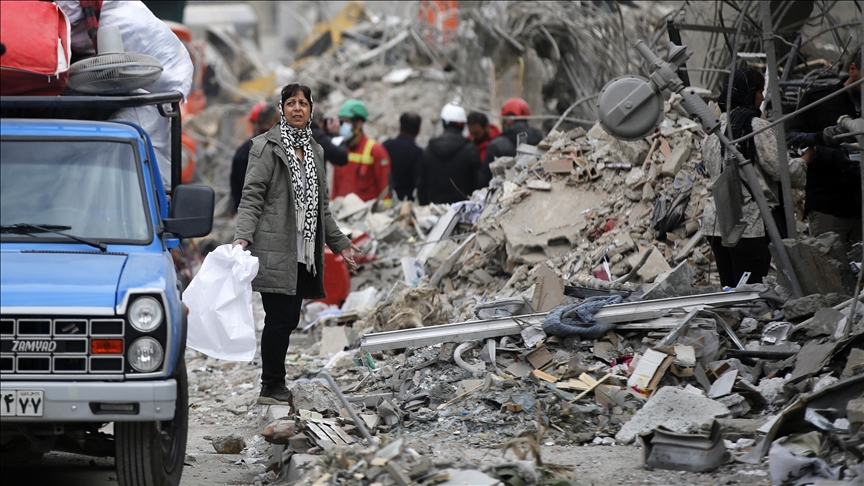
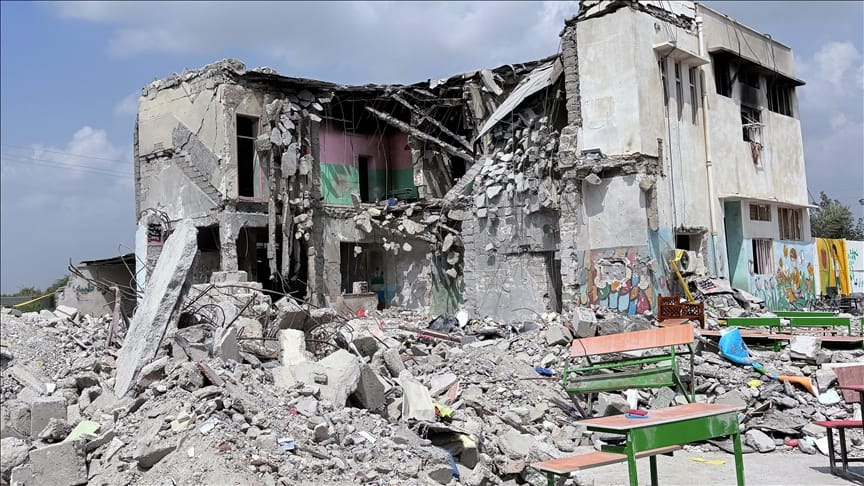
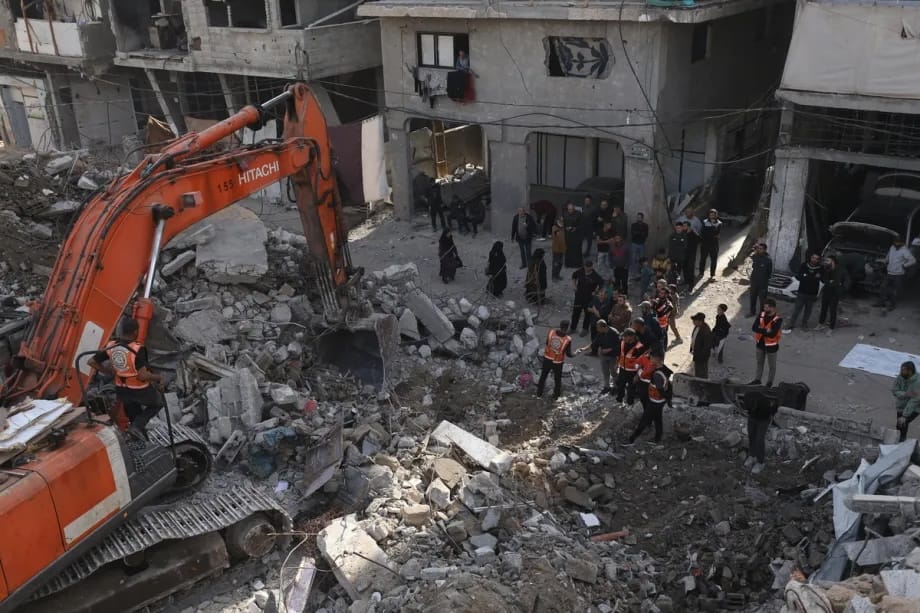
The current Israeli military onslaught on Gaza is so fierce that hundreds of thousands of Palestinian have already left the downtrodden city. It is a ramshackle place that is once again becoming a ghost town of debris as once-plush residential towers are now beaten down by Israeli bombs with the stench of gun-powder and sick human flesh that lies hidden below the rubble.
Israel’s latest attempt to invade Gaza City started on 16 September, 2025 and since then it has been bombing the once-dazzling urban conurbation from the air, land, and sea, causing widespread destruction and significant civilian casualties, whilst creating yet another mad wave of displacement to the south of the Strip.
Figures of forced displacement are not precise but the city a, conglomerate of 1.3 million people, has been reduced by much less. The Israeli army likes to boost of its handiwork. After the first week of ariel bombardment, it said 40 percent of the population has left, and today it says that 450,000 people have gone. The Gaza Media Office puts the number at only 270,000.
Despite the Israeli leaflets dropped from the air telling people to leave Palestinian sources still say that around 900,000 are staying put. Many say they are not going anywhere because of the limited space down in the south, and the fact it costs $3000 dollars to get down there, something which they don’t have.
One put it bluntly and callously, accepting fate as it comes. “Since, we are going to die anyway through Israeli bombs, it’s better to die here,” he added. The acceptance of fate however may be related to the fact that some of the people may have moved up to 20 times since the war started on Gaza soon after 7 October, 2023.
Last Thursday, World Health Organization (WHO) chief Tedros Adhanom Ghebreyesus said that the Israeli assault, currently centred on Gaza City, is “driving new waves of displacement, forcing traumatised families into an ever-shrinking area unfit for human dignity”.
“The injured and people with disabilities cannot move to safety, which puts their lives in grave danger,” Tedros said. “We call for an immediate end to these inhumane conditions. “We call for an immediate end to these inhumane conditions. We call for a ceasefire.”
Case stories of thick swarves of displaced people speak of hellish conditions as they can be seen on the Al Rasheed Road connecting the north of the Gaza Strip to its southern side. If people can afford they can use transport but many, including whole families of men, women and children are moving on foot, hungry, with no water and many collapsing on the road as some have been moving for hours on end. For night rest, they make do with resting their limbs, again with no food on the sides of the road.
The social media have been rife with stories about forcibly displaced Palestinians on the road. Many of them say they don’t know where they are going, although the end of the road is to Al Mowasi, an area to the southwest of Khan Younis and which the Israeli has designated as a “safe” place but which it keeps bombing from the air whenever it feels like it.
One elderly man called Abu Nader Siam, walks slowly holding a cane in his right hand with his wife, Zakia Siam, at his left. He is exhausted as reported in the UN News.
“I come from the Tal al-Hawa neighborhood in Gaza City. They [Israelis] have left no house or neighbourhood except to bomb it,” he said. “The shelling continues, and they have dropped leaflets ordering us to evacuate. We walked for six hours because we couldn’t find a car or any transportation.”
Zakia Siam spoke about their non-stop journey after the shelling reduced their house to rubble. “We went to the Shujaiya neighbourhood, and then we were displaced to the Sha’af neighbourhood in Gaza City before it was bombed,” his wife said.
“Afterwards, we went to the seashore west of Gaza City and my husband and I stayed there for two nights without a tent. We sat on the sidewalk next to the tents and hid next to one of them, then continued walking.”
Another civilian, Mrs. Um Shadi al-Ashkar, carried a bag of belongings as she headed for southern Gaza. “There is death, shelling, bombing and destruction of houses (in Gaza City),” she said.
“Even if they had dropped leaflets, if there had been no shelling, no one would have left Gaza City, they would have stayed in their homes. But there is death and devastation.”
The fight for Gaza city is in full-swing. The Israeli army knows what its up against, adding it could take months, or even up to a year to completely take over the city from Palestinian resistance groups. Meanwhile, they know the city is a Hamas stronghold which they can’t railroad through their tanks. That is why for the time being they put the ground invasion on hold and bombing the city from the air and sea.
CrossFireArabia
International newspapers and research centers are openly warning that “the belief in the possibility of quickly eliminating the Islamic Resistance Movement (Hamas) is an illusion and a political and military naiveté. This is coming at a time when the international boycott of Israel is expanding and the humanitarian situation in the Gaza Strip is worsening.
Impossibility
The New York Times quotes Israeli military officers and experts as saying “the complete elimination of Hamas is unrealistic in the near term.” They note that “the movement still possesses a strong presence and combat capabilities that allow it to continue the confrontation for years.”
They maintain: “Betting on eliminating Hamas within a short period reflects an oversimplification of a complex equation.”
Great Civilian Losses
The British newspaper The Guardian states that field reports revealed that Israeli airstrikes are causing large numbers of civilian casualties in Gaza, while Hamas losses remain limited compared to what Israel officially announces.
The newspaper also notes: “The movement is resorting to unconventional tactics such as mines and ambushes, which increases the difficulty of the Israeli mission.”
International Boycott
The British newspaper The Financial Times confirms: “Boycott campaigns against Israel are growing at an unprecedented rate, encompassing the fields of sports, culture, and academia.”
The newspaper highlights a massive advertising campaign in Times Square in New York City, explicitly calling for a boycott of Israel and accusing it of committing “genocide” in Gaza.
In the same context, the Hebrew newspaper Israel Hayom reveals that the Italian authorities have decided to exclude Israel from participating in a tourism exhibition in Rimini, on the grounds that its presence would be “inappropriate” given the ongoing war and humanitarian crisis.
Worsening Humanitarian Tragedy
On the humanitarian front, the Hebrew newspaper Haaretz devotes extensive space to documenting the suffering of women and the most vulnerable groups in Gaza.
It notes the rise in miscarriages, the prevalence of malnutrition among mothers and infants, and a severe shortage of basic health services whilst warning that repeated displacement and poor living conditions are exacerbating the humanitarian catastrophe.
Future Scenarios
International analysts believe Hamas is still capable of reorganizing its ranks and relying on guerrilla warfare and unconventional methods, making it difficult for Israel to resolve the confrontation militarily.
It also predicted the conflict over Gaza would continue for a long time, with the increasing humanitarian and political costs for Israel and the increasing diplomatic and legal pressure on it in international forums.
Since October 7, 2023, the occupying forces, with direct support from the United States and Western countries, have continued to wage a devastating war in Gaza, resulting in the death and injury of more than 231,000 Palestinians to date, according to the Palestinian Ministry of Health in the Strip according to JO24.
CrossFireArabia
Edan Alexander, an Israeli-American soldier released from imprisonment, announced he will return to Israel next month to rejoin the Israeli military as it continues its genocide in Gaza.
Alexander spent 584 days in inprisonment, which he called “the hardest period of my life.” At a press conference, he said, “My story does not end with survival, it continues in service until victory!”
He added, “Next month, God willing, I will return to Israel and once again wear the IDF uniform, and I will proudly serve alongside my brothers.”
Alexander’s release came as part of mediation efforts to reach a ceasefire, open Gaza’s crossings, and allow humanitarian aid into the besieged territory. Hamas resistance movement had described the release as a gesture of “positivity and high flexibility” and urged international actors, including the US, to build on it to secure a full agreement.
Alexander grew up in the United States and joined the Israeli military at 18. He volunteered as a colonizer and served in the Golani Brigade out of ideological commitment according to the Quds News Network.
CrossFireArabia
By Shaimaa Eid
Al-Mawasi was no refuge, just another stop in a long journey of suffering, where life is not truly lived, but merely endured.”
Once again, we were forced to leave northern Gaza under a relentless storm of shelling, fear, and destruction—beginning yet another displacement heavy with exhaustion and loss, this time toward Al-Mawasi in Khan Yunis.
There, in the place the occupation claimed was “safe,” with access to water, medicine, and basic humanitarian needs, we found only land overwhelmed with displaced families, weary faces, and recurring pain. Al-Mawasi was no refuge, only another stop in a long journey of suffering, where life is not truly lived, but merely endured.
Our joy at touching the walls of our home again did not last long. It was the same home that had been struck by Israeli shells during the ceasefire. We returned carrying hope, trying with our tired hands and hearts to clear the rubble, to wipe the dust off memories, to bring back a trace of the home’s old heartbeat.
We believed that love would be enough to stay—that holding on to our home, even with all its wounds, was the least we could do. As a family, we made a promise: we would not leave, we would stay as long as we had breath in our bodies.
But the occupation, with its violence and arrogance, stripped us of even that right. And once again, we were left with nothing but the bitterness of forced departure.
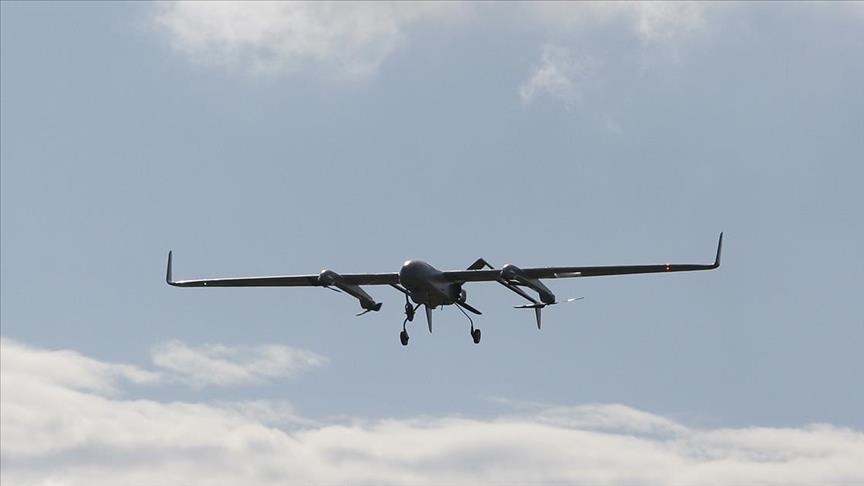
In the Sheikh Radwan neighborhood, we were trapped under fire from quadcopter drones. They shelled and chased every movement, making it impossible to open the door or even glance through a window. We lived through endless nights of terror, listening to the constant buzzing above our heads, counting the seconds until the next missile would strike.
Then the occupation installed a crane-mounted sniper position to the east of the neighborhood, targeting anyone who moved through the streets. It felt as though they had surrounded us with a fence of fire, suffocating our lives, tightening the noose around us, and forcing us once more toward displacement.
The final days before our departure felt like the horrors of Judgment Day. Many of our neighbors received evacuation warnings, followed by devastating shells. The smell of gunpowder and smoke still lingers in my nose to this day, and I continue to struggle with breathing from the intensity of what we endured. We were cut off from water and food; markets were closed; even street stalls became targets for bombs dropped by planes at night. We had no choice but to flee southward to escape certain death.
The journey of displacement was harsh in every detail. My elderly parents, burdened by chronic illness, could not endure the long road. We carried their worries in our hearts before carrying them in our arms. Our trip from the north to the south took nearly six hours under a blazing sun, along the Rashid Road, which the occupation designated as the evacuation route.
On the way, we witnessed a scene that will never be erased from memory: a tent on the beach shelled right before our eyes, with bodies scattered across the sand. We were only meters away, yet that distance was enough to rob us of sleep forever. Even now, whenever I close my eyes, that scene returns to wake me.
After the exhausting journey, we arrived at the Khan Yunis displacement camp. The place was unbearably overcrowded. Services were scarce, far too few for everyone. People were forced to go down to the sea under the scorching sun to collect salty water, which led to the spread of skin diseases among both adults and children. Watching people fill bottles from the sea felt like a scene from an apocalyptic novel. Everything here is difficult: sleeping, eating, getting medicine—even finding a small patch of shade to rest beneath has become a challenge.
Today, we live in a whirlwind of anxiety and fear. Every day, we watch the news of new residential towers collapsing in Gaza. We go to sleep wondering: will our home still be standing, or will it too become rubble? My parents need ongoing medical care and medications that we cannot find.
I feel powerless and frustrated at my inability to secure their medicine, and at our family’s helplessness in the face of this relentless tragedy.
And yet, despite all this, there is an inner voice that refuses to give in. It whispers to me that Gaza will endure, and that one day we will return to the north to rebuild, stone by stone, raising our homes again with our own hands. That voice tells me this land will remain free and proud, no matter how long the destruction lasts, and that all this pain is but a chapter in the story of resilience.
Gaza is bleeding today, but it will not break. The Gaza I bid farewell to—with hope of return—will always remain in my heart a symbol of dignity and pride, until every displaced person comes home, every child returns to school, and every family reunites with its memories.
(The Palestine Chronicle)

– Shaimaa Eid is a Gaza-based writer. She contributed this article to the Palestine Chronicle.
CrossFireArabia
On average, the journey south costs more than $3,000, according to UN Palestine refugee agency UNRWA, making it out of reach for many.
Along the densely populated coastal al-Rashid Road, thousands of residents are lining up to escape, following Israeli military evacuation orders, in a grueling trek to the central and southern parts of the enclave.
A UN News correspondent was there and documented scenes of suffering as displaced people made the journey on foot.
While some were dragging carts loaded with their belongings, others – including women and children – were trying to take a break after long hours of walking.
The Gaza Valley Bridge in the central Gaza Strip has been overcrowded due to the influx.
In the midst of the crowd, an elderly man called Abu Nader Siam, walks slowly holding his cane in his right hand with his wife, Zakia Siam, at his left. He is exhausted.
“I come from the Tal al-Hawa neighborhood in Gaza City. They left no house or neighbourhood except to bomb it,” he said.
“The shelling continues, and they have dropped leaflets ordering us to evacuate. We walked for six hours because we couldn’t find a car or any transportation.”
Zakia Siam spoke about their non-stop journey after the shelling reduced their house to rubble.
“We went to the Shujaiya neighbourhood, and then we were displaced to the Sha’af neighbourhood in Gaza City before it was bombed,” she said.
“Afterwards, we went to the seashore west of Gaza City and my husband and I stayed there for two nights without a tent. We sat on the sidewalk next to the tents and hid next to one of them, then continued walking.”
Another civilian, Mrs. Um Shadi al-Ashkar, carried a bag of belongings as she headed for southern Gaza.
“There is death, shelling, bombing and destruction of houses (in Gaza City),” she said.
“Even if they had dropped leaflets, if there had been no shelling, no one would have left Gaza City, they would have stayed in their homes. But there is death and devastation.”

UN News
Umm Shadi al-Ashqar, a displaced person from Gaza.
Ayman al-Khatib told UN News that most of his family members were killed in the Tal al-Za’atar neighbourhood of Jabalia camp in the north.
He fled alongside a few surviving relatives. His aunt held onto his arm, as if she were afraid of losing him too.
“More than 25 members of my family were killed: my children, my wife, my mother, my brothers and their wives,” he said. Only his aunt, two nephews and a son remain.
“We fled under the bombardment, and we couldn’t find any transport. They asked us for 2,000 shekels to get in a car, but we don’t have the money. We don’t have a tent or anything. I made many calls and pleas, but no one responded to me.”

UN News
From Gaza, Ayman al-Khatib during his displacement journey on foot with his aunt.
According to UNRWA, the average cost of displacement to the south is $3,180 per family. Fuel is scare in Gaza, and no shelter supplies have entered for seven months due to the Israeli blockade.
Last month, Israel announced that it would take control of Gaza City and in recent weeks has intensified bombardment of high-rise apartment buildings there.
The UN Office for the Coordination of Humanitarian Affairs (OCHA) said more than 250,000 people have been displaced from the city in the past month alone, including 60,000 in just 72 hours, as troops advanced into densely populated neighbourhoods such as Sheikh Radwan and Tal al-Hawa.