 Pezeshkian: ‘Iran Will Not Surrender to Bullies’
 Israeli Soldiers Enforce Closure of Al Aqsa
 1 in 7 Displaced in Lebanon – NRC
 Hormuz: End of an Era of Martime Dominance
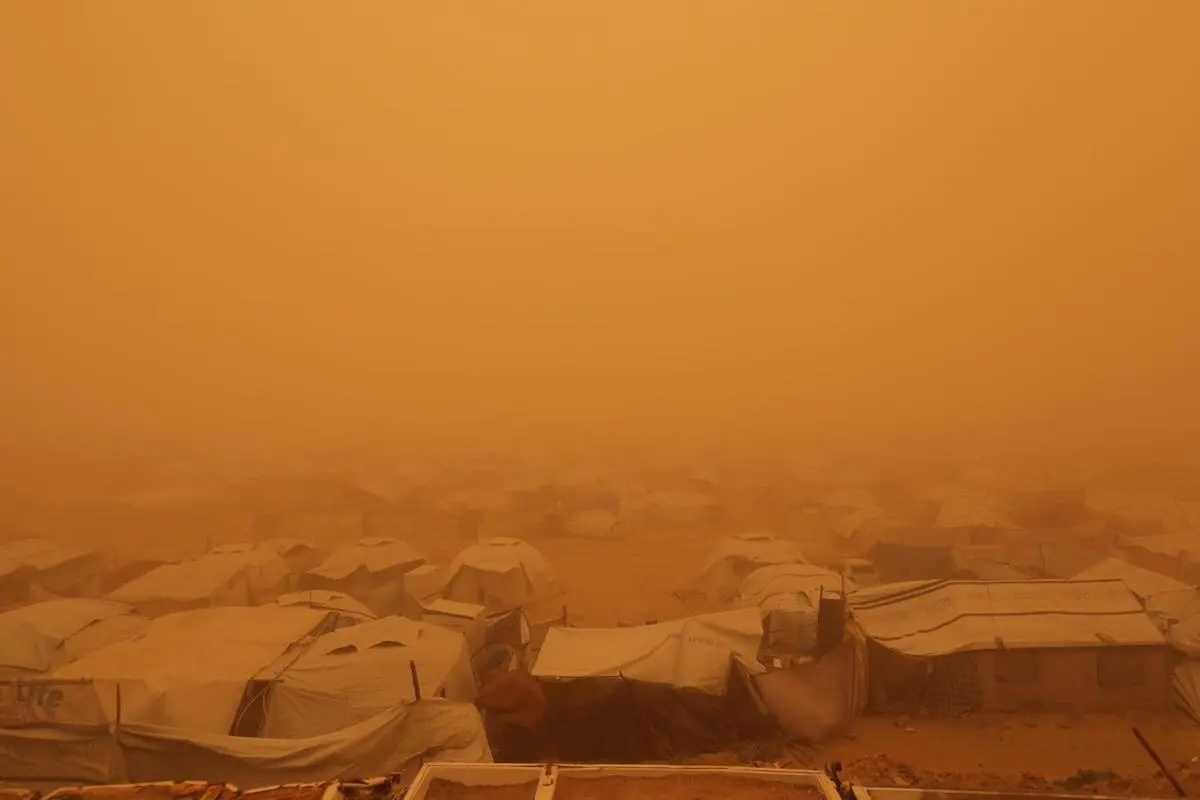 Gaza Faces Massive Dust Storm




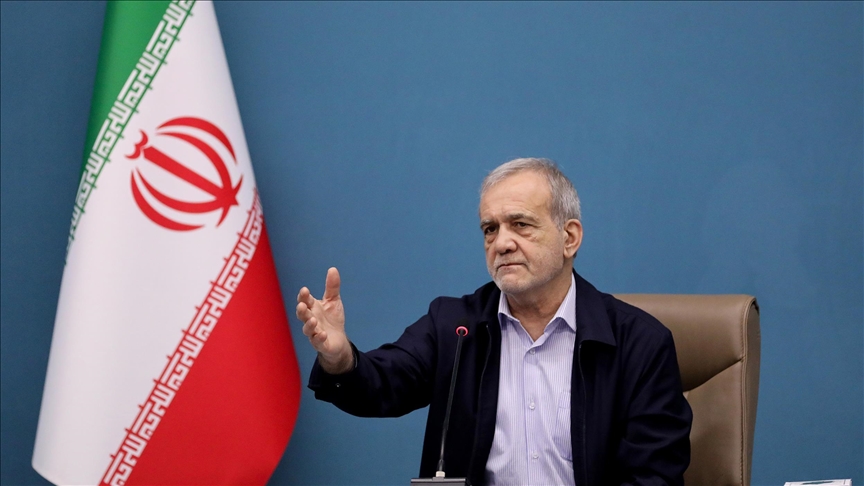
Pezeshkian: ‘Iran Will Not Surrender to Bullies’
 CrossFireArabia
- March 16, 2026
 CrossFireArabiaCrossFireArabiaCrossFireArabiaCrossFireArabiaCrossFireArabiaCrossFireArabiaCrossFireArabiaCrossFireArabiaCrossFireArabiaCrossFireArabiaCrossFireArabiaCrossFireArabiaCrossFireArabiaCrossFireArabiaCrossFireArabiaCrossFireArabiaCrossFireArabiaCrossFireArabiaCrossFireArabiaCrossFireArabiaCrossFireArabiaCrossFireArabiaCrossFireArabiaCrossFireArabiaCrossFireArabiaCrossFireArabiaCrossFireArabiaCrossFireArabiaCrossFireArabiaCrossFireArabiaCrossFireArabia
 Saleem Ayoub QunaCrossFireArabiaCrossFireArabiaCrossFireArabiaCrossFireArabiaCrossFireArabiaCrossFireArabiaCrossFireArabiaCrossFireArabiaCrossFireArabiaCrossFireArabiaCrossFireArabiaCrossFireArabiaCrossFireArabiaCrossFireArabiaCrossFireArabiaCrossFireArabiaCrossFireArabiaCrossFireArabiaCrossFireArabia
Bashar Al Assad sometimes walks the streets of Moscow incognito. This was a prerequisite set by the Kremlin for his stay in Russia.
The Syrian president, who was forced into exile, exactly one year ago on 8 December, 2024, lives in one of Moscow’s top palatial flats in the capital’s business district with his wife and three children with 24-hour body guards who have been assigned to the family for their protection.
Since his stay Moscow, the message has been thrust forward that Moscow takes care of its friends even when they have fallen from grace and/or down in the dumps. Bashar Al Assad, and his father before and who held power since 1970 were always the strongest of allies and Damascus was always seen as Russia’s strategic gateway to the Middle East.
Friendship however doesn’t mean the end of political opportunism and interest. Whilst Assad is allowed to stay in Moscow under the rubric of humanitarian grounds, his asylum follows strict rules: he is not allowed to engage in any political activity nor is he allowed to talk to the press or the media.
He is no longer treated as presidential but a private person. Russian president Vladimir Putin had never met him since he arrived in Moscow nor is he planning to despite claiming otherwise. All Putin would say is he is planning to meet the ex-president ‘sometime’ in the future. Add insult to injury is the fact that Assad has been assigned a lowly figure in the Russian Foreign Ministry as a means of coordination whenever it’s necessary.
But this has long proved a sign of frustration. Today, Assad is alone despite his staff that either travelled with him when he was hastily bungled up last year on a military jet from a Russian airbase near Latakia last year or joined him latter in his residence to start his exile.
With little to do, he spends his days playing video games or going downstairs to the mall in his plush complex to wile his time away, doing it day after day after day. The strong man of Syria, at the top of the helm for the 24 years with ministers, officials, politicians and Ba’ath Party – for theoretically it was this pan-Arab institution that ruled Syria since the late 1960s – is no more.
In Moscow he is a guest with his brother, Maher Al Assad, a former strong man and previous head of the Republican Guard who is staying at the capital’s Four Seasons Hotel. Today they have little political sway with the Kremlin preferring they stay as low as possible and ‘out of sight out of mind’ because of Moscow’s new strategic plans with the new government of Syria lead by previous Al Qaeda extremist-turned-president Ahmad Al Sharaa.
Putin wants to maintain a rapport with the new government because Syria is still seen as the new battleground of political rivalry vis-a-vis the United States, Turkey and Israel. Moscow wants to continue to be a part of the geo-political pie despite the fact that Al Shara has continually called on Moscow to handover Assad to be tried for criminal charges in Damascus, something that was always refused by the Kremlin and Putin.
But politics reflects the interests of both sides for Sharaa wants to be a favorite with everyone, both the West and Russia as demonstrated by his last visit to Moscow last October who continues to have military, strategic, economic and aid ties to Syria from the past Baathist regime.
Thus, although relegated to his luxurious apartments, Assad can still be a valuable political asset to Moscow, being put on hold for the right time as a political chip to be used with the new government of Syria who is desperate to create the needed stability of the country, keep outside powers at bay, check Israeli incursion into its territory and start a program of reconstruction and economic development.
CrossFireArabia
The Israeli army announced that it carried out an operation in Gaza City in coordination with the Israel Security Agency Shin Bet, targeting what it described as a senior leader of the Palestinian Resistance Movement, Hamas.
Israeli Army Radio said the target was Qassam Brigades commander Raed Saad, whom it claimed was responsible for planning the October 7 operation that overwhelmed the army’s Gaza Division.
Israeli security sources reportedly identified Saad as a senior figure within the Qassam Brigades, referring to him as the group’s “second man,” and asserted that the operation was successful.
According to Army Radio, the targeted commander was allegedly involved in efforts to rebuild Hamas’ military capabilities, including the rehabilitation and production of weapons.
The broadcaster added that Israeli forces had previously attempted to assassinate Saad and that he had survived multiple attempts during the war.
Army Radio further reported that the operation was approved by Prime Minister Benjamin Netanyahu and carried out without prior coordination with Washington. In a related report, Israel Hayom quoted a security source as saying that the assassination was conducted without informing the US administration.
In response, Hamas said that the Israeli strike on a vehicle in Gaza City constituted a new and serious violation of the ceasefire agreement. The movement said the action demonstrated Israel’s deliberate efforts to undermine and sabotage the ceasefire.
Hamas called on mediators and guarantor states to assume their responsibilities, address Israel’s violations, and take concrete steps to restrain the occupation government according to the Palestine Chronicle.
CrossFireArabia
Families of Israeli captives who appeared alive in a video filmed in the Gaza Strip before later being killed have sharply criticized Israeli Prime Minister Benjamin Netanyahu, with one family member describing him as “despicable.”
On Thursday, Israeli media aired footage reportedly obtained by the Israeli army during its operations in Gaza. The video shows six Israeli captives lighting Hanukkah candles inside a tunnel in the Strip. All six were later killed.
According to the Israeli newspaper The Jerusalem Post, the captives were killed in Gaza in 2024. They were identified as Carmel Gat, Eden Yerushalmi, Hirsch Goldberg-Polin, Uri Danino, Alexander Lobanov, and Almog Sarousi. The newspaper reported that their bodies were recovered in Rafah, southern Gaza, in August of that year.
While The Jerusalem Post did not specify the circumstances of their deaths, former Israeli negotiator Nitzan Alon said on Tuesday that most Israeli captives in Jabaliya, northern Gaza, were killed by Israeli army fire due to what he described as “intelligence gaps,” according to Yedioth Ahronoth.
Reacting to the video, the families of the six captives said in a statement carried by Maariv: “They were kidnapped alive, and they should have been brought back alive. Nothing will bring our loved ones back.”
They added that “revealing the truth and taking responsibility honestly, officially, and genuinely is the only way justice can be served and our hearts can begin to heal.”
Gil Dickman, the cousin of Carmel Gat, wrote on X that “an entire country is crying, grieving, and angry,” criticizing Netanyahu’s response to the video, which he said the prime minister had not even watched.
Dickman wrote: “Look at Carmel. You are a despicable person. How dare you say you brought everyone back?”
In response, Netanyahu’s office said in a statement cited by Channel 12 that “the prime minister’s policy led to the return of all the abductees except for the late Ran Givoli,” a police officer whose remains are still in Gaza, adding that Netanyahu “insists on bringing him back as well.”
Einav Tsengauker, the mother of Matan, who was released from Gaza during the recent exchange deal, wrote on X that she watched the video “with tears that would not stop.”
“They could have been saved. They were alive, and it was the duty of this government to save them,” she wrote, accusing Netanyahu’s government, along with National Security Minister Itamar Ben-Gvir and Finance Minister Bezalel Smotrich, of “deliberately sacrificing them to remain in power for another year.”
“You will not remain in power. The people of Israel will not allow those responsible for this failure and these terrible years to continue as if nothing happened,” she concluded.
It is worth noting that Hamas released all living Israeli captives during the ceasefire agreement that came into effect on October 10, along with the bodies of captives who died while in custody, except for one captive it said it was still searching for.
Israel, meanwhile, continues to condition the implementation of the second phase of the prisoner exchange agreement and the end of the war on Gaza on the return of the body of soldier Ran Givoli according to the Palestine Chronicle.
With US support, Israel’s war on Gaza, launched on October 8, 2023, and lasting two years, has left more than 70,000 Palestinians killed and over 171,000 wounded, most of them women and children.
CrossFireArabia
The Orthodox Council in occupied Nazareth has canceled the public Christmas tree lighting originally scheduled for Sunday. The event, which typically draws thousands of participants, was called off due to Israeli security restrictions limiting attendance. The council said the limitations would prevent most of the community from joining and refused to issue a limited number of tickets, as this would exclude large sections of the public from the annual celebration.
The council held an emergency press conference on Friday evening and lit the tree during the event. The Christmas tree will remain in the main square for five weeks, as is customary, and the council encouraged residents to see it in the coming days.
The council had attempted to negotiate with Isreali police and security authorities to ease restrictions, including limiting the number of attendees and the forced closure of nearby businesses. They stressed that the festival also supports the local economy. Council officials emphasized that the restricted number of attendees would represent less than 8% of the community and that the celebration is meant to include the city’s entire social fabric.
Council head, Lawyer Basim Asfour, said the Israeli restrictions were “beyond reason.” He added, “We refuse to favor one group over another. We want the Nazareth Christmas tree, in all its colors and lights, to represent all residents of the city. Our duty is to protect this message, our dignity, the dignity of the people, and their right to joy and participation.”
Nazareth Municipality’s Director General, Nahida Mansour, expressed the city’s support for the council’s decision. She encouraged the public to visit the city during the holiday season, saying, “The tree is a light that must not be extinguished.”
The council confirmed that preparations for the Christmas market and other celebrations will continue in coordination with the municipality according to the Quds News Network.
CrossFireArabia
Military and strategic expert Nidal Abu Zeid stated the Israeli army’s combat doctrine is undergoing a radical shift, moving from reliance on large-scale conventional ground operations to less costly, selective operations. This shift comes after recent confrontations, particularly in the Gaza Strip, demonstrated the army’s inability to achieve decisive victories through traditional methods.
Abu Zeid added that increasing the Israeli defense budget to approximately 112 billion shekels next year does not reflect strength as much as it reveals a structural predicament, especially given the requirement to reduce reserve forces from 60,000 to 40,000 soldiers. He noted that the army has announced a shortage of approximately 1,300 officers from the rank of lieutenant to captain, and 300 officers with the rank of major. Furthermore, the percentage of those wishing to continue serving has declined to 63%, compared to 83% in 2018.
He pointed out that these indicators constitute a direct impetus for changing the nature of combat within the military doctrine, a shift already evident in the nature of the military operations carried out by the occupation army in Gaza, southern Lebanon, and southwestern Syria.
Abu Zeid explained to Jo24 the findings of the “Tarjuman Committee”, which studied the failures of the 7th October war, concluded that it was necessary to establish buffer zones and transfer the battle to enemy territory. He clarified that what is happening on the ground reflects the practical implementation of these recommendations, through the occupation’s adherence to five points in southern Lebanon, its insistence on a buffer zone in southwestern Syria, its adoption of the “yellow line” in Gaza, and its tightening of control over Area C in the West Bank.
He added that the appointment of General Roman Gofman, with his background as an armored officer, as head of the Mossad is unprecedented in the history of intelligence agencies worldwide. It reflects a shift from deterrence based on threats to deterrence based on destruction, and from traditional intelligence work to direct integration with military field operations.
Abu Zeid pointed out that the triad of deterrence, early warning, and swift decisive action, upon which Israeli military doctrine has been based for decades, has been shattered. He emphasized that the army will not return to large-scale conventional operations, but will instead shift towards what are known as “selective operations” or “easy hunting,” operations that are less costly in terms of both personnel and resources, but which require a radical change in military plans and structures.
He explained that this shift clarifies Chief of Staff Eyal Zamir’s objection to the new budget and the reduction in reserve numbers. It also explains the deepening crisis of confidence between him and Defense Minister Yoav Katz, after the latter agreed to the Finance Minister’s demands, revealing a clear rift in the decision-making system within the Israeli establishment.
Abu Zeid asserted that, given these circumstances, it can be said that Benjamin Netanyahu’s government has partially succeeded in restoring “strategic balance” related to the state’s image and foreign relations after the ceasefire. However, it has lost the more critical “strategic balance” related to internal governance.
He pointed out that signs of strategic imbalance have begun to surface through crises in managing the conflict between the religious and secular factions, the fracturing of the decision-making chain, and even former Shin Bet chief Ronen Bar’s statement that “the state is trembling.”
Abu Zeid explained that combining the shift in the nature of the war with the loss of internal strategic balance could lead to what is known as “hyperextension”—a mismatch between what politicians want and the actual tools and capabilities available. This, in his estimation, indicates that Israel has begun to devour itself from within.