 Pezeshkian: ‘Iran Will Not Surrender to Bullies’
 Israeli Soldiers Enforce Closure of Al Aqsa
 1 in 7 Displaced in Lebanon – NRC
 Hormuz: End of an Era of Martime Dominance
 Gaza Faces Massive Dust Storm




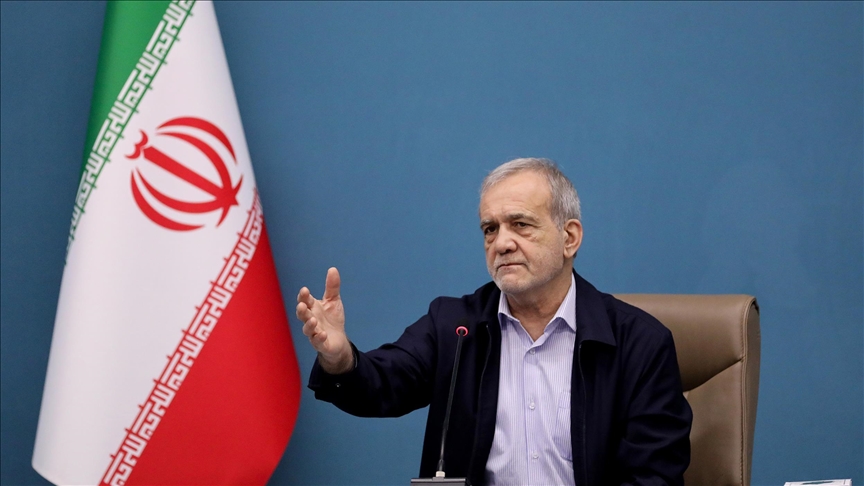
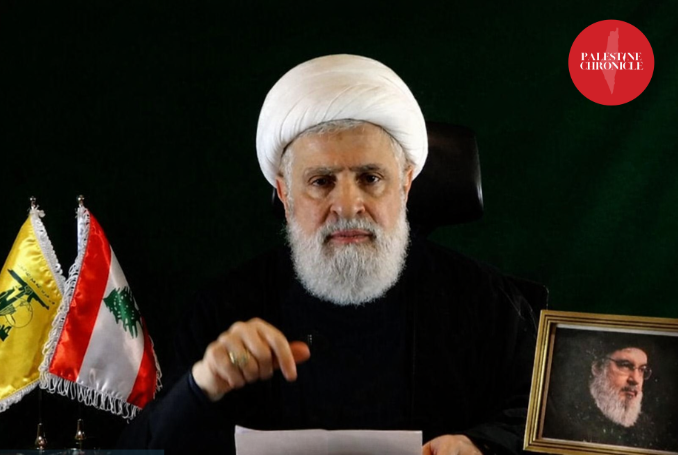
Pezeshkian: ‘Iran Will Not Surrender to Bullies’
 CrossFireArabia
- March 16, 2026
 CrossFireArabiaCrossFireArabiaCrossFireArabiaCrossFireArabiaCrossFireArabiaCrossFireArabiaCrossFireArabiaCrossFireArabiaCrossFireArabiaCrossFireArabiaCrossFireArabiaCrossFireArabiaCrossFireArabiaCrossFireArabiaCrossFireArabiaCrossFireArabiaCrossFireArabiaCrossFireArabiaCrossFireArabiaCrossFireArabiaCrossFireArabiaCrossFireArabiaCrossFireArabiaCrossFireArabiaCrossFireArabiaCrossFireArabiaCrossFireArabiaCrossFireArabiaCrossFireArabiaCrossFireArabiaCrossFireArabia
 Saleem Ayoub QunaCrossFireArabiaCrossFireArabiaCrossFireArabiaCrossFireArabiaCrossFireArabiaCrossFireArabiaCrossFireArabiaCrossFireArabiaCrossFireArabiaCrossFireArabiaCrossFireArabiaCrossFireArabiaCrossFireArabiaCrossFireArabiaCrossFireArabiaCrossFireArabiaCrossFireArabiaCrossFireArabiaCrossFireArabia
On December 18, 2025, the world celebrates World Arabic Language Day, an occasion that transcends mere celebration to touch upon the core of cultural and intellectual conflict in a rapidly changing world. This day commemorates the 1973 United Nations General Assembly resolution adopting Arabic as an official and working language of the UN system, in recognition of its historical and cultural significance.
This year’s celebration, organized by UNESCO at its headquarters in Paris, carries the theme:
“Innovative Pathways for Arabic: Policies and Practices for a More Inclusive Linguistic Future.” This theme reflects a growing awareness that the future of Arabic can no longer be secured through emotional rhetoric or historical glorification, but rather through public policies, educational strategies, and serious investment in technology and innovation.
Arabic is not simply a means of communication; it is the language of the Holy Quran, the language of the Prophet’s sayings (Hadith), and a repository of poetic, intellectual, and philosophical heritage. It is also a liturgical language for several Eastern churches. It is spoken today by more than 400 million people and is widespread throughout the Arab world and its surrounding regions, as well as in the diaspora across five continents. It is also one of the most influential languages in the history of world languages.
For centuries, Arabic played a pivotal role as the language of science, politics, and administration. It contributed to the transmission of Greek and Roman knowledge to Europe and served as a bridge for dialogue between cultures along land and sea trade routes. However, this historical leadership is now met with a worrying paradox: Decline of Arabic’s presence in scientific research, higher education, and digital content, in favor of other global languages.
This decline is due to a complex set of factors, most notably the dominance of foreign languages in universities, weak Arabization policies, a decline in translation activity, and the digital revolution, which Arabic has not adequately kept pace with. The widespread use of local dialects, especially through media and social media platforms, has also contributed to weakening the presence of Standard Arabic in the public sphere. This does not mean that the dialects themselves are responsible for the crisis, but rather that it reflects the absence of a balanced linguistic vision. In this context, the 2025 slogan acquires strategic significance, linking the future of Arabic to three fundamental paths:
First, language policies, as no language can be protected without clear legislation guaranteeing its presence in education, administration, and media.
Second, innovation and technology, given that the survival of a language today depends on its presence in artificial intelligence, software, search engines, and the digital content industry.
Third, linguistic inclusivity and equity, by making Arabic accessible to multilingual societies, supporting low-income groups, and promoting linguistic justice without compromising the integrity of the language or politicizing it ideologically.
UNESCO’s celebration of World Arabic Language Day constitutes a platform for global cultural dialogue, but at the same time, it places a heightened responsibility on Arab states and their educational and cultural institutions. The problem does not lie in a lack of international recognition, but rather in the absence of a comprehensive Arab linguistic project that restores Arabic to its role as a language of knowledge and production, not merely a language of heritage and celebration.
Ultimately, the Arabic language does not face an existential crisis, but rather a crisis of management and awareness. It must either be integrated into the core of the civilizational and developmental project, as a language of science, law, and technology, or it will remain confined to occasions and speeches. On World Arabic Language Day 2025, the question remains: Do we want Arabic to be the language of the past, or the language of the future?
Ali Abu Hablah originally wrote this article for the Arabic Addustour newspaper.
CrossFireArabia
Amid the rubble of homes and the ongoing displacement, an unprecedented humanitarian crisis is unfolding in Gaza. The loss of personal documents, especially identity cards, has become widespread, affecting thousands of families, paralyzing the lives of survivors of the genocide, and subjecting them to a daily nightmare from which there is no escape.
Losing an identity card is no longer simply a matter of losing an official document; it has become an obstacle hindering access to aid, depriving the wounded of medical treatment, complicating the burial procedures for martyrs, and preventing even the simplest transactions, from purchasing a SIM card to registering newborns.
An Impossible Bank Account
Rehab Abu Samra, a survivor of the genocide, tried to open a bank account to purchase her daily necessities, but was met with refusal from the responsible employee because she did not possess her original identity card, despite presenting a substitute identification card.
Rehab told Quds Press, “I tried repeatedly to convince the employee to accept the identification card, but he refused because it wasn’t the original, and because the transaction was official and he couldn’t circumvent the requirements.”
She adds: “When we left our homes, we didn’t think about what we would face today. Our only concern was saving our lives and the lives of our children. Now we are living a nightmare with no solution except for government offices to reopen and civil services at the Ministry of Interior to resume.”
She points out that thousands of citizens have returned from banks without completing their transactions, whether to open new accounts or reactivate their frozen ones.
Job Opportunity Threatened with Loss
Nada Abu Shawish is experiencing the same suffering. She lost her ID card under the rubble of her home and received a temporary one. Despite being offered a temporary job, the Bank of Palestine refused to open an account for her to receive her salary.
Nada tells Quds Press: “I had an electronic copy of my ID on my phone, and I showed it to the employee, but he refused and insisted on the original, according to the established procedures.”
She explains that this condition is impossible to meet, as the civil registry offices are almost paralyzed, and the issuing centers are destroyed or unable to operate, while transactions pile up amidst power and internet outages.
She adds: “I was forced to authorize my husband to collect my salary on my behalf as a temporary solution that allows me to benefit from my employment contract until the ID card issuance crisis is resolved.”
Severe Technical and Logistical Crisis
Ismail al-Thawabta, Director General of the Government Media Office in Gaza, confirms that the civil department of the Ministry of Interior is currently unable to issue replacements for lost ID cards or renew them, despite the urgent need for them in daily transactions.
He says that the ID card issue is “one of the most complex issues” at present, due to technical and logistical reasons imposed by the occupation.
Al-Thawabta explains that the most prominent of these reasons are: Preventing the entry of the specialized technical ink used for printing ID cards, which has high security specifications; the unavailability of the paper used for the cards, which is classified as a prohibited material, similar to passport paper; the absence of the original, approved printing templates due to the disruption of supply lines; the lack of the ID card cover and the inner gel used in its production; and the shutdown of specialized printing presses after they were targeted during the aggression. This is on addition to the damage to the civil registry’s paper archive, which contains verification data and citizens’ photographs, accessing it is virtually impossible.
He emphasizes that these factors combined make the situation “completely intractable” and preclude any swift resolution to the crisis.
Since October 7, 2023, the Israeli occupying power—with American and European support — has committed genocide in the Gaza Strip, including killing, starvation, destruction, displacement, and arbitrary arrests, ignoring international appeals and orders from the International Court of Justice to halt its actions.
This genocide has left more than 241,000 Palestinians dead or wounded, most of them children and women, and more than 11,000 missing, in addition to hundreds of thousands displaced and a famine that has claimed the lives of many, mostly children. Furthermore, it has resulted in widespread destruction and the erasure of most of the Gaza Strip’s cities and regions from the map.
CrossFireArabia
Another Palestinian infant has died in the Gaza Strip after exposure to extreme cold weather, the territory’s Health Ministry said Thursday, as a severe cold spell continues to claim lives amid dire living conditions.
In a statement, the ministry said one-month-old Saeed Asaad Abideen died as a result of a sharp drop in temperatures.
His death brought to 13 the number of people who have died after being admitted to hospitals due to the recent cold wave and extreme weather conditions across Gaza according to Anadolu.
On Wednesday, Gaza’s Civil Defense warned that an intense cold wave threatens the lives of children, as many families lack adequate shelter and heating amid the worsening humanitarian conditions due to Israel’s genocide in the enclave.
Hundreds of thousands of displaced Palestinians are living in extremely difficult conditions after their homes were destroyed and they were forcibly displaced. Many families are sheltering in tents or makeshift structures, facing acute shortages of blankets, heating supplies and winter clothing as temperatures drop.
Gaza’s government media office has repeatedly accused Israel of failing to meet its obligations under the Oct. 10 ceasefire and its humanitarian protocol, including the entry of shelter materials and the delivery of 300,000 tents and mobile homes for displaced families.
Israel has killed nearly 70,700 people, mostly women and children, and injured over 171,100 others in attacks in Gaza since October 2023, before the assault came to a halt under the ceasefire deal that took effect on Oct. 10.
CrossFireArabia
The German Press Council has issued a formal reprimand to BILD.DE over its pro-Israel coverage of the killing of Palestinian journalist Anas Al-Sharif in Gaza.
The council said the report violated core journalistic ethics. It cited a serious breach of accuracy and a grave attack on the journalist’s personal dignity.
The decision followed 328 collective complaints. All targeted an August article on BILD.DE about Al-Sharif, an Al Jazeera correspondent in Gaza.
The article echoed claims by the Israeli army. It claimed that Al-Sharif led a Hamas cell. The headline presented this claim as fact. It read: “Terrorist disguised as journalist killed in Gaza.”
Editors provided no sufficient objective evidence. The report triggered wide criticism. BILD later changed the headline.
The Press Council’s complaints committee ruled unanimously. It said the coverage showed gross disregard for due diligence under Article 2 of the Press Code. It also found a severe violation of personal honor under Article 9.
Because of the seriousness, the council issued a formal reprimand. This is its strongest disciplinary measure.
The committee reached a different conclusion on other reports. Two articles with a total of 15 complaints did not violate ethics. One used the headline: “Army: Killed Al Jazeera reporter received salary from Hamas.” Another asked a question: “Israel kills Gaza reporter: Journalist or terrorist?”
In both cases, the outlets reported the allegation without adopting it. The council rejected the complaints as “unfounded.”
The German Press Council stressed its independence. It said decisions rely only on ethical standards in the Press Code. Politics and personal views play no role according to the Quds News Network.
Anas Al-Sharif was born in 1996 in Jabalia refugee camp in Gaza. He worked as an Al Jazeera correspondent during Israel’s genocide in the enclave.
He became known for documenting massacres and the humanitarian catastrophe, despite threats. He was killed on August 10, 2025, in a direct Israeli strike on a journalists’ tent near Al-Shifa Hospital in Gaza City.
The killing sparked international condemnation. Al Jazeera denounced the act as a deliberate attack on press freedom.
Since October 7, 2023, the Press Council has received more than 650 complaints linked to Middle East coverage. In 2025 alone, it recorded 429 complaints. They targeted more than 200 articles across German media.