 Pezeshkian: ‘Iran Will Not Surrender to Bullies’
 Israeli Soldiers Enforce Closure of Al Aqsa
 1 in 7 Displaced in Lebanon – NRC
 Hormuz: End of an Era of Martime Dominance
 Gaza Faces Massive Dust Storm


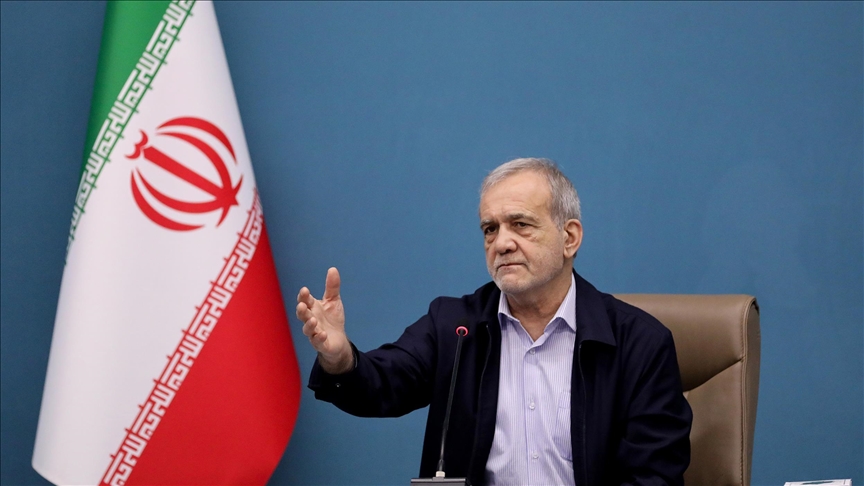
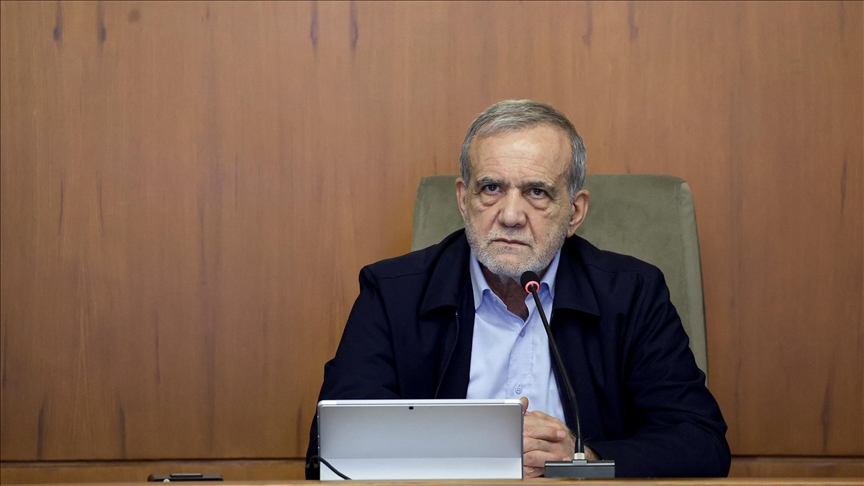
Pezeshkian: ‘Iran Will Not Surrender to Bullies’
 CrossFireArabia
- March 16, 2026
 CrossFireArabiaCrossFireArabiaCrossFireArabiaCrossFireArabiaCrossFireArabiaCrossFireArabiaCrossFireArabiaCrossFireArabiaCrossFireArabiaCrossFireArabiaCrossFireArabiaCrossFireArabiaCrossFireArabiaCrossFireArabiaCrossFireArabiaCrossFireArabiaCrossFireArabiaCrossFireArabiaCrossFireArabiaCrossFireArabiaCrossFireArabiaCrossFireArabiaCrossFireArabiaCrossFireArabiaCrossFireArabiaCrossFireArabiaCrossFireArabiaCrossFireArabiaCrossFireArabiaCrossFireArabiaCrossFireArabia
 Saleem Ayoub QunaCrossFireArabiaCrossFireArabiaCrossFireArabiaCrossFireArabiaCrossFireArabiaCrossFireArabiaCrossFireArabiaCrossFireArabiaCrossFireArabiaCrossFireArabiaCrossFireArabiaCrossFireArabiaCrossFireArabiaCrossFireArabiaCrossFireArabiaCrossFireArabiaCrossFireArabiaCrossFireArabiaCrossFireArabia
By Mohammed Abu Rumman
John Mearsheimer, one of the most prominent professors and theorists of international relations and a founder of the so-called “structural realism” school, believes that the “Venezuela operation” (arrest of President Nicolás Maduro and his wife) is not the end, but rather the beginning of major transformations taking place in the international system. While it reflects a significant tactical and military success for the United States, it also constitutes a major strategic failure, in terms of the inability to accurately predict the repercussions of this operation on the image of the United States and its role in the world, and the mobilization and consolidation of forces hostile to it regionally and internationally in response to the proposed American behavior.
One of the most important points raised by Mearsheimer is his prediction that the Venezuelan process will serve as a key and fundamental dynamic for the transition from the current unipolar international system, which emerged after the end of the Cold War, 35 years ago, and in which the United States and its Western allies dominated international politics, to a multipolar system. This multipolar system has already begun to take shape in one form or another in recent years, with the other two main poles being China, which clearly possesses significant economic, military, and cyber capabilities, and Russia.
On the other hand, the European continent is currently suffering from numerous problems, including its complicated and strained relationship with the United States, its strategic partner. It was evident from the recent US National Security Strategy announced by President Donald Trump that he underestimates Europe and its strategic power and greatly disregards the alliance between Europe and the United States.
From another perspective, it is clear there is considerable Israeli jubilation. Political analysts in Tel Aviv are clearly attempting to link this operation to the conflict with Iran, either by associating the Venezuelan regime with anti-Semitism and claiming the presence of significant activities by Hezbollah and Iranian supporters in Caracas, and/or considering what happened there, a message to the Iranian regime that new policies are being implemented at the beginning 2026, and the threat will not be limited to rhetoric only but be carried out on the ground.
This may align with Trump’s statements and leaks regarding his decision not to accept a proposal from his Middle East envoy, Steve Wittkopf, to renew dialogue with Iran. On the contrary, Trump insists on halting any dialogue with Iran, a view supported and advocated by his Secretary of State, Marco Rubio, and Secretary of Defense, Pete Hegseth, who are pushing for a more stringent military and economic approach towards the Iranian regime.
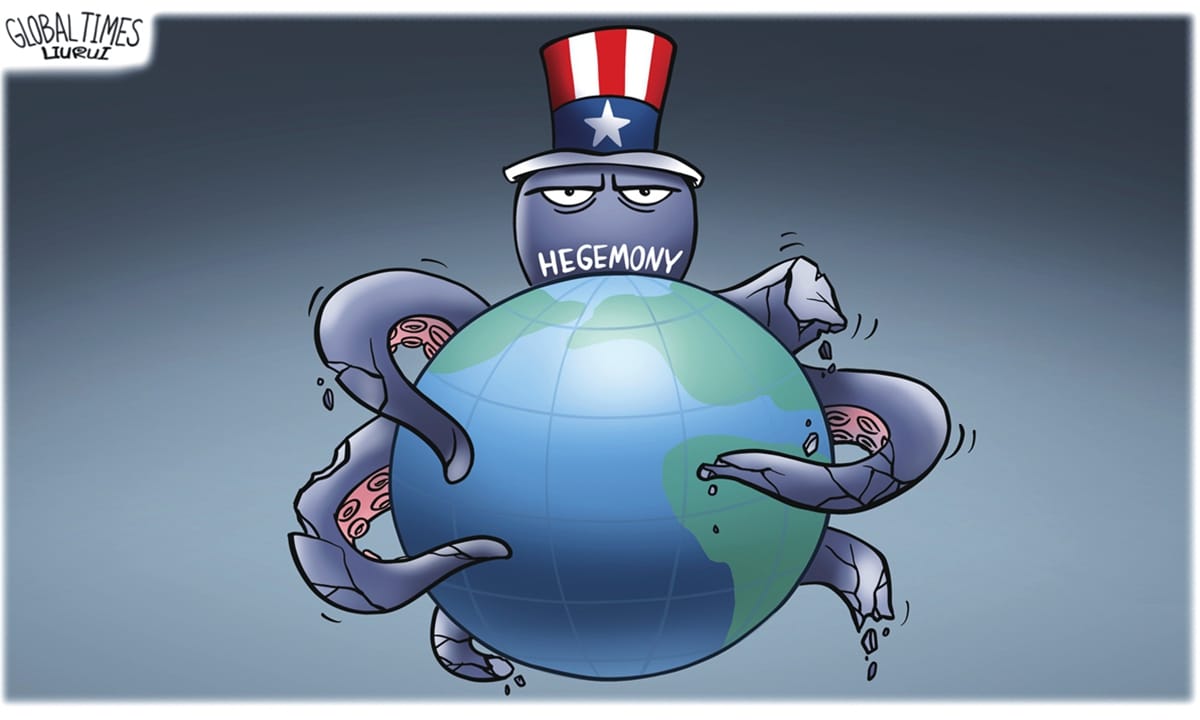
This brings us back to the current Trump US National Security Strategy which served as a prelude and framework for what happened in Venezuela and anticipated US policies toward its two neighbors: Latin America and Canada. The strategy began by emphasizing the Monroe Doctrine (i.e., ensuring US hegemony and control over South America — the backyard) as the primary priority for the United States and its national security, a point we can infer from Trump’s subsequent threats against both Colombia and Cuba.
More importantly, there is a shift in the strategic perspective that dominates the Trump administration, both domestically and internationally. This refers to the question of identity, specifically the Anglo-Saxon Protestant community—which, for the Trump administration, represents its electoral base (we can here refer to Samuel Huntington’s book, “Who Are We?”, by the theorist of the clash of civilizations—a work that complements the Trump administration’s vision). While this new line, ostensibly represented by Trump, is the leading force within the Republican Party, it fundamentally reflects several new dynamics that began with the neoconservative dominance of the White House under George W. Bush.
These dynamics involve a heightened religious, cultural, and social connection to this identity, and a greater role for Christian Zionist groups and the American right wing in shaping American policies and strategic visions.
Within these parameters, ladies and gentlemen, we are entering a more difficult and tense phase, both globally and regionally. As Mearsheimer aptly describes it, this is a transitional phase in the international order, one in which America abandons its claims of democracy and human rights, international institutions become arenas of conflict between superpowers, and a state of confusion, turmoil, and regional tensions prevails, particularly in a region like the Middle East, which is already a perpetual hotspot of conflict in the world.
This article by Muhammad Abu Rumman was originally published in Arabic in the Jordan Addustour daily newspaper.
CrossFireArabia
By Dr Khairi Janbek
The late British historian Eric Hobsbawm had an interesting theory that of long centuries and short centuries. In the first, no big transformations happens, consequently these centuries are counted them in terms of numerics, like 100 years, for instance.
In the second case however, so many big transformations occur, and so these centuries are counted not numerically, but by their effect on human life, progress and development.
To this one wishes to add, that throughout history, people moved habitually into the new century with old ideas passing through and tipping over. Consequently, the grasping of the new developments is always difficult, and our current situation in the 21st century is, in fact, no different.
We have entered this century with the values inherited from the past 100 years with examples being the truth, legality, international law, human rights, sovereignty, and many other norms. Now, this is not to say in any way the values of the past century were ideal, but at least there were norms that could be appealed to not necessarily punish transgressors, but to embarrass them.
However today, and with the latest debacles, we have now entered an age in which you can easily add the word “post-” to all the aforementioned values. In fact we are in the age of post human values, in which the logic of pure force, and the law of the jungle prevails and used with no compunction.
With the latest action on Venezuela, the US administration is providing a new paradigm to the world: That of the policy of the backyard to illustrate the point and as used by British prime minister Neville Chamberlain prior to World War II and in which he wrote after the annexation of Czechoslovakia by Adolf Hitler, as being the dictator’s new backyard.
What he meant of course is that any entity with enough strength is permitted to go into countries which it considers to be its own backyard. Flipping back, today this is how America sees its new role, acting to prevent harm to US interests but also is willing to negotiate on other issues important for the interests of America.
As the situation stands, Washington through the Trump administration, is clearly moving to revive the Monroe Doctrine and use it unashamedly and in accordance with the backyard theory.
And as for the international outlook, the current US strategy is to push for extreme right-wing governments to run Europe, seeing the continent as an economically powerful block but without military swing and/or political clout and willing to negotiate to end the war in Ukraine to Russia’s advantage.
Meanwhile, Washington wants also to push the Abraham Accords in the Middle East and get Arab governments, especially the Saudis, to negotiate with Israel to liquidate the Palestinian problem once and for all. In this paradigm, the fate of Taiwan remains to be seen, whether it becomes the sacrificial lamb for US-China Accords or not. This is how one sees the balance.
However having said all that, and in this formula, the allies of the US can be hurt in as much way as the detractors of America.
Dr Janbek is a Jordanian historian living in Paris.
CrossFireArabia
By Rashad Abu Dawood
Our generation was always captivated by cowboy movies popular in the 1950s and 1960s. The hero always spoke with his gun and not with his mouth. He kicks the wooden bar door wide open with his foot, not his hand. The patrons tremble with fear as they watch the hero pull his hat down to half of his face and stretch out his legs in his high-heeled shining brass boots, placing them on the table in the face of whoever appears to be sitting across from him.
The terrified bar-tender approaches and asks what he wants to drink, and without even looking at him, he utters a single word. If the bra-tender pours him other than what he ordered, he pulls out his gun and fires a single shot at a bottle on the shelf. If he hears anyone utter a word that displeases him, he raises his gun and… silences them forever!
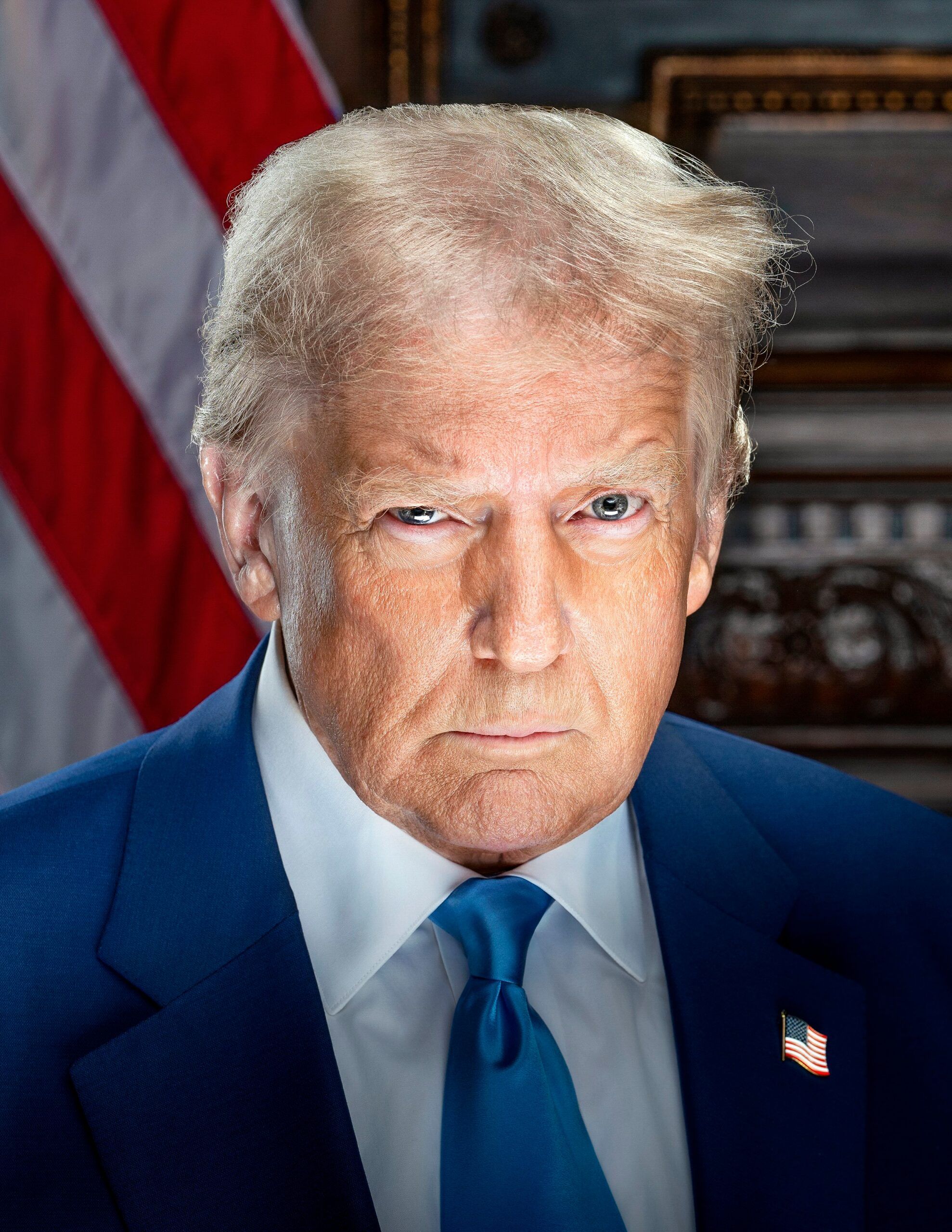
When he’s about to leave, he demands the baman hand over the dollars in the safe. If the owner refuses, he kills him and takes the money, then… struts out, basking in his power and glory. Of course, morals and values have no value in the world of the cowboy. I don’t know why I remembered this as I watched what Donald Trump did to Venezuelan President Nicolás Maduro on that dark night in world history.
Trump said he felt like he was watching a live television program as US forces arrested President Maduro. I and many others around the world, saw a totally different image of an American president that of the reckless, arrogant cowboy.
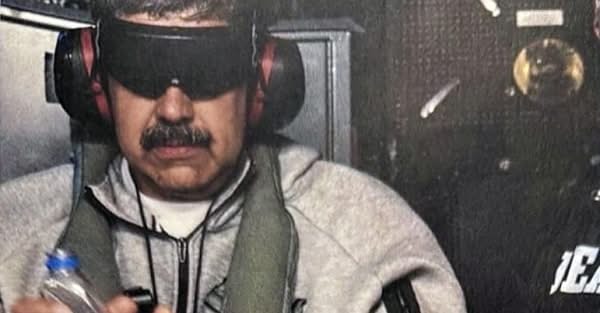
What happened wasn’t an arrest, but the ‘kidnapping’ of a head of state from his country’s capital, indeed, from his bedroom while he and his wife were in their pajamas.
The operation was meticulously planned, taking over four months. The soldiers that carried it out was part of the so-called Delta Force, the most powerful unit in the US Air Force. This is the same unit that took part with Israeli soldiers in their failed attempts to free the hostages in the Gaza tunnels.
The US administration paved the way for the kidnapping of the Venezuelan president by claiming the objective was a war on drugs. However, Trump, true to form, exposed the truth and made statements clearly declaring that he wanted Venezuelan oil, which possesses the largest reserves in the world.
He called on American companies to prepare to return to Venezuela after they were expelled by former President Hugo Chávez, whom Washington had attempted but failed to capture as well.
This is not the first time the United States has been involved in assassinating or overthrowing heads of states in Latin America. It has previously carried out operations in Panama, Guatemala, Chile, the Dominican Republic, and Nicaragua.
This is in accordance with the Monroe Doctrine, which considers South America a backyard for the United States, where no regime should be in power that is not loyal to Washington and its interests.
Trump was not content with seeing Maduro in handcuffs and under guard; he also threatened the leaders of other Latin American countries, such as Mexico and Colombia, under the grossly misleading pretext of fighting drugs.
The president, who is fond of taking “unprecedented” actions, such as officially recognizing occupied Jerusalem as the “capital of Israel” and annexing the Golan Heights, may well continue invading other countries in the “Latin American backyard,” and beyond, starting with Iran. In doing so, he is about to dismantle the international law and order that was born out of World War II and could well pave the way for World War III.
What if now Putin kidnapps Ukrainian President Zelensky, or the Chinese president kidnapped the president of Taiwan? Trump will surely be told: “We did the same as what you did to the Venezuelan president”.
The dealmaker is acting recklessly and is leading America and the world down to the jungle of abyss!
The writer is a columnist for Ad Dustour daily in Jordan and the above article is a translation from the Arabic version.