 Getting Ready For School in Gaza
 Beware! Qusra and The Next Nakba
 Israeli Settler Attacks Spiked by 63 percent in the Occupied West Bank
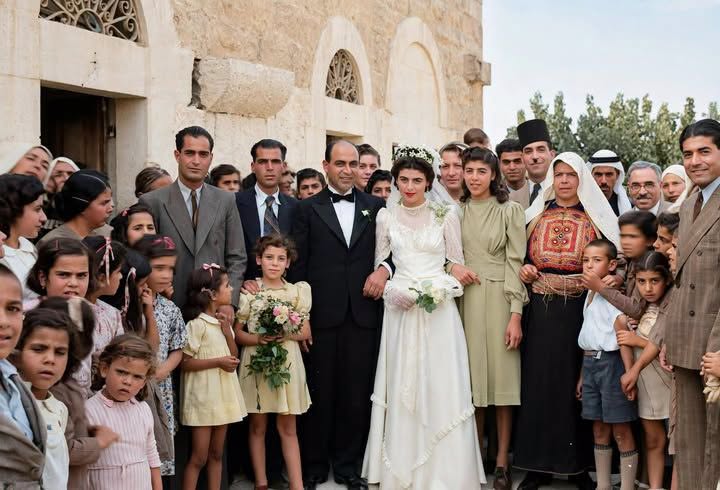
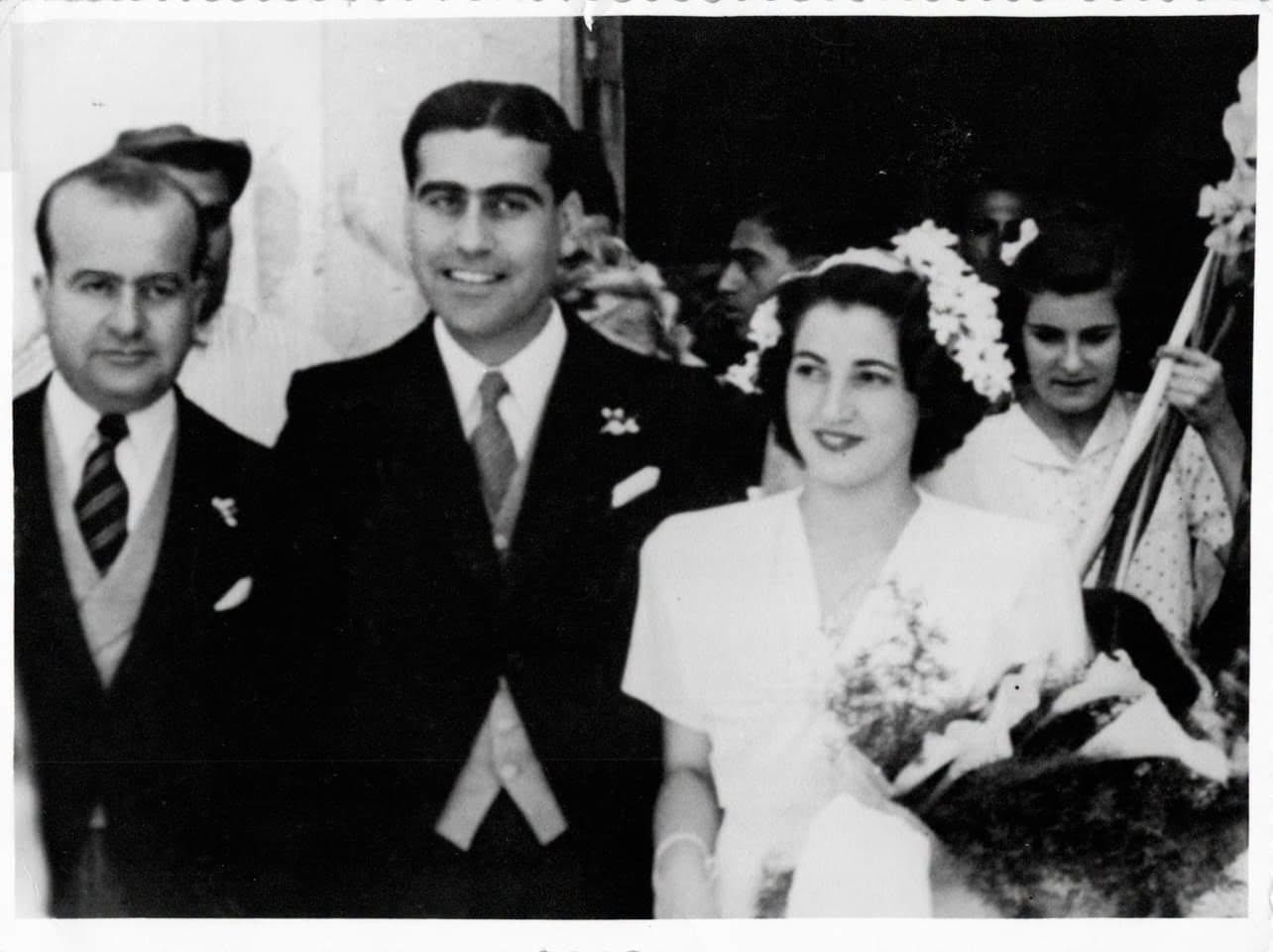 A Jerusalem Wedding, 1945
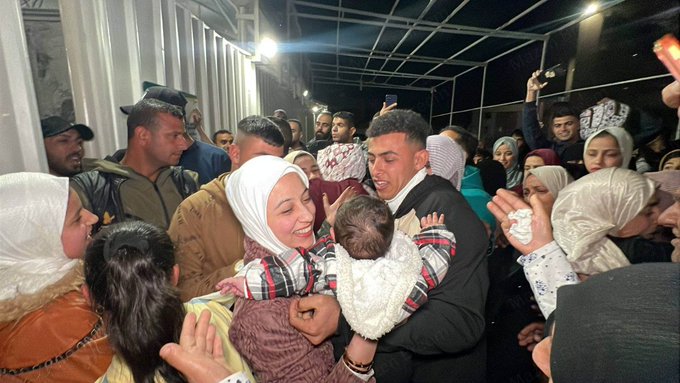
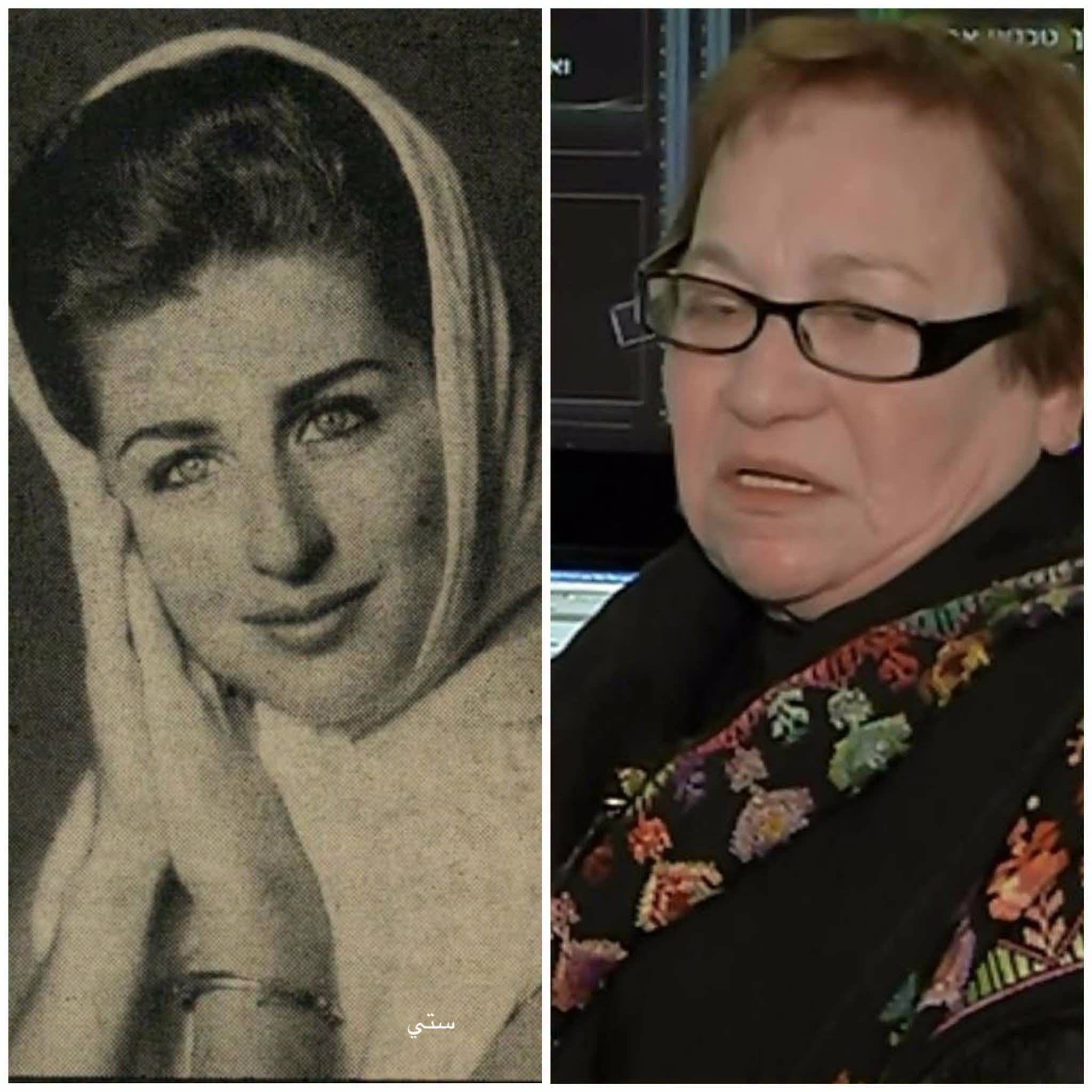 A Prisoner to Remember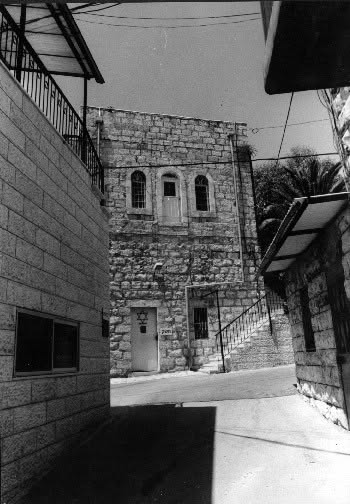

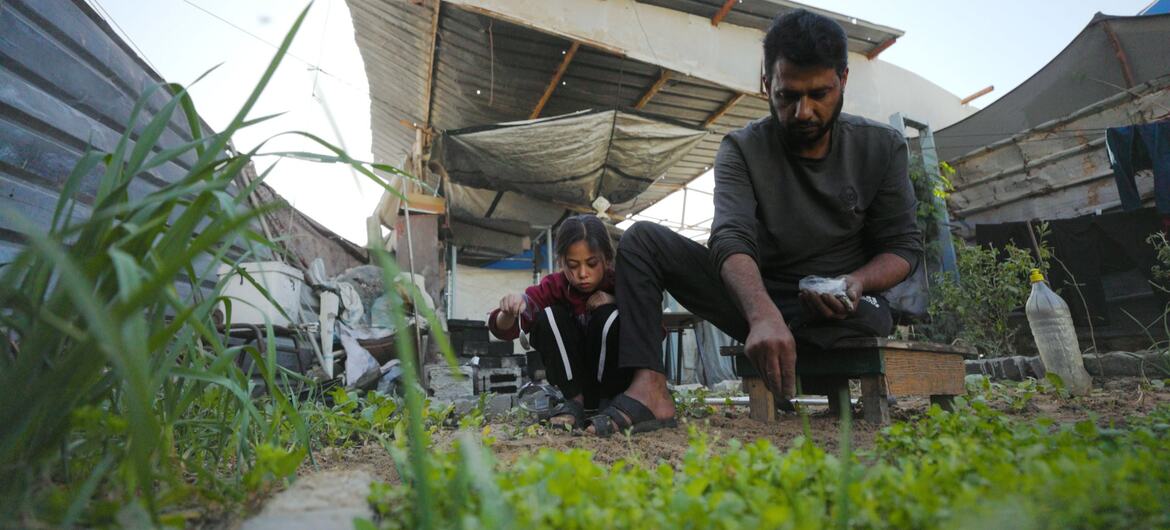
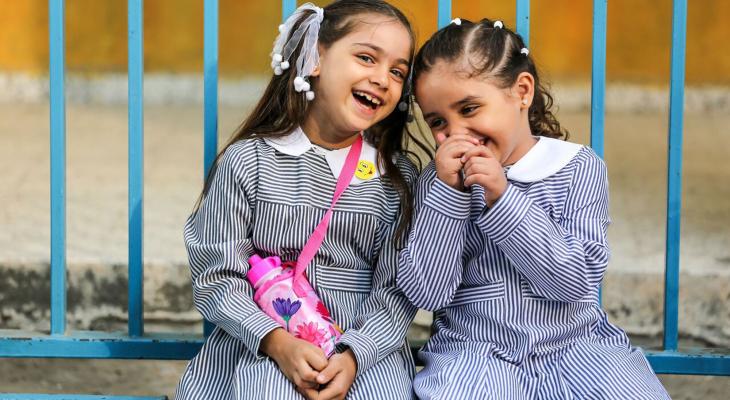
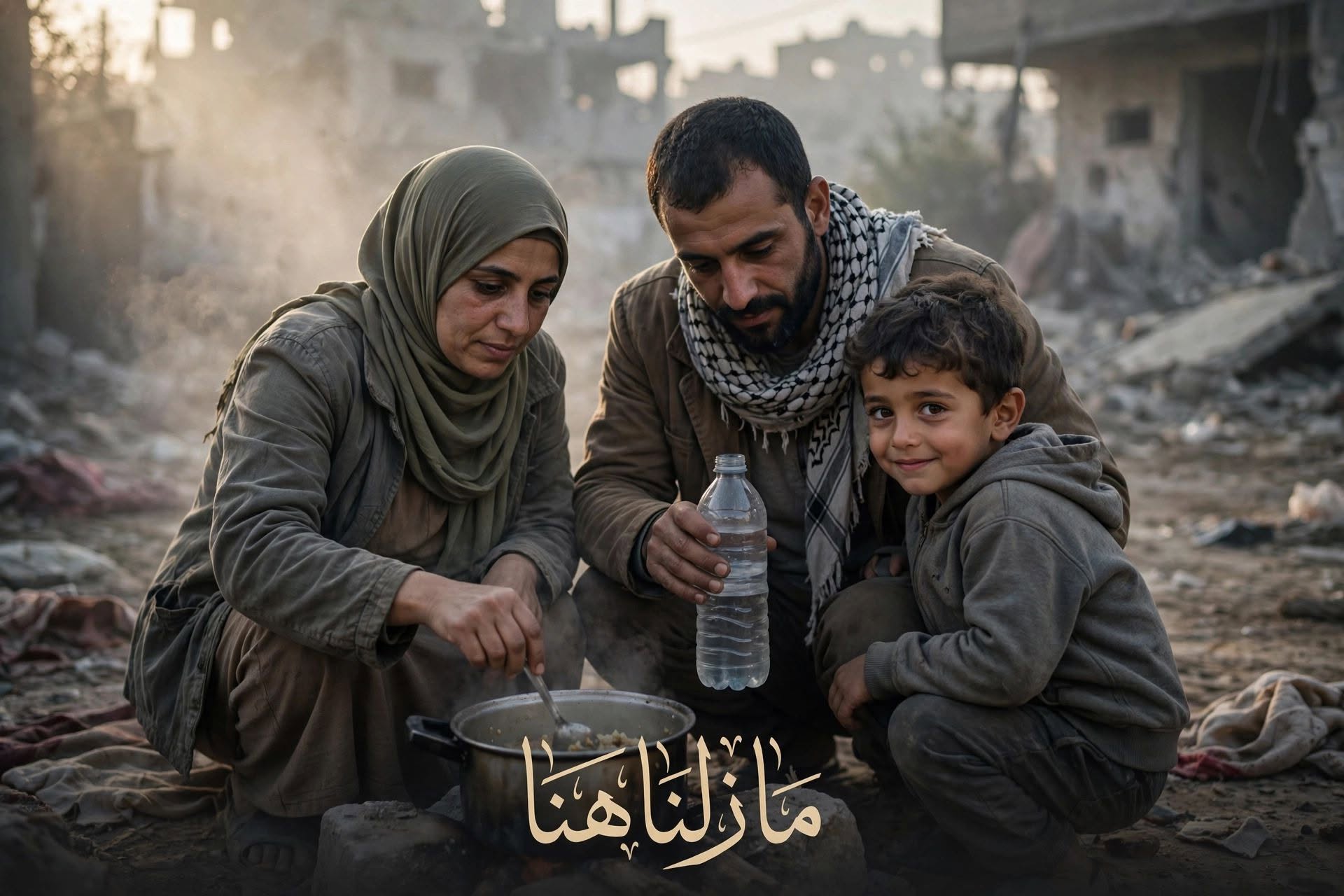
Getting Ready For School in Gaza
 CrossFireArabia
- August 26, 2026
 CrossFireArabia
 HebaHeba
 marwanCrossFireArabiaCrossFireArabiaCrossFireArabiaCrossFireArabiaHebamarwanHebaCrossFireArabiaCrossFireArabiaCrossFireArabiaCrossFireArabiaCrossFireArabiamarwanHebaCrossFireArabiaCrossFireArabiaCrossFireArabiaCrossFireArabiaCrossFireArabiaCrossFireArabiaCrossFireArabiaCrossFireArabiaHebaCrossFireArabiaCrossFireArabiaHebamarwanmarwanmarwanmarwanmarwanmarwanCrossFireArabiamarwanmarwan
 Saleem Ayoub QunamarwanCrossFireArabiaCrossFireArabiaCrossFireArabiaCrossFireArabiamarwanCrossFireArabiaCrossFireArabiamarwanCrossFireArabiaHebaCrossFireArabiamarwanCrossFireArabiamarwanHebaCrossFireArabiamarwanmarwanHebaCrossFireArabiamarwanmarwanCrossFireArabiamarwanHebaCrossFireArabiaCrossFireArabiaCrossFireArabiaHebamarwanCrossFireArabiamarwanHebaCrossFireArabiaCrossFireArabia
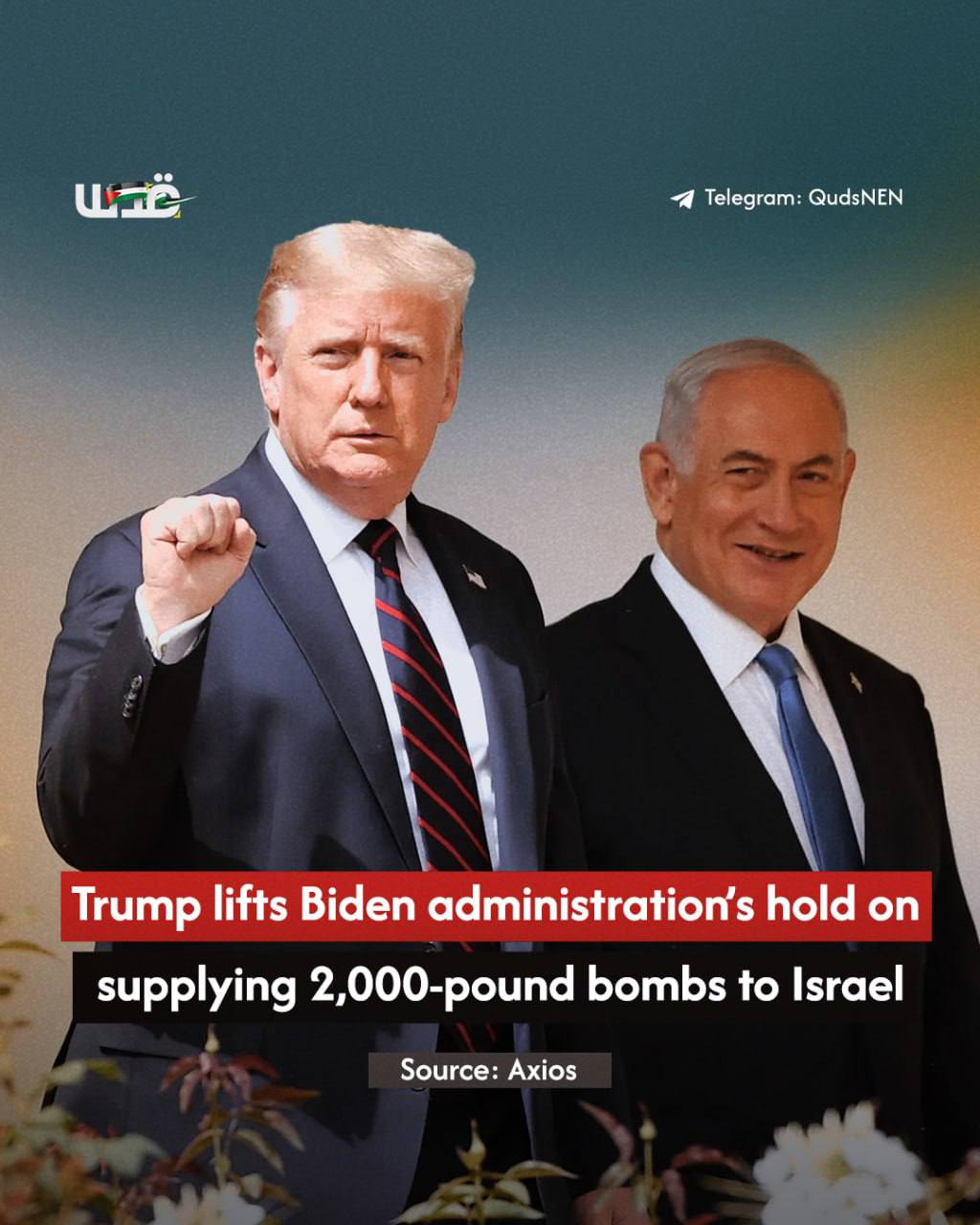
The Trump White House instructed the Pentagon to release the hold imposed by the Biden administration on the supply of 2,000-pound bombs to Israel, three Israeli officials told Axios. The officials stated that 1,800 MK-84 bombs, which were held in storage in the U.S., will be put on a ship and delivered to Israel in the coming days.
Last May, then-President Joe Biden paused the delivery of a weapons shipment that included 2,000-pound bombs that Israel had used to flatten wide swathes of Gaza Strip.
His decision to halt the shipment was made due to concerns over its possible use in a heavily populated area.
CrossFireArabia
The Al-Qassam Brigades published a video clip, Saturday evening, showing 4 Israeli female soldiers released, expressing their gratitude in Arabic to the Palestinian factions for the good treatment they received during their captivity and for preserving their lives despite the violent Israeli bombardment.
The video, which was broadcast by Al-Qassam via its Telegram account, shows the female soldiers in a car while they were being transported to be handed over to the International Committee of the Red Cross, as part of the ceasefire agreement between Hamas and Israel with international and regional mediation.
While they were inside the car before the handover, the female soldiers expressed their gratitude to the Al-Qassam Brigades for the good treatment they received.
One of them said: “Peace be upon you, thank you to the Al-Qassam Brigades for the good treatment.”
Another added: “Thank you for the food, drink and clothes.”
A third female soldier thanked the faction fighters who were “protecting us and protecting us from the bombardment.”
While the fourth expressed her wish that this day would be “a happy day for everyone.”
At the end of the clip, the female soldiers were seen chanting loudly the date “January 25,” which was the day of their release, near the Gaza beach, where the video was filmed before they were handed over to the Red Cross.

On Saturday afternoon, Hamas released 4 Israeli female soldiers and handed them over to the Red Cross, which in turn handed them over to the Israeli side, as part of the second batch of the first phase of the exchange deal and ceasefire in Gaza.
In exchange for each Israeli female soldier, 50 Palestinian prisoners will be exchanged, including 30 serving life sentences and 20 serving long sentences, according to what a Hamas source told Anadolu Agency, Saturday.
In total, Israel currently holds more than 10,300 Palestinian prisoners in its prisons, and it is estimated that there are about 96 Israeli prisoners in Gaza.
The Gaza ceasefire agreement, which went into effect on January 19, included a deal to release Israeli prisoners in Gaza in exchange for a number of Palestinian prisoners in Israeli prisons.
In the first phase of the agreement, which consists of three stages, each lasting 42 days, the terms stipulate the gradual release of 33 Israelis held in Gaza, whether alive or dead, in exchange for a number of Palestinian detainees estimated between 1,700 and 2,000.
Indeed, the first exchange, which took place on the first day of the agreement, saw the release of three female Israeli civilian prisoners in exchange for 90 male and female Palestinian child detainees, all from the occupied West Bank, including Jerusalem according to the Anadolu news agency.
With American support, Israel committed genocide in Gaza between October 7, 2023 and January 19, 2025, leaving more than 158,000 Palestinians dead and wounded, most of them children and women, and more than 14,000 missing, and one of the worst humanitarian disasters in the world.
CrossFireArabia
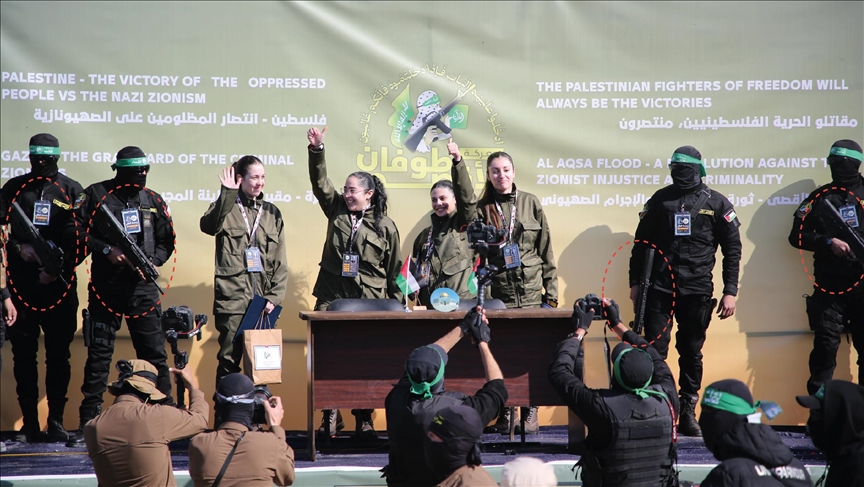
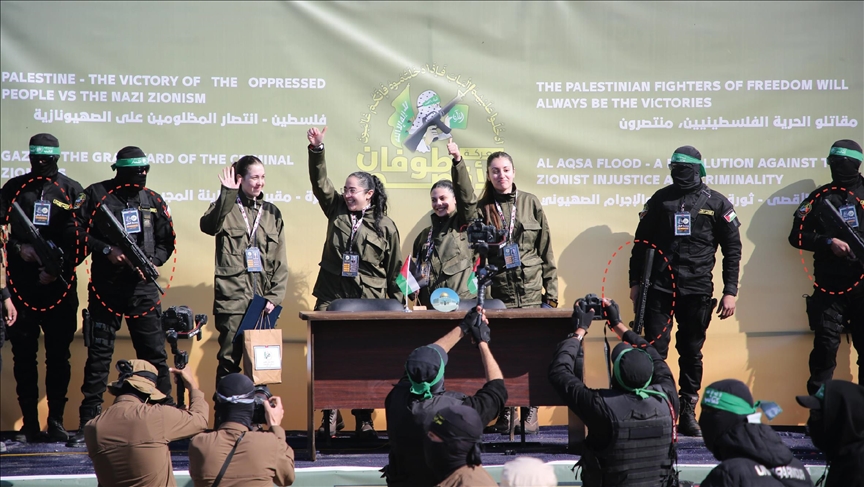
In a dramatic display of power, elite fighters from the Palestinian resistance group Hamas appeared with Israeli Tavor rifles during the handover of four female Israeli soldiers in Gaza City.
The rifles, reportedly seized during the Oct. 7, 2023 attack on Israeli military bases and settlements near Gaza, were prominently featured on podium set up at Palestine Square in Gaza City to hand over the four soldiers.
“Hamas chose to include fighters from an elite unit carrying Tavor rifles from the Israeli army’s elite unit during the handover process,” Amir Bohbot, a military correspondent for the Israeli news web Walla, said, citing a military source.
“These rifles were most likely seized on Oct., 2023,” he added.
Hamas released four female Israeli soldiers early Saturday under the first phase of a ceasefire and prisoner exchange agreement with Israel.
The freed soldiers are members of the Israeli army’s surveillance unit at the Nahal Oz base.
The four freed soldiers wearing the Israeli military uniform smiled and waved on a stage set up at the square as they were transferred to representatives of the International Committee of the Red Cross (ICRC).
“The handover event organized by Hamas was meticulously planned and executed at Palestine Square in Gaza City,” the Israeli Channel 12 said.
“Hamas exploited this dramatic moment to convey propaganda messages, erecting a platform in the middle of the square with symbols of the Israeli army and the Shin Bet security service, along with a Hebrew headline: ‘Zionism will not win’.”
Message of superiority
The Israeli channel said long convoys of armed men from Hamas and Islamic Jihad groups streamed into the square since early morning.
“Activists carrying weapons and organization flags were positioned around the central platform in a pre-planned formation to create an image of victory for the cameras broadcasting the release of the captives to the entire world,” it added.
“The carefully chosen setting and decor – Israeli symbols and Hebrew inscriptions – show a planned effort by Hamas to turn the ceremony for the release of the female soldiers into a propaganda show,” the channel said.
“Hamas invested significant resources in designing the square, with the aim of conveying a message of control and superiority.
“The female soldiers were brought to the podium, where they held each other’s hands, smiled and waved,” the channel commented.
Some 200 Palestinian prisoners are also scheduled to be released on Saturday in exchange for the four freed Israeli soldiers.
Under the first phase of the Gaza ceasefire day, Israel is planned to withdraw from the Netzarim Corridor area that separates northern Gaza from its south, allowing displaced Palestinian to return to their areas in northern Gaza.
The first six-week phase of the Gaza ceasefire agreement took effect on Jan. 19, suspending Israel’s genocidal war that has killed nearly 47,300 Palestinians, mostly women and children, and injured more than 111,400 since Oct. 7, 2023.
On the first day of the ceasefire, Israel released 90 Palestinian detainees in return for three Israeli captives set free by Hamas.
The three-phase ceasefire agreement includes a prisoner exchange and sustained calm, aiming for a permanent truce and the withdrawal of Israeli forces from Gaza.
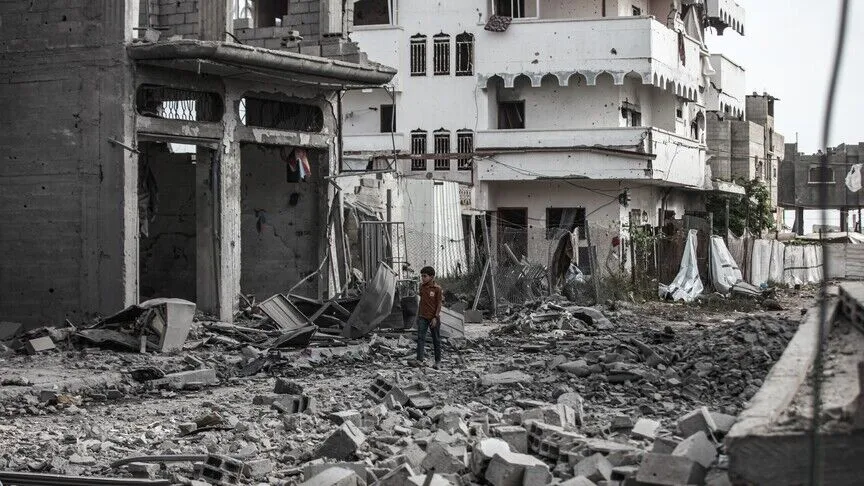
The Israeli onslaught has left more than 11,000 people missing, with widespread destruction and a humanitarian crisis that has claimed the lives of many elderly people and children in one of the worst global humanitarian disasters ever.
The International Criminal Court (ICC) issued arrest warrants in November last year for Israeli Prime Minister Benjamin Netanyahu and his former Defense Minister Yoav Gallant for war crimes and crimes against humanity in Gaza.Israel also faces a genocide case at the International Court of Justice for its war on the enclave.
CrossFireArabia
Meeting a week after a ceasefire paused the war in Gaza, after it raged for almost 470 days, the Security Council discussed the plight of children, with speakers calling for their needs to be prioritized, through the rebuilding of educational infrastructure, the provision of psychosocial support and ensuring a surge of humanitarian aid to the Strip.
“A generation has been traumatized,” Tom Fletcher, Under-Secretary-General for Humanitarian Affairs and Emergency Relief Coordinator, told the Council, pointing to the United Nations Children’s Fund (UNICEF) finding that 1 million children need mental health and psychosocial support for depression, anxiety and suicidal thoughts.
Nonetheless, today’s briefing marks “one of the rare times we are able to highlight positive developments”, he said, with the ceasefire providing a reprieve from relentless hostilities for Palestinians; allowing Israeli hostages and imprisoned Palestinians to be reunited with their families; and allowing a surge in life-saving humanitarian aid into Gaza. “Children have been killed, starved and frozen to death,” he said, adding:
“Some died before their first breath — perishing with their mothers in childbirth.” Citing conservative estimates indicating that over 17,000 children are without their families in Gaza, he stated that an estimated 150,000 pregnant women and new mothers are now in desperate need of health services.
Outlining the UN and its partners’ stepped-up response across the Gaza Strip in recent days to meet the needs of 2 million people across Gaza, he said they were enabled by improved operating conditions, including safe, unobstructed humanitarian access, the absence of hostilities and the almost complete cessation of criminal looting.
Such operations included the provision of life-saving services; delivering food parcels and flour and working to reopen bakeries; and distributing fuel to ensure that critical services, such as healthcare and water pumping, can run on back-up generators, he said, underscoring: “At the centre of this, as always, is United Nations Relief and Works Agency for Palestine Refugees in the Near East (UNRWA).”
He went on to express alarm over the situation in the West Bank, where record-high levels of casualties, displacement and access restrictions witnessed since October 2023 have intensified since the announcement of the ceasefire. Voicing alarm over attacks by Israeli settlers on Palestinian villages and an ongoing military operation in Jenin causing death and displacement, he urged the Council to ensure the ceasefire is maintained and to ensure that international law is respected across the Occupied Palestinian Territory of Gaza and the West Bank, including East Jerusalem.
Restrictions on critical humanitarian items must be lifted, including items considered to be “dual use”, and there must be accountability for atrocities. Underscoring the need to ensure humanitarian operations are well-funded, with the 2025 Flash Appeal in need of $4.07 billion to meet the needs of 3 million people in Gaza and the West Bank, he stressed: “The children of Gaza are not collateral damage”, but deserving of security, education and hope. “They tell us that the world was not there for them through this war. We must be there for them now.”
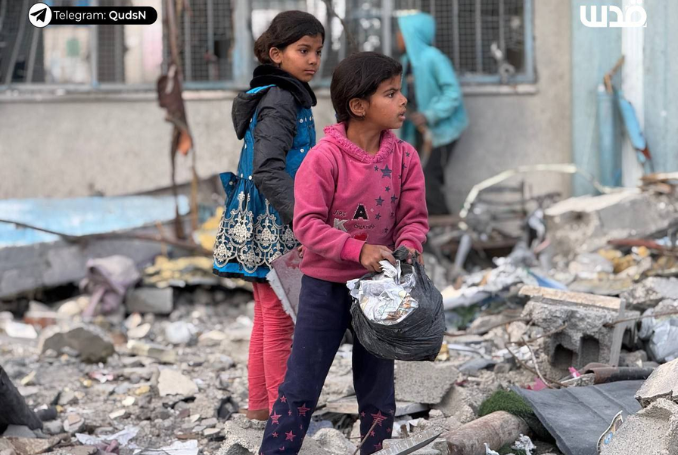
The Council also heard from Bisan Nateel, from Tamer Institute for Community Education, an organization that helps Palestinian children express themselves through artistic activities, who recounted the “very simple dreams” expressed in drawings by the children she worked with, who “dreamed of going back to school, of playing with friends, and of not hearing constant shelling”.
Instead, she said, they were told to go to the safe place in south Gaza, through a “so-called safe corridor” where their lives were under threat, forced to see bodies along the road, forced to walk as snipers targeted them.
“They arrived unable to say a word about the horrific sights seen in their displacement journey, to a safe area that was targeted,” she said. Displaying a drawing by a child named Gazi when he was in al-Mawasi refugee camp, in which he drew himself feeling well-fed, at home with his father, she said: “But Gazi lost his life, along with his father, when their tent was attacked.”
Also citing the case of a 12-year-old girl in north Gaza, who saw the remains of relatives “torn to pieces” outside her tent, she said that amidst the horror and violence, the children of the Strip forgot “what it means to live, to be human”.
Throughout the conflict, she recalled awaiting news of Security Council meetings on the radio, hoping for a ceasefire that would end the massacres. “Every day we lost our friends, loved ones, our homes and lives,” she said, recalling the death of her friend Mohammed, alongside the children he was drawing and playing with at Al-Maamadani Hospital.
“We used to walk down the streets, not knowing if we would live or die, always waiting for the moment the Council would announce a ceasefire, and end the violations against the Palestinian people, including their right to life, violated during 470 days of continuous attack against Gaza,” she stressed. She voiced hope that Gazans’ “right to life” will he restored, and that children can go back to school, to play, to draw and to sing; to being “normal children in a normal environment, not surrounded by soldiers, and hearing weapons”. In Gaza, “we do not know how life looks like in the outside world,” she said, adding: “We have lost a lot in this war and I hope we will not lose more.”
CrossFireArabia
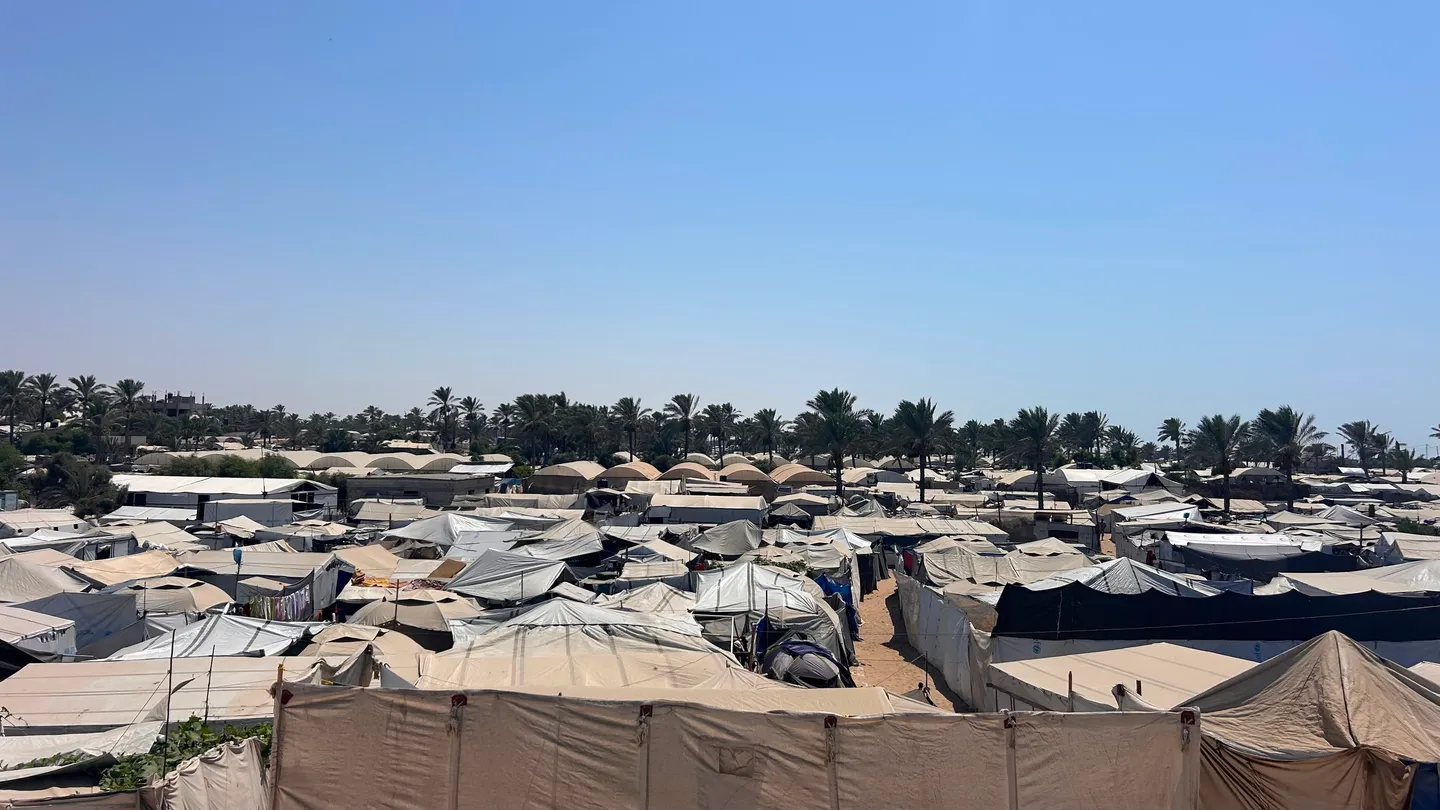
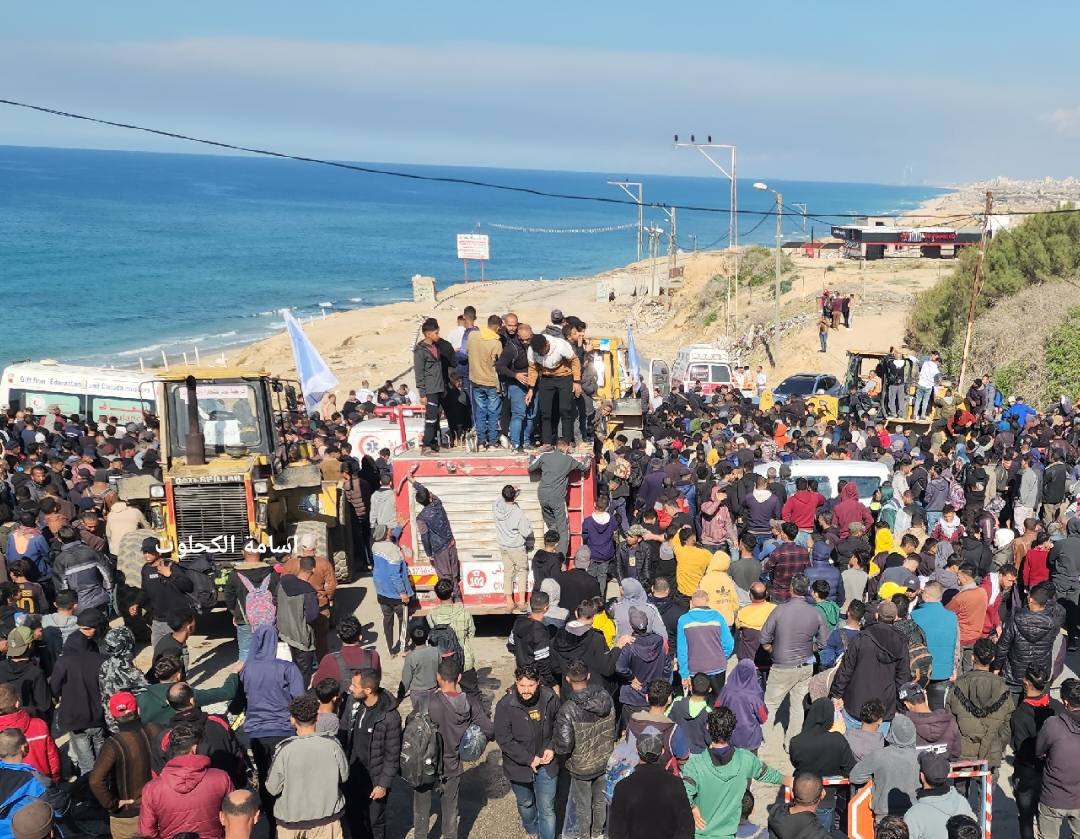
Thousands of displaced Palestinians gather at the entrance of Al-Nuseirat refugee camp, waiting to return to their homes in northern Gaza after being forcibly displaced by the Israeli occupation during the genocide that lasted for 15 months.