 Flying Kites and The Politics of Fear
 ‘No Rest Even in Death:’ Israel Holds on The Bodies of 1700 Palestinians
 Israeli Army Forced to Release The Body of a 15-Year-Old it Kept For 9 Months
 ‘My Tent, My Museum’
 Tradition and Identity




Flying Kites and The Politics of Fear
marwan
- August 27, 2026
 marwan
 CrossFireArabiaCrossFireArabiamarwan
 HebaCrossFireArabiaHebaHebamarwanCrossFireArabiaCrossFireArabiaCrossFireArabiaCrossFireArabiaHebamarwanHebaCrossFireArabiaCrossFireArabiaCrossFireArabiaCrossFireArabiaCrossFireArabiamarwanHebaCrossFireArabiaCrossFireArabiaCrossFireArabiaCrossFireArabiaCrossFireArabiaCrossFireArabiaCrossFireArabiaCrossFireArabiaHebaCrossFireArabiaCrossFireArabiaHebamarwanmarwanmarwanmarwanmarwanmarwanCrossFireArabiamarwanmarwan
 Saleem Ayoub QunamarwanCrossFireArabiaCrossFireArabiaCrossFireArabiaCrossFireArabiamarwanCrossFireArabiaCrossFireArabiamarwanCrossFireArabiaHebaCrossFireArabiamarwanCrossFireArabiamarwanHebaCrossFireArabiamarwanmarwanHebaCrossFireArabiamarwanmarwanCrossFireArabiamarwanHebaCrossFireArabia
Several European leaders, Wednesday, rejected US President Donald Trump’s controversial plan to “take over” Gaza and forcibly resettle its Palestinian population in other countries.
Germany
Dismissing the proposal, German Foreign Minister Annalena Baerbock said that the only way forward for peace is a negotiated two-state solution.
“It is clear that Gaza—like the West Bank and East Jerusalem—belongs to the Palestinians,” Baerbock said, warning that forcibly expelling the civilian population would violate international law and fuel further hatred.
She stressed that the UN, EU, and G7 have consistently opposed Israeli settlements on Palestinian territories.
France
France also swiftly rejected Trump’s proposal, reaffirming that Gaza should remain part of a future Palestinian state.
“The future of Gaza must be inscribed not in the perspective of control by a third State but in the framework of a future Palestinian State, under the aegis of the Palestinian Authority,” a French Foreign Ministry statement said.
“France reiterates its opposition to any forced displacement of the Palestinian population of Gaza, which would constitute a serious violation of international law, an attack on the legitimate aspirations of the Palestinians, but also a major obstacle to the two-state solution,” it added.
Britain
Responding to a question on Trump’s Gaza remark, UK Prime Minister Keir Starmer said Palestinians in Gaza “must be allowed home, they must be allowed to rebuild, and we should be with them in that rebuild on the way to a two-state solution”
Spain
Spain also joined the chorus of disapproval, with Foreign Minister Jose Manuel Albares firmly rejecting the idea of US control over Gaza.
“Gaza is the land of the Palestinian Gazans. The Palestinian Gazans must stay in Gaza,” Albares said.
Spain reaffirmed its commitment to a future Palestinian state that includes Gaza as part of its territory.
Poland
Poland’s Deputy Foreign Minister Andrzej Szejna expressed support for a two-state solution and emphasized the need for Palestinian involvement in the peace process.
“Just like in the case of Ukraine, where we say that you can’t decide about Ukraine without Ukraine, if we’re talking about the peace process. Similarly, you can’t decide about Palestine without the Palestinians. This is Poland’s position,” Szejna said.
Slovenia
Slovenian Foreign Minister Tanja Fajon criticized Trump’s comments as reflective of a “deep ignorance of Palestinian history.”
Speaking from Lebanon, Fajon warned that such proposals could lead to further unrest and violence and stressed that Palestinians completely reject the idea of being displaced from their homeland.
Scotland
Scottish First Minister John Swinney also condemned the proposal, calling any suggestion of displacing Palestinians “unacceptable and dangerous.”
Swinney emphasized that the suffering of the people in Gaza must not be exacerbated by plans for forced relocation, following months of intense violence and loss of life in the region.
Further reaction
The Palestine Solidarity Campaign (PSC) condemned Trump’s remarks, describing them as “illegal” and part of a “grotesque plan” that would lead to the mass ethnic cleansing of 2.3 million Palestinians.
“This is a blueprint for a crime of historic proportions,” said the PSC, highlighting that the plan would violate the Geneva Convention’s prohibition on the forcible transfer of populations.
The Muslim Council of Britain has criticized Trump’s plan, urging international action for Gaza’s reconstruction that is led by the Palestinian people themselves.
Wajid Akhter, Secretary General of the Muslim Council of Britain, warned that any attempt to reconstruct Gaza through displacement would amount to ethnic cleansing.
“Reconstruction without displacement is not only possible – it is the only acceptable path forward,” he stated.
Amnesty Denmark
Amnesty Denmark echoed the widespread rejection, with spokesperson Vibe Klarup drawing a stark comparison between Trump’s plan and Russia’s invasion of Ukraine.
” (What) Trump is advocating here is, first of all, a real invasion of another people’s country,” Klarup said, adding that any US takeover of Gaza would be criminal and a grave breach of international law.
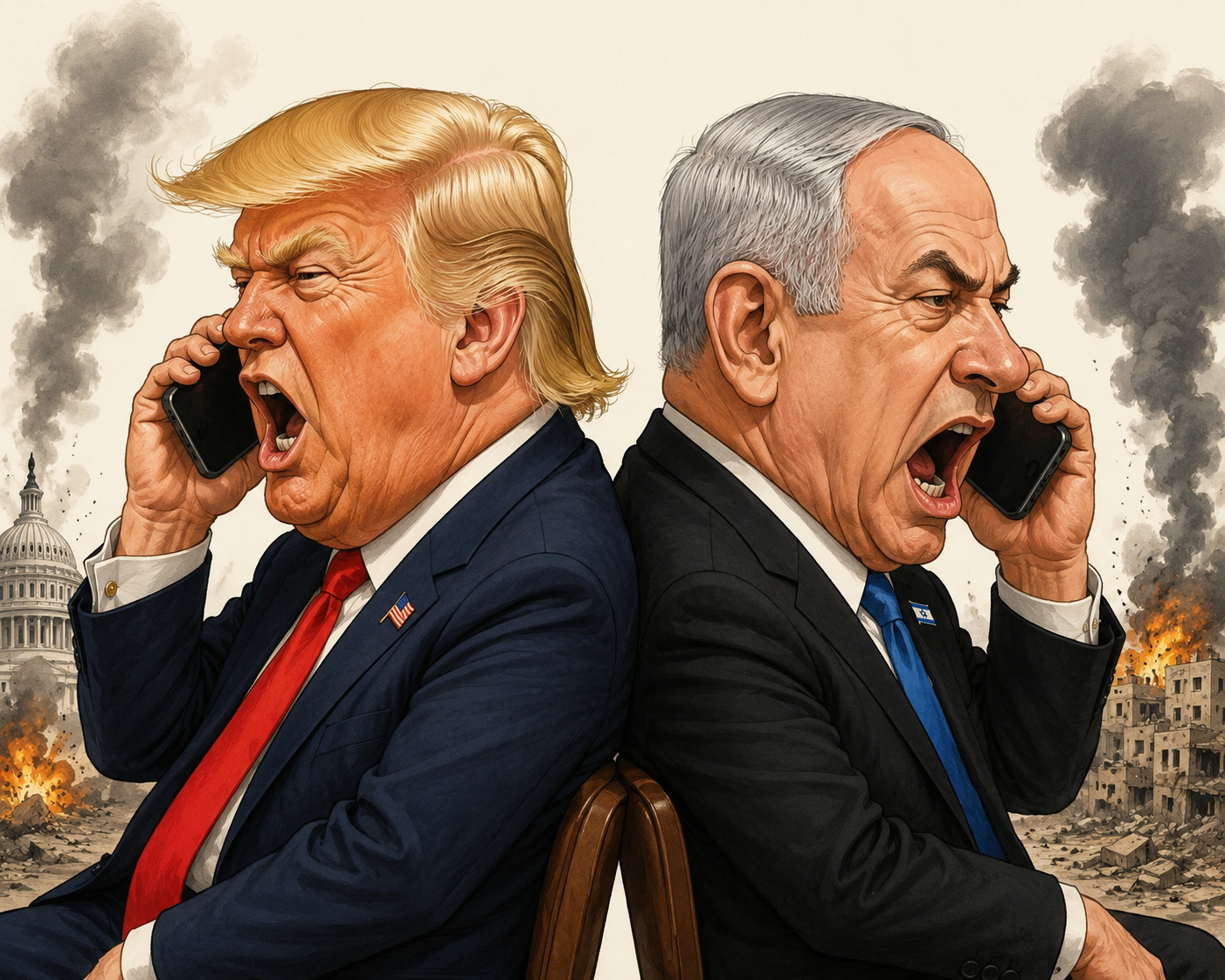
During a news conference with Israeli Prime Minister Benjamin Netanyahu in Washington on Tuesday, Trump said that the US “will take over” Gaza after relocating Palestinians elsewhere under a redevelopment plan that he claimed could turn the enclave into “the Riviera of the Middle East,” according to Anadolu.
CrossFireArabia
Palestine’s envoy to the UK on Wednesday termed US President Donald Trump’s plan to “take over” Gaza “very dangerous,” and warned that it will go far beyond Palestine.
Palestinian people are tested with genocide, mass-kill, mass-murder, mass-destroy yet the people remain as hundreds of thousands are now marching back to their homes, said Husam Zomlot.
“So, no force on earth can remove Palestinians from their homes,” he told Sky News.
His remarks came after Trump’s controversial remarks that the US “will take over” Gaza after relocating Palestinians to other countries.
The Palestinian ambassador highlighted that the future is about a two-state solution, the international consensus, ending the occupation and establishing the state of Palestine.
“If people from Gaza will go anywhere later, it will be back to their original homes inside the 1948 areas,” said Zomlot, adding Palestinians have one homeland, Palestine.
Gaza is just the “last episode” of what Trump wants to take over, the ambassador said, referring to Trump’s previous statements on Canada, Panama, and Greenland.
“We are watching global order being burnt, I think our global order is being collapsed,” he added.
The Palestinian ambassador noted that with his Gaza remarks, Trump normalized the ethnic cleansing and the idea of mass expulsion of people from their homes, which, he stressed is “very dangerous and it will go far beyond Palestine.”
“This is not just about Gaza, can you imagine a world where you can just go and claim ownership of a territory … where does it stop?” he questioned.
Zomlot said that the UK needs to “correct the gravest injustice inflicted” on Palestinians according to Anadolu.
“We need recognition of the state of Palestine immediately, Mr. Starmer, do not wait one more day,” he added.
During a news conference with Israeli Prime Minister Benjamin Netanyahu in Washington on Tuesday, Trump said that the US “will take over” Gaza after relocating Palestinians elsewhere under a redevelopment plan that he claimed could turn the enclave into “the Riviera of the Middle East.”
CrossFireArabia
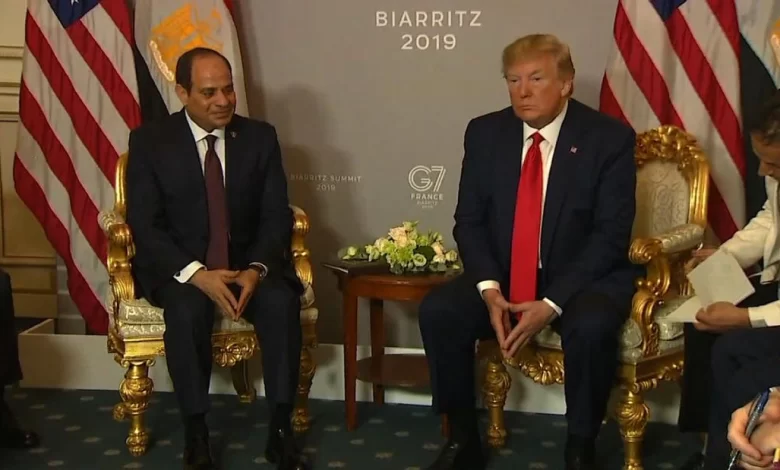
Egypt refuses to accept displaced Palestinians from Gaza, despite pressure from US President Donald Trump, US officials told the White House in recent days, according to Middle East Eye (MEE). Cairo has made it clear that it will not bow to financial incentives or political coercion.
Trump has also claimed that Jordan would take in Palestinians ahead of King Abdullah II’s visit to Washington next week. His administration’s push for forced displacement has sparked tensions with US diplomats in the region, who warned that the plan could destabilize Egypt, a key American ally.
A senior US diplomat told MEE that the White House remains “tone-deaf” to regional assessments and continues to push for the mass expulsion of Palestinians. Last week, US Secretary of State Marco Rubio discussed the issue with Egyptian Foreign Minister Badr Abdelatty, but Egypt remains firm in its refusal.
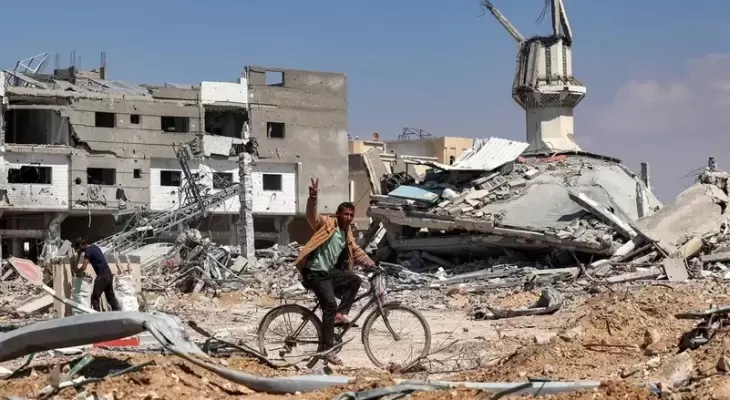
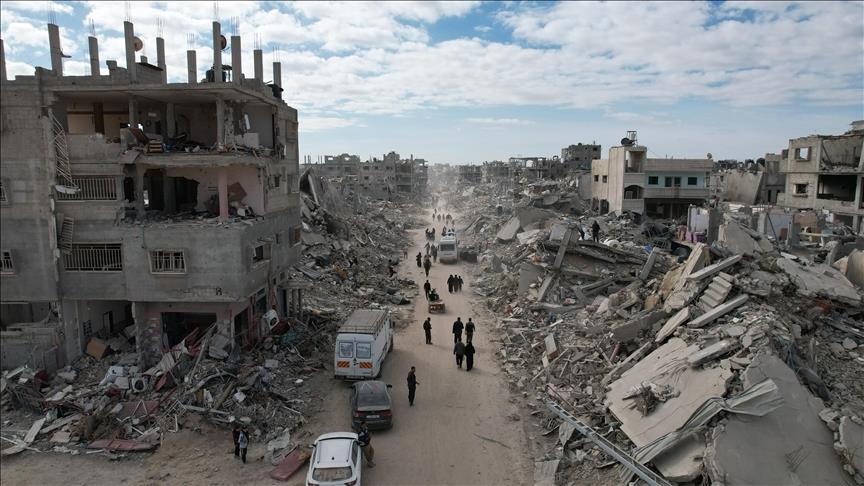
Trump reiterated his stance before a meeting with Israeli Prime Minister Benjamin Netanyahu, calling Gaza a “pure demolition site.” He suggested relocating Palestinians to other countries, saying, “If we could find the right piece of land and build them some really nice places, that would be a lot better than going back to Gaza.”
Trump initially suggested that Egypt could take in refugees temporarily, but Witkoff later dismissed the idea, calling it “preposterous” to suggest that Palestinians could return after five years.
Israel has openly pushed for Egypt to accept Palestinian refugees since its genocide in Gaza began. Egyptian officials previously called this a “red line,” but the Trump administration’s support for the plan has emboldened Israeli leaders.
Egyptian President Abdel Fattah el-Sisi condemned the proposal, calling it “an injustice that we cannot take part in.” Egyptian diplomats fear Trump may use military aid as leverage. Cairo receives $1.3 billion annually in US security assistance and is preparing for potential cuts.
Egypt’s security services organized rare protests at the Rafah border crossing last week, signaling strong opposition to Trump’s demands. An Egyptian official told MEE that the government may also allow protests outside the US embassy in Cairo.
Despite Sisi’s iron-fisted rule, he claimed last week that “if I were to ask this of the Egyptian people, all of them would take to the streets to say ‘no,’” according to the Quds News Network.
CrossFireArabia
Saudi Arabia has reaffirmed its stance on Palestinian statehood, stating that normalization with Israel will not happen without an independent Palestinian state with East Jerusalem as its capital. The Saudi Foreign Ministry issued the statement at 4:00 a.m. on Tuesday, directly contradicting remarks made earlier by US President Donald Trump.
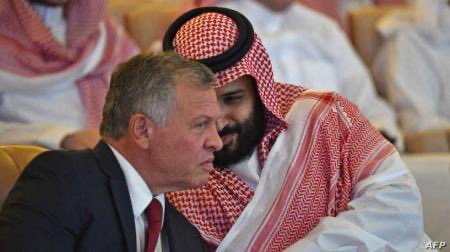
The statement emphasized that Saudi Arabia’s position on the Palestinian issue is “firm and unshakable.” It cited Crown Prince Mohammed bin Salman’s speech on September 18, 2024, during the opening of the Shura Council’s ninth session. In that speech, the crown prince made it clear that the kingdom remains committed to the establishment of a Palestinian state and will not establish diplomatic ties with Israel without it.
The ministry also referred to the extraordinary Arab-Islamic summit in Riyadh on November 11, 2024. During the summit, the crown prince reiterated Saudi Arabia’s commitment to a Palestinian state based on the 1967 borders. He also urged more countries to recognize Palestine and called on the international community to support Palestinian rights.
The Saudi statement came just hours after Trump claimed that Saudi Arabia no longer insists on Palestinian statehood as a condition for normalization with Israel. His remarks sparked speculation about a potential shift in Saudi policy, but the Foreign Ministry’s statement dismissed any such notion.
The ministry stressed that Saudi Arabia rejects any infringement on Palestinian rights. It condemned Israeli settlement expansion, land annexation, and forced displacement of Palestinians. It also called on the international community to ease the severe humanitarian suffering in Palestine.
Saudi Arabia reaffirmed that its stance is non-negotiable. “Permanent and just peace cannot be achieved without the Palestinian people obtaining their legitimate rights in accordance with international resolutions,” the statement read. The ministry also noted that this position has been clearly communicated to both the previous Biden administration and the current administration according to the Quds News Network.
CrossFireArabia
Hamas said, Wednesday, that the Palestinian people will not allow any country in the world to occupy their land or impose guardianship over them.
This came in a statement by the movement, commenting on US President Donald Trump’s latest announcement of his intention to seize the Gaza Strip after displacing Palestinians from it.
“We condemn in the strongest terms and reject Trump’s statements for the United States to occupy the Gaza Strip after displacing our Palestinian people from it,” the Hamas statement read.
It added that Trump’s views are hostile to the Palestinian people and their cause, and don’t create stability in the region and only “pours oil on the fire.”
The statement continued: “We affirm that we, our Palestinian people and their living forces will not allow any country in the world to occupy our land or impose guardianship over our great Palestinian people who have offered rivers of blood to liberate our land from occupation and to establish our Palestinian state with Jerusalem as its capital.”
Hamas called on the US administration and President Trump to retract these “irresponsible statements that contradict international laws and the natural rights of our Palestinian people in their land.”
The movement also called on the Arab League, the Organization of Islamic Cooperation and the United Nations to “convene urgently to follow up on Trump’s statements and take a firm and historic position that preserves the national rights of our Palestinian people, their right to self-determination, and the establishment of their Palestinian state with Jerusalem as its capital,” according to the statement.
Since January 25, Trump has been promoting a plan to transfer the Palestinians of Gaza to neighboring countries such as Egypt and Jordan, which was rejected by the two countries, and was joined by other Arab countries and regional and international organizations as stated in Quds Press.