 Morocco-Israel: Normalization Stops at The Top
 Albanese Calls For World Force to Protect Civilians in Gaza, West Bank
 40 Million Tons of Rubble: Gaza Ministry Faces Challenges in Removing it
 Join The Queue For The Drops
 ‘My Way Out of Insanity’






Morocco-Israel: Normalization Stops at The Top
Heba
- August 24, 2026
 Heba
Heba CrossFireArabiaCrossFireArabiaCrossFireArabiaCrossFireArabiaCrossFireArabia
 marwanHebaCrossFireArabiaCrossFireArabiaCrossFireArabiaCrossFireArabiaCrossFireArabiaCrossFireArabiaCrossFireArabiaCrossFireArabiaHebaCrossFireArabiaCrossFireArabiaHebamarwanmarwanmarwanmarwanmarwanmarwanCrossFireArabiamarwanmarwan
 Saleem Ayoub QunamarwanCrossFireArabiaCrossFireArabiaCrossFireArabiaCrossFireArabiamarwanCrossFireArabiaCrossFireArabiamarwanCrossFireArabiaHebaCrossFireArabiamarwanCrossFireArabiamarwanHebaCrossFireArabiamarwanmarwanHebaCrossFireArabiamarwanmarwanCrossFireArabiamarwanHebaCrossFireArabiaCrossFireArabiaCrossFireArabiaHebamarwanCrossFireArabiamarwanHebaCrossFireArabiaHebamarwanmarwanCrossFireArabiamarwanmarwanmarwanmarwanmarwanmarwanmarwanCrossFireArabia
Israel has withdrawn its forces from the Nitzarim axis in central Gaza as reported by different media sources. This is part of the ceasefire agreement and comes after over a year of Israeli occupation of the of the Gaza Strip and its three-month occupation of the axis.
Under the deal, Israel must evacuate its last military outposts along the axis, which has been a key Israeli military stronghold in Gaza. The withdrawal marks a significant shift, as settlers had hoped to establish a permanent presence in the area. Israeli forces will now remain only in the buffer zone and along the Philadelphi Corridor Quds News Network reported.
The area lies to the east of the Salah Al-Din Road. Once Israeli forces withdraw, no troops will remain in northern Gaza except for the 162nd Division, which has repositioned in the buffer zone near the border.
The Nitzarim axis has long been a symbol of Israeli assaults and settler ambitions in Gaza. Settlers held public rallies at its entrance, viewing it as a gateway for their colonization of the strip.
Two weeks ago, Israel partially withdrew from sections of Nitzarim to allow displaced Palestinians to return north under the ceasefire agreement. Over 500,000 have since made their way back to their wrecked homes in the north of the strip.
The withdrawal from Nitzarim highlights Israel’s failure to maintain long-term occupation of Gaza. The army had expanded the axis to 80 kilometers in length and up to 7 kilometers in depth through wiping out several neighbourhoods, establishing multiple fortified positions. However, intense resistance and political pressure forced an Israeli army retreat.
This marks Israel’s third withdrawal from Nitzarim in 20 years. In 2005, then-Prime Minister Ariel Sharon pulled Israeli forces out of Gaza. In 2009, Israel withdrew again after a three-week invasion. Now, after months of military assaults and infrastructure development, another retreat is imminent.
However, a senior Hamas official warned, Saturday, Israel’s failure to fully implement the ceasefire agreement threatens its collapse. Basem Naim, a member of Hamas’s political bureau, said the deal remains fragile because of the Israeli foot-dragging in the negotiations for the second phase of the ceasefire agreement.
“The delays and violations we are seeing could derail the agreement,” Naim said, adding that Hamas wants to avoid a return to war.
Saturday marked the exchange of a fifth group of prisoners, halfway through the first phase of the ceasefire deal. The agreement, brokered by Qatar, Egypt, and the US, is divided into three phases, each lasting 42 days. Talks on the second phase maybe starting but at a snail’s pace..
Haaretz previously reported that Israeli officers stationed along the Nitzarim axis admitted to systematically shooting any Palestinian who approached the area. Soldiers targeted civilians, including children and unarmed people, leaving their bodies exposed.
An officer told Haaretz that the army treated every person as a potential threat. “Every woman is a scout, or a man in disguise,” he said, adding that soldiers killed cyclists under the pretext of them being collaborators.
The investigation revealed that Israeli forces enforced an unmarked boundary near Nitzarim with standing orders to shoot anyone who approached. “This line appears on no map and exists in no official military order, but in Gaza, it is brutally real,” the report stated.
CrossFireArabia
Israeli newspapers are frowning on statements made by US President Donald Trump about displacing Palestinians from the Gaza Strip to neighboring countries such as Egypt and Jordan. Articles are appearing criticizing the plan as unrealistic, stating the Palestinians will not leave their land, and the Trump statements are mere “political tricks” without any real plan of action.
Not Realistic
Political analyst Avi Issacharoff confirmed the Palestinians wholehearted rejection of the plan and the continued control of Hamas over Gaza make Trump’s statements inapplicable on the ground.
The writer in Yedioth Ahronoth wrote: “Trump’s statements about displacing Palestinians sparked the imagination of a large number of Israelis. After 7 October, many wanted to see Gaza disappear and its residents leave for it to turn into a prosperous American Riviera. But the only problem is that this is not realistic.”
He believed the ideas made by Trump may merely be a political maneuver or a negotiating step with Hamas, but he stressed it “is not a real plan of action, because there is no Arab entity willing to cooperate with it, including the moderate Arab countries that strongly oppose it.”
He explained Arab countries such as Egypt and Jordan, while receiving American aid, are more concerned about the influx of Palestinian refugees into their territories whilst Saudi Arabia and the United Arab Emirates have also expressed their opposition to the idea.
Historical Wound
As for the Palestinian side, Issacharoff stressed no Palestinian party could agree to a displacement plan, noting the idea of mass departure is linked in Palestinian memory to the 1948 Nakba, which remains a historical wound.
The political analyst also warned of the repercussions of the displacement plan, as it could strengthen extremism within Israel and hinder ongoing efforts to complete any deal. He said, “There is doubt Trump’s statements will lead to the release of prisoners, but…hasten the resumption of fighting, which will condemn Israel to more months of war in Gaza.”
He added: “As long as there is no alternative to Hamas, any military operations will only lead to more destruction and killing, without achieving the desired goal of its collapse Hamas. The result will be more Israeli casualties and the continuation of the war without a clear political horizon.”
No Deportation From Gaza
He concluded by stressing “flattening Gaza and deporting its residents is an unfeasible dream, and is merely a gimmick by an American president seeking to prove his superiority over others.” He added Hamas still controls the Gaza Strip, and no one threatens its existence.
For his part, Israeli analyst Uri Misgav told Haaretz: There will be no “deportation” from Gaza, and the Americans will not build a “Riviera” there. There is no plan, no preparatory work, no point, and no one will receive two million Palestinians on their land. We are not in the days of World War II. Trump is babbling meaninglessly, this is his style. He has suggested in the past building hotels in North Korea instead of nuclear missiles. Since his election, he has talked about invading Panama, seizing Greenland, and annexing Canada. We are old enough to remember how he once said during a meeting with Netanyahu about annexing the West Bank to Israel.
Experts Continuous Media Bombardment with Empty Speech
“It is insulting to intelligence to take Trump’s random statements seriously,” Misgav told Haaretz. “He is completely mentally unstable, and we live in an era of accelerating decline. It is true that Netanyahu is also a psychopath with no conscience, but he is not stupid. Even he froze in discomfort when Trump began raving about evacuating Gaza, while Netanyahu lavished embarrassing praise on him.”
“It is sad to see large parts of the Israeli media cooperating with this farce, and engaging in discussions at the level of a seventh-grade social studies lesson, about deportation – for or against. Even before the moral dimension, this basically reflects superficiality and intellectual laziness. They are very easy to manipulate. And here Trump and Netanyahu are already experts in “continuous media bombardment with empty talk about things that will never happen – tomorrow, Trump will not even remember what he was talking about.”
On the other hand, the Times of Israel newspaper ruled out the possibility of Trump’s plan being implemented in the near future, as the residents of Gaza, who survived 15 months of violent Israeli attacks, do not want to live in exile, and Trump will not send American forces to force some two million Palestinians to leave the Strip.
Egypt and Jordan will also not agree to the plan, despite Trump’s confidence that their dependence on American aid and military support gives him enough leverage to pressure them to accept large numbers of Gazan refugees. But this plan crosses the red lines of both countries.
Great Concern in Jordan
The newspaper indicated that Trump’s plan could raise great concerns in Jordan, as it already has a majority population of Palestinian origin, so the influx of hundreds of thousands of Gazan refugees could destabilize the country, which is already facing internal political challenges.
On the other hand, Egypt sees the influx of large numbers of Palestinians from the Gaza Strip as an existential threat to its own national security.
The newspaper reported that there are many issues on which Trump and Netanyahu can cooperate, such as ending the Iranian nuclear program, strengthening Israel’s regional position, and confronting international institutions such as the International Court of Justice and some UN agencies. Therefore, wasting political efforts on Trump’s plan for Gaza may not be the best option.
In the same context, a report broadcast by Israel’s Channel 12 stated that Trump’s plan to evacuate the residents of Gaza and place it under American control faces legal, security, and economic obstacles, and could lead to a long-term war in the Middle East.
War Crime
The report quoted international law experts warning that the mass displacement of Palestinians could constitute a “war crime” under the Geneva Conventions, sparking widespread international criticism.
The channel indicated that the cost of implementing the plan could reach tens of billions of dollars, which sparked objections even within the Republican Party, as some refuse to fund a project of this size. The plan also met with widespread opposition within the United States, as Democrats considered it a violation of international law.
As for the American Wall Street Journal, it said that Trump’s proposal regarding control of Gaza “stunned his allies and Middle East experts, and left many questions unanswered.”
The newspaper added that “any American military deployment of this kind would be long-term, something Trump has repeatedly condemned,” expressing its belief that the proposal “would be met with rejection in the Arab world.”
For its part, the American Time magazine said that Trump’s proposal “was met with sharp criticism,” noting that “some Democrats described the proposal as crazy and morally inappropriate.”
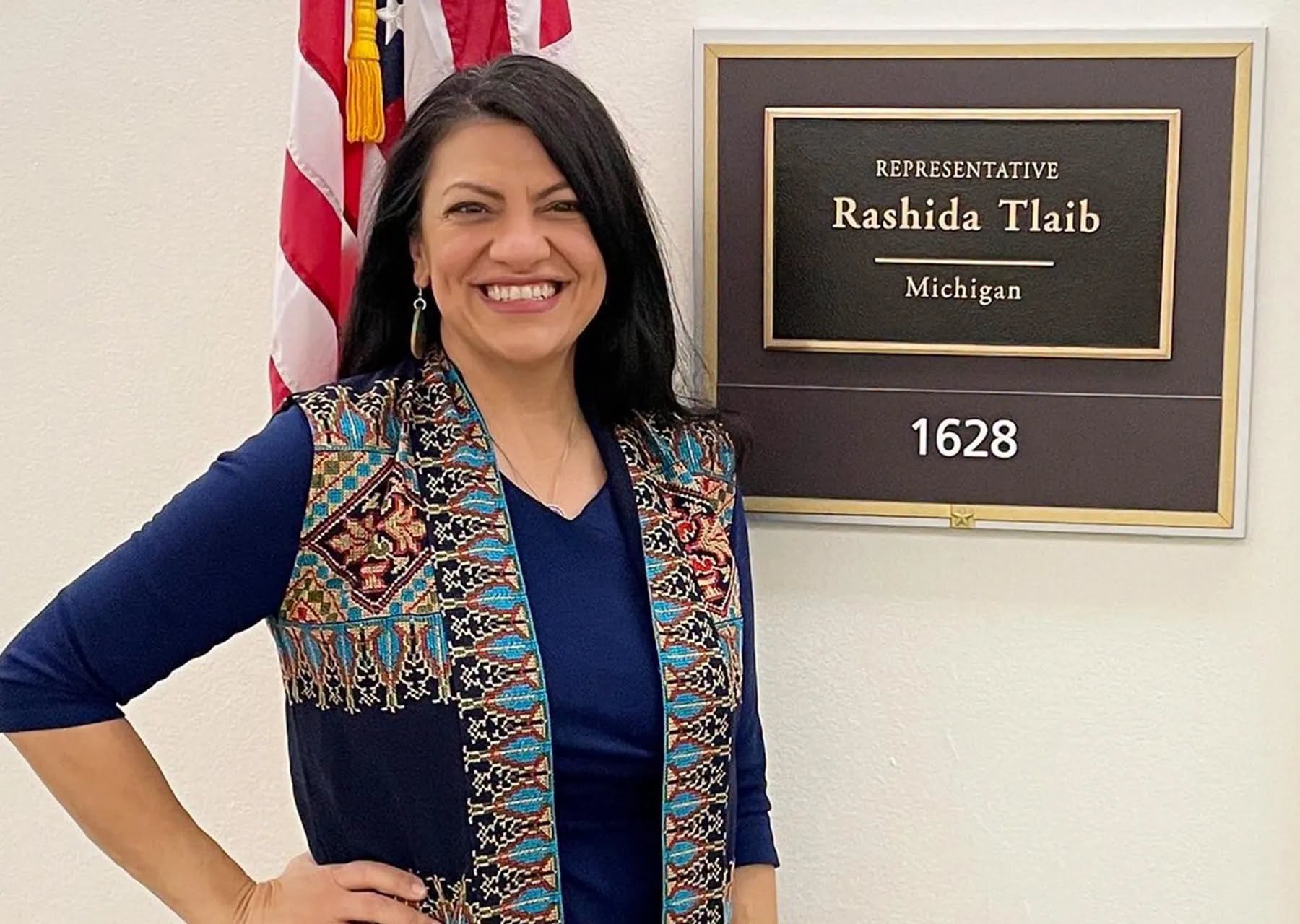
The magazine indicated that Democratic Representative Rashida Tlaib condemned the plan and considered it a purge Ethnically, “while Netanyahu expressed interest in the idea and saw that it was worth studying.”
Finally, the American Foreign Policy said that what President Trump is planning for Gaza “will be a disaster for everyone, especially Jordan, which takes the president’s talk about the forced displacement of Gaza residents very seriously.”
The magazine concluded by saying that what Trump does not know “is the extent of the damage that will be inflicted on American interests if Jordan is exposed to any disturbances as a result of his plans,” as reported by the Shihab news agency.
CrossFireArabia
Breaking | QNN correspondent reports that the injured Al Jazeera journalist Fadi Al-Wahidi will leave the Gaza Strip for treatment abroad after months of being prevented from receiving treatment by the Israeli occupation.
Al-Wahidi, who was working as a cameraman, was shot and injured by Israeli occupation forces while covering Israeli attacks in the Jabalia refugee camp during the annihilation plan that lasted for more than three months.
He will be transferred via the Rafah crossing to an Egyptian hospital to begin his treatment journey.
Over 200 journalist have been killed in Gaza by the Israeli war machine and over 400 have been injured.
CrossFireArabia
Trump and Netanyahu are openly discussing the ethnic cleansing of Palestinians, framing #Gaza as a ‘demolition site’ and questioning why its people would want to return. This isn’t policy; it’s genocide. And the U.S. is actively making it happen.
CrossFireArabia
Former Shin Bet chief Carmi Gillon said if the commander of the Izz Aldin Al Qassam Brigades, Muhammad Deif, was an Israeli, he would have been a senior commander of the Israeli army’s special forces.
Gillon added – in Al Jazeera’s “Fawq Al Sulta (Above Authority)” program broadcast on 7 February – he was determined to kill Deif when he was spy chief and that Deif wanted to have him killed, describing him as a highly competent opponent.
This statement reflects an unprecedented appreciation by an Israeli general for a Palestinian leader, especially in light of the war that lasted 15 months before stopping after the ceasefire agreement.
Gillon pointed out that Deif possesses exceptional leadership qualities, which earned him respect even among his opponents.
Abu Obeida, the Qassam Brigades spokesman – the military wing of the Islamic Resistance Movement (Hamas) – “announced on 30 January, 2025, the Al Deif, and a group of senior mujahideen members were killed.
Abu Obeida that besides Deif, a number of other leaders, most notably Marwan Issa, Deputy Chief of Staff of the Qassam Brigades, the Commander of the Weapons and Combat Services Section, Ghazi Abu Tama’a, the Commander of the Human Resources Section, Raed Thabet, and the Commander of the Khan Yunis Brigade, Rafeh Salama were also martyred according to JO24.