 Pezeshkian: ‘Iran Will Not Surrender to Bullies’
 Israeli Soldiers Enforce Closure of Al Aqsa
 1 in 7 Displaced in Lebanon – NRC
 Hormuz: End of an Era of Martime Dominance
 Gaza Faces Massive Dust Storm

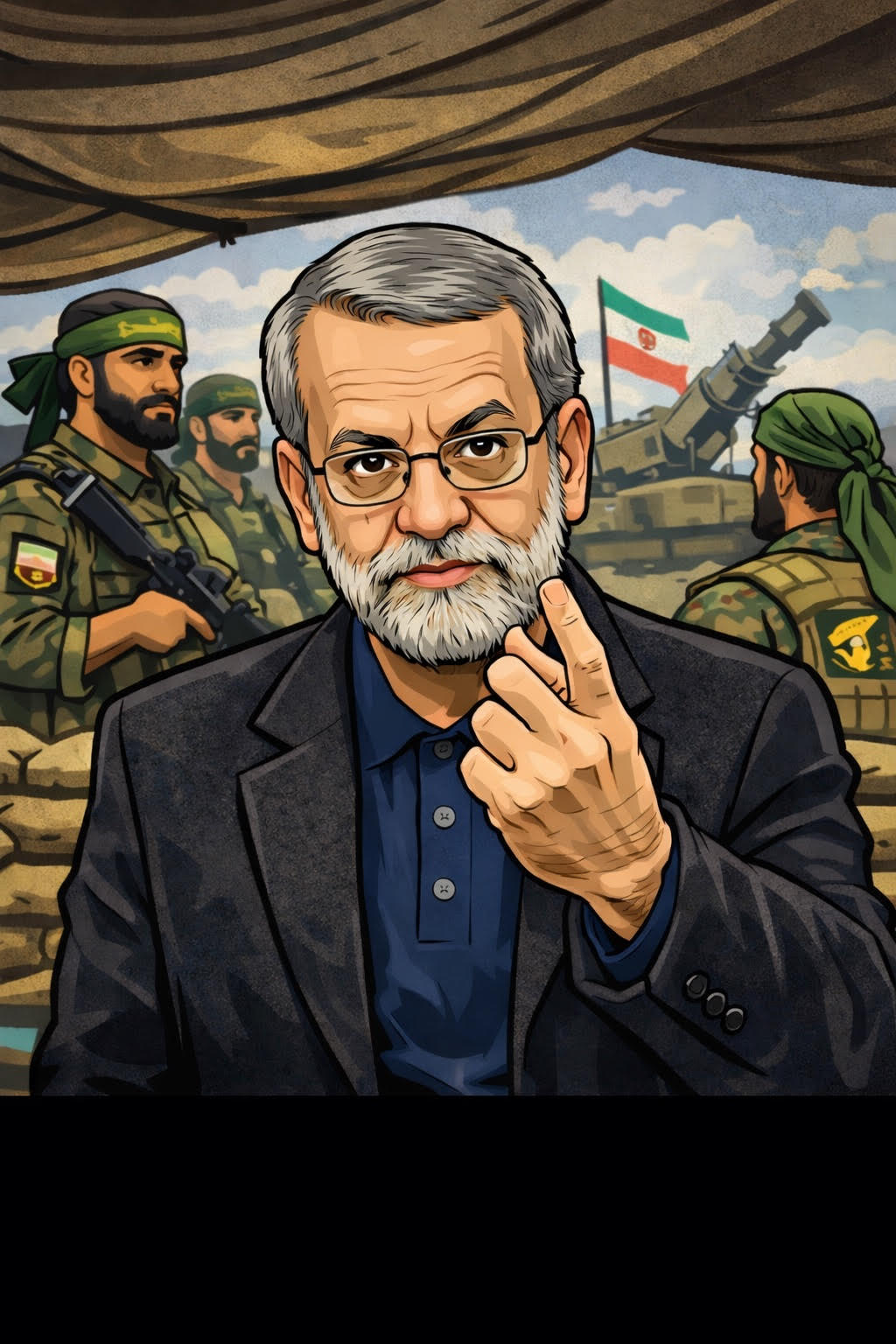
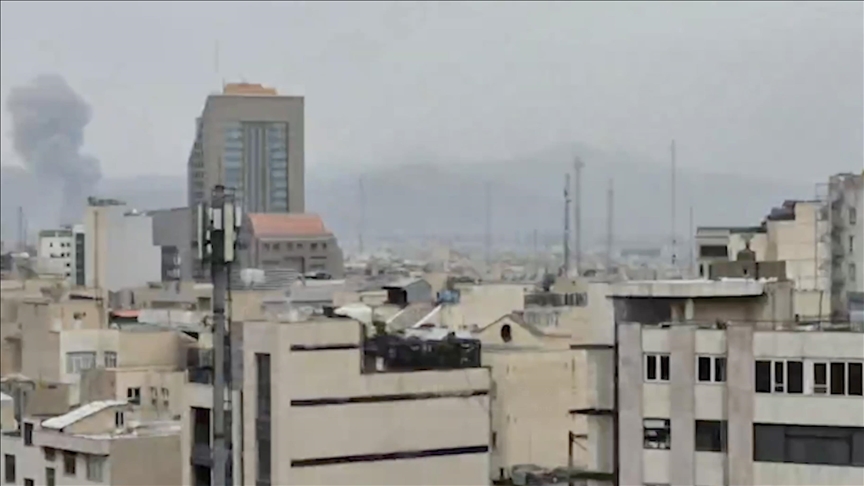
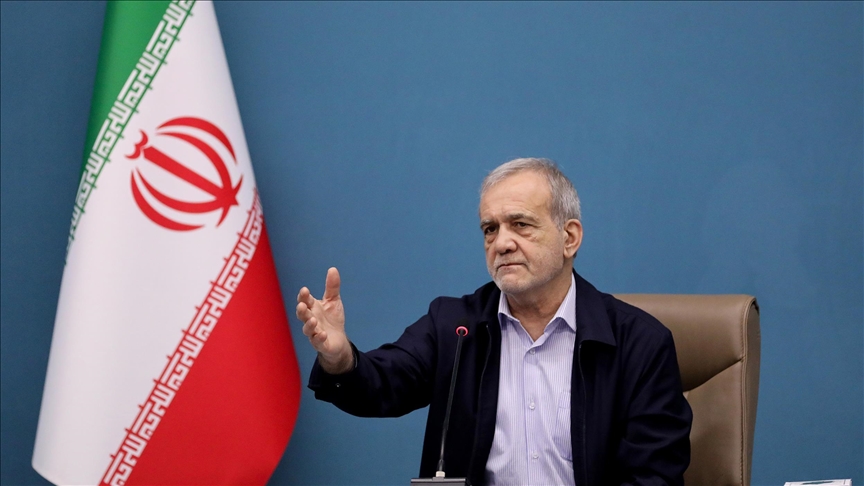
Pezeshkian: ‘Iran Will Not Surrender to Bullies’
 CrossFireArabia
- March 16, 2026
 CrossFireArabiaCrossFireArabiaCrossFireArabiaCrossFireArabiaCrossFireArabiaCrossFireArabiaCrossFireArabiaCrossFireArabiaCrossFireArabiaCrossFireArabiaCrossFireArabiaCrossFireArabiaCrossFireArabiaCrossFireArabiaCrossFireArabiaCrossFireArabiaCrossFireArabiaCrossFireArabiaCrossFireArabiaCrossFireArabiaCrossFireArabiaCrossFireArabiaCrossFireArabiaCrossFireArabiaCrossFireArabiaCrossFireArabiaCrossFireArabiaCrossFireArabiaCrossFireArabiaCrossFireArabiaCrossFireArabia
 Saleem Ayoub QunaCrossFireArabiaCrossFireArabiaCrossFireArabiaCrossFireArabiaCrossFireArabiaCrossFireArabiaCrossFireArabiaCrossFireArabiaCrossFireArabiaCrossFireArabiaCrossFireArabiaCrossFireArabiaCrossFireArabiaCrossFireArabiaCrossFireArabiaCrossFireArabiaCrossFireArabiaCrossFireArabiaCrossFireArabia
The Organisation of Islamic Cooperation (OIC) on Saturday condemned remarks by US Ambassador to Israel Mike Huckabee, warning that his comments about Israeli expansion in the Middle East threaten regional security and stability.
Mike Huckabee argued that Israel has a biblical right to the land stretching from the Nile to the Euphrates rivers, saying on a podcast released Friday: “It would be fine if they (Israel) took it all.”
Huckabee made the remarks in an interview with US journalist Tucker Carlson, during which he defended Israel’s actions in Gaza and voiced support for the idea of “divine providence” giving control of the region to Israel.

After Huckabee claimed Israel had a divine right to vast portions of the Middle East, Carlson asked him: “What land are you talking about?” Interpretations of the biblical phrase “river of Egypt” vary, with some scholars identifying it as a riverbed in the Sinai Peninsula and others as the Nile.
“It would be fine if they took it all,” Huckabee replied, referring to Israel’s biblical right to the territory stretching from the Nile River to the Euphrates.
‘Dangerous and irresponsible’
The OIC described Huckabee’s remarks in a statement as “dangerous and irresponsible,” calling them an unacceptable call for the expansion of Israel, the occupying power, and the seizure of additional Palestinian and Arab lands.
The comments were based on “a false and rejected historical and ideological narrative and claims” that violate state sovereignty, diplomatic norms, principles of international law, UN resolutions, and the UN Charter, the group added.
The organisation warned that such extremist rhetoric would fuel further extremism and embolden Israeli policies centered on displacement, settlement expansion, and attempts to impose annexation on occupied Palestinian territory.
It said these measures “threaten security and stability in the entire region.”
Supporting legitimate rights
The bloc reaffirmed its unwavering support for what it described as the legitimate rights of the Palestinian people, foremost among them the right to self-determination and the establishment of an independent, sovereign state on the June 4, 1967 borders with East Jerusalem as its capital.
Huckabee, named US ambassador to Israel in April 2025, is an evangelical Christian who has previously spoken of expansionist claims based on what he described as a “divine right” for Israel in the West Bank.
Israeli Prime Minister Benjamin Netanyahu told news channel i24 last August that he feels “very attached” to the vision of a Greater Israel. He said he considers himself “on a historic and spiritual mission,” including “generations of Jews that dreamt of coming here and generations of Jews who will come after us.”
Greater Israel is a term used in Israeli politics to refer to the expansion of Israel’s territory to include the West Bank, Gaza, and Syria’s Golan Heights, with some interpretations also including Egypt’s Sinai Peninsula and parts of Jordan.
Arab countries
Arab countries also separately strongly condemned the statement as “absurd and provocative”, unacceptable, and contrary to international law.
Jordan
In a statement, Jordan’s Foreign Ministry called the remarks “absurd and provocative”, saying they “constitute a violation of diplomatic norms, an infringement on the sovereignty of states in the region, and a blatant breach of international law and the UN Charter.”
The ministry added that the comments “contradict the publicly declared position of US President Donald Trump rejecting annexation of the occupied West Bank.”
The ministry called for “the concerted efforts of all parties to consolidate stability in Gaza and to implement the US president’s plan and UN Security Council Resolution 2803, instead of issuing absurd, escalatory, irresponsible statements that carry no legal value or effect.”
Egypt
Egypt’s Foreign Ministry condemned the statements, describing them as a “flagrant departure” from the principles of international law and the UN Charter.
Cairo expressed surprise at the remarks, saying they contradict the vision put forward by US President Trump and the related 20-point framework aimed at ending the genocidal war in Gaza, as well as the outcomes of a Board of Peace conference held in Washington on Feb. 19.
Egypt reiterated that Israel has no sovereignty over occupied Palestinian land or any other Arab territories, stressing its categorical rejection of any attempts to annex the West Bank, separate it from Gaza, or expand settlement activity in the occupied Palestinian territory.
Saudi Arabia
Saudi Arabia’s Foreign Ministry also condemned “in the strongest terms” and fully rejected Huckabee’s “reckless remarks,” which violate international law, the UN Charter, and diplomatic norms, calling them a dangerous precedent when issued by a US official and dismissive of the region’s long-standing relations with the US.
A ministry statement warned that such extremist comments “threaten international peace and security” by antagonising countries and peoples in the region and undermining the foundations of the international order.
Saudi Arabia called on the US State Department to clarify its position on a rejected proposal and reiterated its firm stance in rejecting any infringement on states’ sovereignty, borders, and territorial integrity.
The statement stressed that the only path to a just and comprehensive peace lies in ending the occupation based on a two-state solution and establishing an independent Palestinian state on the 1967 borders with East Jerusalem as its capital.
Kuwait
Kuwait’s Foreign Ministry also rejected the US ambassador’s remarks, saying in a statement that they represent a clear violation of international law and relevant international legitimacy resolutions, including Resolution 2803, and undermine states’ sovereignty and territorial integrity.
It said the comments directly contradict President Trump’s stated vision and the related 20-point peace framework, warning that legitimising control over others’ territory would inflame tensions and weaken efforts to restore stability.
Kuwait reaffirmed that Israel holds no sovereignty over the occupied Palestinian territory or any other Arab land and rejected attempts to annex the West Bank, separate it from Gaza, or continue settlement expansion.
It reiterated its support for the Palestinian people’s inalienable right to self-determination and the establishment of an independent state on the June 4, 1967, borders with East Jerusalem as its capital, in line with international resolutions and the Arab Peace Initiative.
Iraq
Iraq’s Foreign Ministry said in a statement that the remarks constitute a serious overreach that contradicts the principles of international law and the UN Charter and infringes on the sovereignty, independence, and territorial unity of states.
Baghdad stressed its firm position in support of state sovereignty and its rejection of any policies based on domination or the imposition of a fait accompli, calling for respect for international law to strengthen regional security and peace.
Oman
Oman’s Foreign Ministry also condemned the remarks, describing them as an illegitimate acceptance of imposing control over Arab lands, including the occupied Palestinian territory.
Muscat said the comments were contrary to international law and the UN Charter, warning that the rhetoric undermines prospects for peace and threatens regional security and stability.
The ministry reiterated Oman’s firm support for the Palestinian people’s right to self-determination and the establishment of an independent state on the June 4, 1967, borders with East Jerusalem as its capital, and for ending the occupation of all Arab territories. – TRTWorld
CrossFireArabia
EDITOR’S NOTE: I wrote this article “On Arabic” in 2008 and posted on hackwriters.com. I am reprinting it here for relvance and archival use
Compared with English, Arabic is an easy read if it is written well. When you look at English, the perception of the language, written and oral, took centuries of development from archaic structures associated with the old English of Geoffrey Chaucer, passing to Shakespeare and Christopher Marlow to George Elliot, Charles Dickens, Virginia Wolfe as well as many others and not mentioning the new contemporaries.
With Arabic it’s different. Although there may have been stages of development through out the centuries, it seems the clarity of the Arabic language was a one-time affair, represented in the Holy Koran brought down from the skies through Angel Gabriel to Prophet Mohammad in the 7th century and passed on to the Muslim community.
The Koran represented a basis for the Arabic language as it is spoken and written today. Unlike English, back in the 7th century Arabic was written in a clear, transparent, effective tone that involved action, and designed from every member of the social community, rich and poor, educated and illiterate, a source of knowledge and speech and continued to be so as it passed down through the centuries.
With English it was different. First if all, the language itself was derivative from other linguistic structures like Germanic, Latin, and French, many of which have said this is what made it stronger; Secondly English was helped by the issue of economic development as new inventions, processes and way of doing things required the development of new words, terminologies and syntax which evolved from the 17th century onwards.
Today some have been known to criticize Arabic for failing to be innovative, or developing to meet the needs of modernization and even globalization, with its inability to produce new words and terminologies to pace with the development going on in the region and the world.
However, one of the points that has to be clarified is that as these inventions came from the western countries and as communicated in English, the language proved more flexible in coming up with new words and terms, as opposed to the Arabic language that adopted a reactive approach with linguists from the region acting haphazardly in their word formations rather than following a methodical pattern.
In the process as well, we tend to get used to hearing the words and terminologies in say the English language and when we hear their equivalents in other languages such as Arabic, as there is a sense of word creation even in translations, it becomes odd and foreign simply because our ears have got used to the English pronunciation.
But this is a different view related to globalization, how much are we as Arabs integrated into the international system, how much we take from it, what do we take, what do we buy, our consumer habits and trends and indeed, how much do we produce and contribute to world society.
While this in turn becomes related to our language, its use, how much we mix words, English-Arabic, Arabic-English, the fact of the matter is that the language itself, spoken by about 300 million people in 22 Arab countries and about a 1.5 billion in Muslim countries who read the Koran in Arabic, says a great deal.
Arabic is a cogent force, its simple, attractive and gets the point across in as a logical manner as possible. It’s easy to read and to understand. It’s structure is less complex as say French and German which are grammatically more demanding than the English language.
However, just like any other language, writing in Arabic has to be learnt, it’s a professional skill; that’s why today there is an endless beating about the bush were getting the idea across is deliberately pumped and inflated and there is much hankering because of political considerations relating to ruler, government, state, security apparatuses and so on.
These considerations are over-riding and smack directly with the professionalism of writing and the way the writing of Arabic should be as passed on and continued through out the holy Koran which is sometimes used as a source of criticism by western writers and pedagogics who claim the Arabic language lacks the basis for producing new words as do the other languages.
But when Arabic is spoken and written as part of the social community there is a sense of modernist continuum as expressed in its words, expressions, figures of speech and syntax found in the structure of the language.
Nowhere is this more emphasized than it is in the Koran. Written in the 7th century, the Koran is timeless in its spiritual message, a modernist document in its approach with words, phrases and expressions that apply as much today as when it was handed down, memorized and collectively written.
Words and expression apply as much then as they apply today. The word “car” for instance is used in one of its Suras (chapters) to signify a caravan route whereas its use today implies a vehicle, and striking the reader as if you are reading a modern document about social relations, economy, authority, and kinship.
The style of language appears to be modernist as well and not with case as it is say with the Bible that is written in old English, not as old as the language used by Chaucer, but is hard to fathom just the same.
That has proved problematic for the Koran. When translated into English translators often use the kind of language that is employed by the Bible, which does not reflect the actual modernist style of the Koran for the lucidness of the holy document becomes lost and replaced by an archaic and medieval structure once found in the language, although English has moved on tremendously.
© Marwan Asmar May 2008
CrossFireArabia
Conservative US podcaster Tucker Carlson and his staff were briefly detained by Israeli security officials Wednesday shortly after he conducted an interview with US Ambassador to Israel Mike Huckabee, the Daily Mail reported.
Carlson had traveled to Tel Aviv for a sit-down with Huckabee, who had challenged him to an in-person conversation following an online dispute over Israel’s treatment of Christians.
Shortly after the interview, Israeli airport security confiscated the group’s passports and took Carlson’s executive producer into a separate room for questioning, the Daily Mail reported.
“Men who identified themselves as airport security…demanded to know what we spoke to Ambassador Huckabee about,” Carlson told the outlet. “It was bizarre. We’re now out of the country.”
A US Embassy spokesperson in Israel pushed back on the account, saying Carlson had not been detained and had instead gone through routine passport control, the same process applied to “countless visitors to Israel, including Ambassador Huckabee and other diplomats.”
The Daily Mail said it reached out to both the White House and Israeli Prime Minister Benjamin Netanyahu’s office for comment but received no immediate response.
CrossFireArabia
Israel said Monday that it will give a 60-day ultimatum for the Palestinian group Hamas to disarm, threatening to resume war if the Palestinian group fails to comply.
Hamas “will have to give up all of its weapons,” including rifles, Israeli Cabinet Secretary Yossi Fuchs said during a conference in Jerusalem, as cited by The Times of Israel news portal.
Fuchs claimed that the 60-day period was asked by the US administration.
“We are respecting that,” he said.
Without confirming when the ultimatum will exactly start, Fuchs said it might begin with the Feb. 19 meeting of US President Donald Trump’s Board of Peace.
“We will evaluate it,” Fuchs said. “If it works, great. If not, then the IDF (army) will have to complete the mission.”
There was no immediate comment from Hamas or Washington on the Israeli claim.
A US-backed ceasefire agreement has been in place in Gaza since Oct. 10, halting Israel’s two-year war that has killed more than 72,000 people, mostly women and children, and injured over 171,000 others since October 2023.
Since the agreement took effect on Oct. 10, Israeli forces have committed hundreds of violations through shelling and gunfire, killing 603 Palestinians and injuring 1,618 others, according to Gaza’s Health Ministry.
The second phase of the ceasefire agreement began in mid-January and includes provisions related to disarming Hamas and other Palestinian factions in Gaza.
Hamas has rejected calls to surrender its weapons, proposing instead that they be “stored or frozen.” The group stresses that it is a resistance movement against Israel, which the UN considers the occupying power in Palestinian territories according to Anadolu.
CrossFireArabia
At least 1,007 Palestinians sports people were killed and 265 facilities destroyed during Israel’s genocidal war on the Gaza Strip since October 2023, the Palestinian Olympic Committee said Monday.
Addressing a press conference, Asaad Al-Majdalawi, the committee’s vice president, said that 45 women were among the victims.
He also reported damage to 265 sports facilities across the Gaza Strip, including 184 completely destroyed and 81 others partially damaged.
“This destruction has deprived thousands of young people and adolescents of their right to train and practice sports,” he added.
Majdalawi said the losses extend beyond statistics to include psychological and social impacts as trauma among athletes, disruption of sports development programs, reduced professional opportunities and the loss of income for many workers in the sector.
A US-backed ceasefire agreement has been in place in Gaza since Oct. 10, halting Israel’s two-year war that has killed more than 72,000 people, mostly women and children, and injured over 171,000 others since October 2023.
Since the agreement took effect on Oct. 10, Israeli forces have committed hundreds of violations through shelling and gunfire, killing 603 Palestinians and injuring 1,618 others, according to Gaza’s Health Ministry according to Anadolu.