Military Expert: Iran Plans for Long Battle

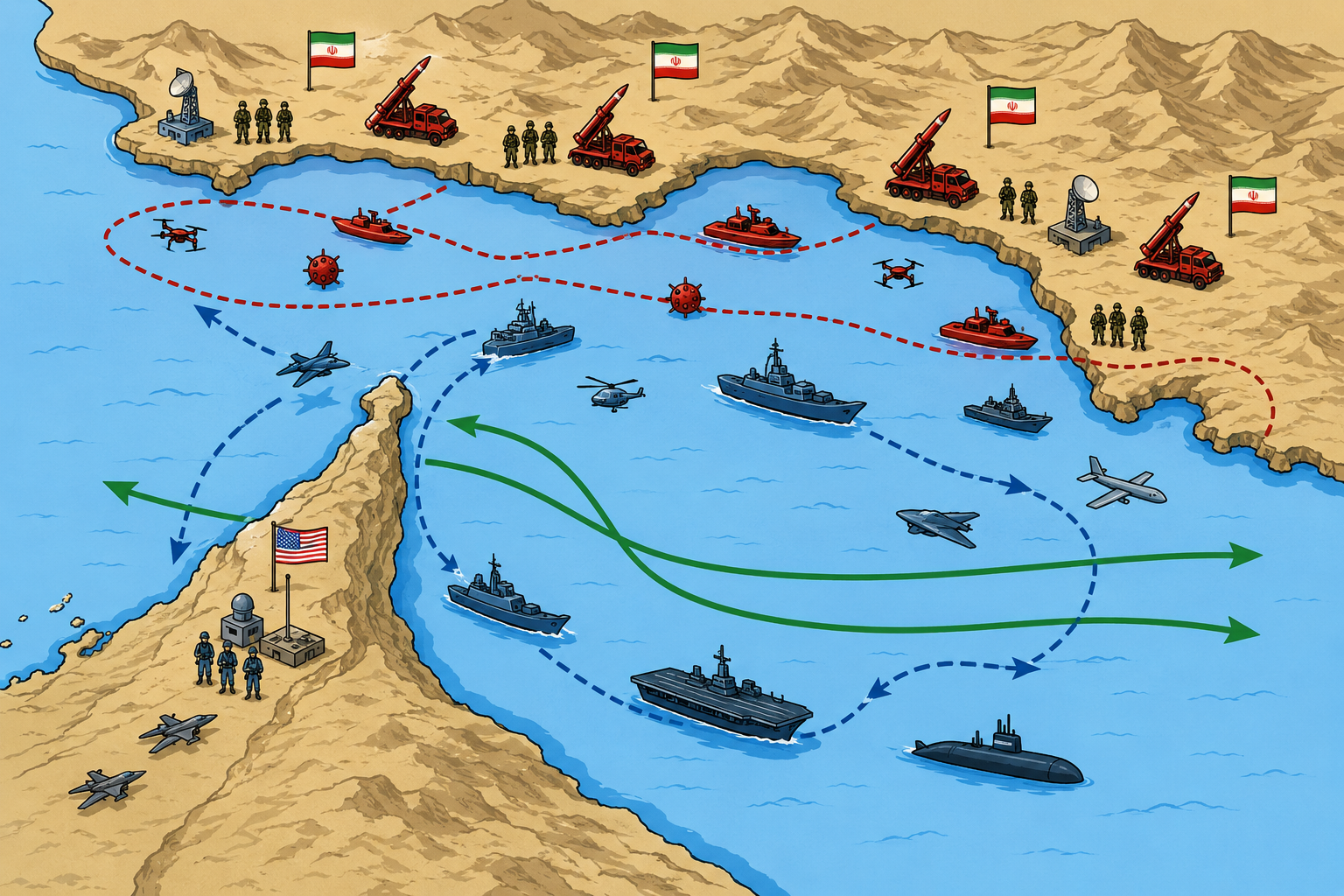
Military and strategic expert Major-General Fayez al-Duwairi believes that Iran is planning a long-term war, while Washington and Tel Aviv are planning to stop the war as quickly as possible, using the principle of “force imposes peace.”

US President Donald Trump announced early Sunday morning that US forces carried out a successful airstrike on three nuclear facilities in Iran. He noted that the sites bombed included Fordow, Natanz, and Isfahan, hours after several US Air Force B-2 bombers took off from a base in the United States and crossed the Pacific Ocean.

In response, Iran declared the US attack on its nuclear facilities in Fordow, Natanz, and Isfahan a “brutal act that violates international law,” and called for an emergency meeting of the Security Council to condemn the attack.

Major General al-Duwairi said that Iran’s strikes against Israel today were not a response to the US strike. He described the response as clear, powerful, and effective, and a clear message from the Iranian Revolutionary Guard that Iran has the ability to respond and continues to rely on timing, diversity, and a refusal to wait.

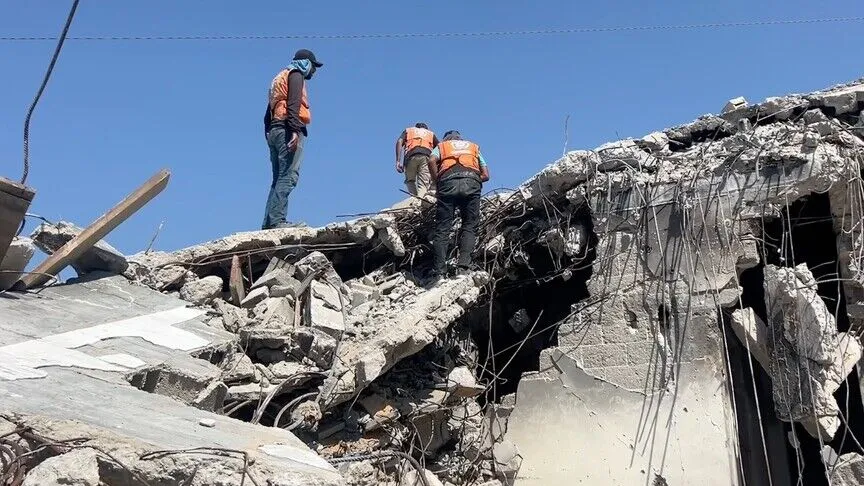
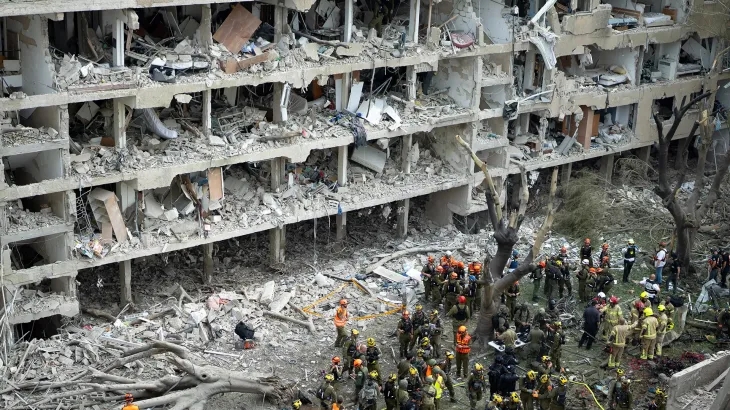
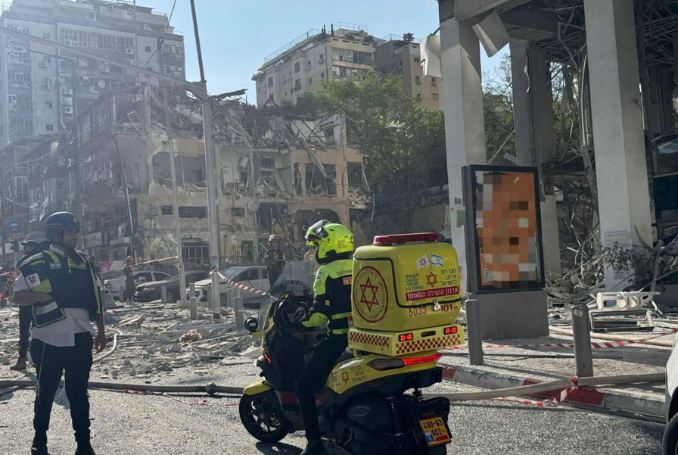
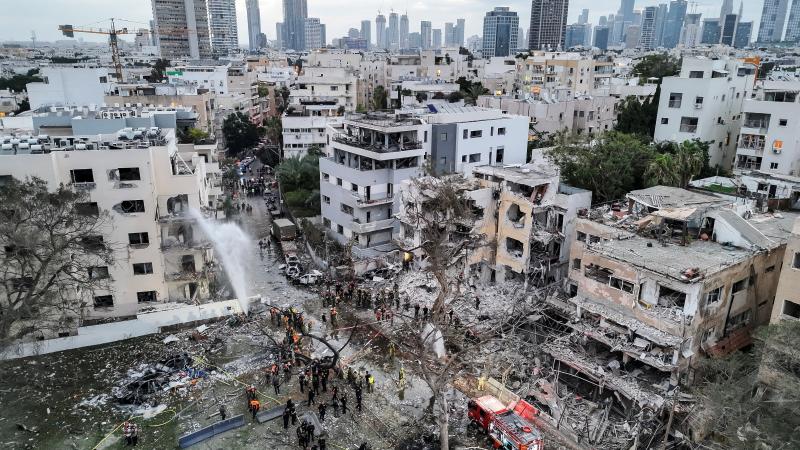
Iran launched two missile salvos at Israel on Sunday morning, causing extensive damage to several sites. This came hours after the US Air Force bombed three Iranian nuclear facilities.

According to Al-Duwairi, in its response to Israel, Iran is obligated to rationalize the number of missiles, focus on their type, and find loopholes through which they can deliver them to their targets. It must also utilize its capabilities in an optimal and intelligent manner, as it is unable to confront Israel and the United States on an equal footing, given the balance of power.

Characteristics of the “Khaybar Shekan” missile that Iran used today, Major General Al-Duwairi explained that this missile is considered one of the most modern missiles and that its official announcement began in 2022. He noted that it has historical and ideological connotations, as its name means “Khaybar Breaker,” a reference to the Battle of Khaybar that led to the expulsion of the Jews from the Arabian Peninsula.

The Khaybar Shekan missile features a multi-warhead, maneuverable, solid-fuel missile with a reduced weight. Its speed ranges between Mach 7 and 9, its range is 1,450 kilometers, and it carries over 1,000 kilograms of high explosives. The Khaybar Shekan is also a derivative of the Fateh 110 missile.

On the other hand, Major General Al-Duwairi points out the importance of focusing Iranian missiles on central and northern Israel, given that these areas represent Israel’s strategic center of gravity.

Since June 13, Israel, with US support, has been waging an aggression against Iran, targeting nuclear facilities, missile bases, military leaders, and nuclear scientists.

Tehran responded by launching ballistic missiles and drones into Israeli territory, in the largest direct confrontation between the two sides amid rounds of negotiations as reported in Jo24.

Continue reading
UN Condemns US Attack on Iran’s Nuk Sites

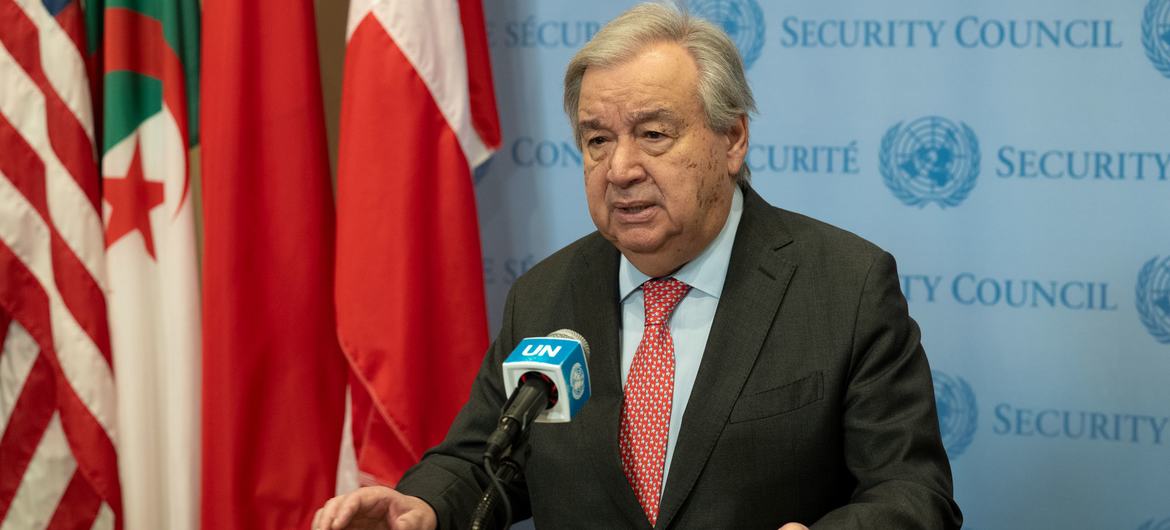
The UN Secretary-General António Guterres described the United States’ bombing of three nuclear sites in Iran as a “dangerous escalation” on Saturday following eight days of deadly strikes and counter strikes between Tehran and Tel Aviv.

“I am gravely alarmed by the use of force by the United States against Iran today,” said the UN chief, reiterating that there is no military solution.

This is a dangerous escalation in a region already on the edge – and a direct threat to international peace and security.”

President Donald Trump delivered a televised address to the nation from the White House at 10pm local time and said that Iran’s nuclear facilities at Fordo, Natanz and Isfahan had been “totally obliterated” describing the long-range bombing raid as a “spectacular military success.”

President Trump called on Iran’s leadership to now “make peace” and return to negotiations over its nuclear programme or suffer a far greater wave of attacks.

Iranian authorities have yet to confirm the extent of the damage to the three sites in central Iran. Earlier in the day, Iran’s foreign minister reportedly warned the US against any involvement in the Iran-Israel conflict which erupted on 13 June.

Deadly strikes

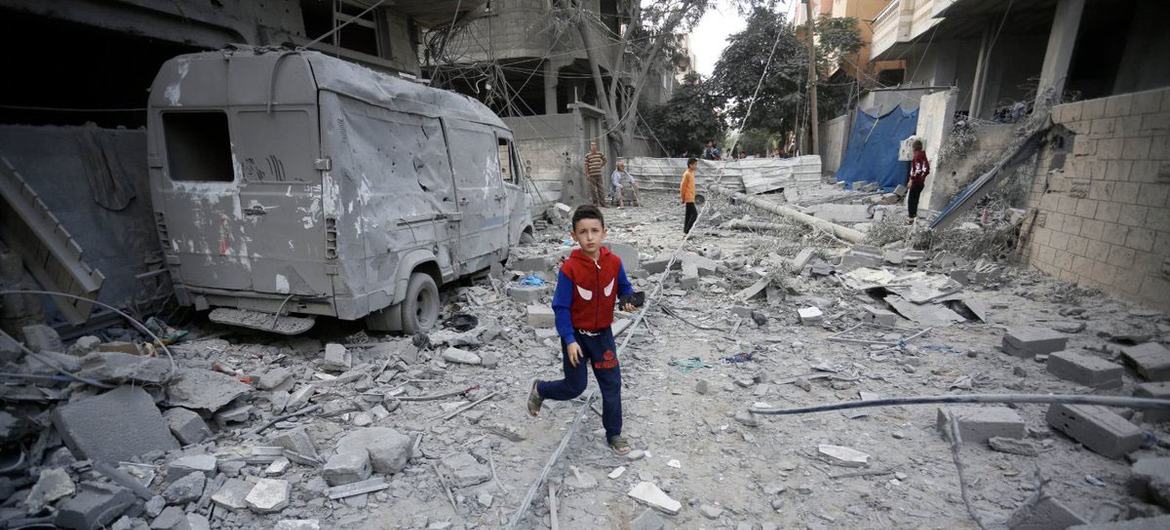
At least 430 Iranians are believed to have been killed during waves of strikes since then with around 3,500 injured, according to figures from the Iranian health ministry.

In Israel, 24 civilians have died in the retaliatory attacks according to local authorities with more than 400 missiles reportedly fired towards the country.

B-2 bombers were involved in the US strikes, President Trump confirmed, dropping so-called “bunker buster” bombs on the uranium enrichment site at Fordow which is buried deep inside a mountain south of the capital Tehran.

‘Avoid a spiral of chaos’

In his statement, the Secretary-General reiterated his concerns voiced in the Security Council during Friday’s emergency meeting on the crisis that the conflict “could rapidly get out of control – with catastrophic consequences for civilians, the region, and the world.”

He called on all Member States to de-escalate the situation which threatens the stability of the Middle East and beyond, calling for everyone to uphold their obligations under the UN Charter and international law.

At this perilous hour, it is critical to avoid a spiral of chaos,” he added calling for an immediate return to negotiations between the warring parties.

There is no military solution. The only path forward is diplomacy. The only hope is peace.”

The UN human rights chief Volker Turk echoed the UN chief’s statement on social media early on Sunday saying that it was now “of utmost importance for all parties to exercise the fullest restraint in order to avoid the untold human rights impacts of a widening conflict on civilians across the region.”

UPDATE: No sign of radiation level increase beyond sites

Meanwhile, the head of the UN’s atomic energy agency, IAEAsaid in a statement on Sunday that there was no sign of any health-impacting radiation resulting from the US strikes beyond the three Iranian sites targeted, citing Iranian nuclear energy authorities.

Director General Rafael Grossi noted that the sites had all contained enriched uranium verified by IAEA inspectors “to different levels” and confirmed that “radioactive and chemical contamination” may have occurred inside the facilities hit.

Read our UN News explainer on the role and importance of the IAEA here.

“In view of the increasingly serious situation in terms of nuclear safety and security, the Board of Governors will meet in an extraordinary session tomorrow, which I will address,” Mr. Grossi said.

As of this time, we don’t expect that there will be any health consequences for people or the environment outside the targeted sites,” he added as reported by UN News.

Continue reading
US Right-wingers Blast Netanyahu

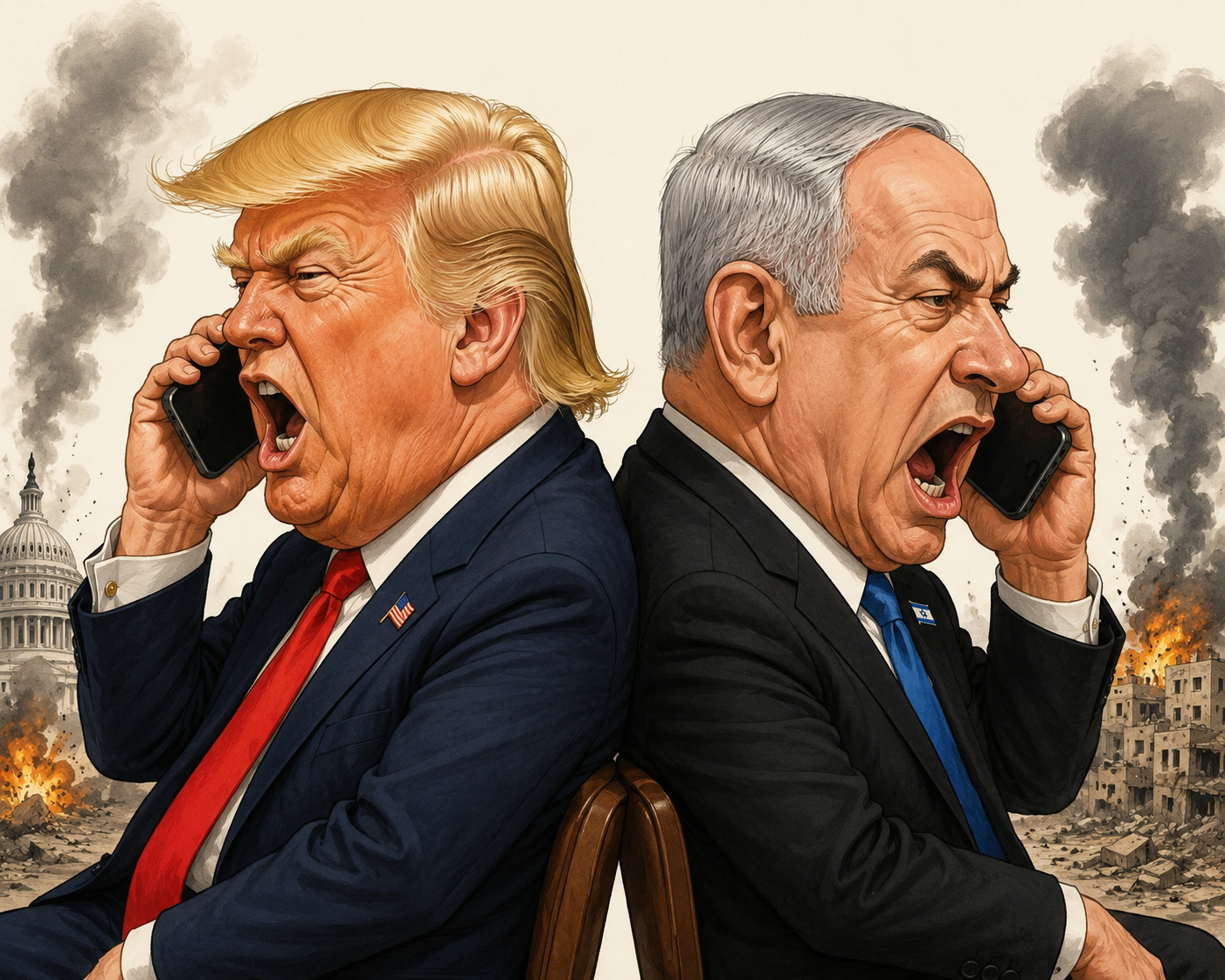
Former Trump strategist and a key voice in the Make America Great Again (MAGA) orbit, Steve Bannon, has delivered a scathing broadside against Israeli Prime Minister Benjamin Netanyahu, questioning whether Israel was dictating American foreign policy as President Donald Trump weighs military action against Iran.

“Who in the hell are you to lecture the American people?” Bannon said on his widely followed War Room podcast, referring to Netanyahu.

“Who are you to lecture the American people? The American people are not going to tolerate it. Not going to put up with it.”

Bannon, an influential voice in the American right, who served as chief strategist during Donald Trump’s first administration, was seen entering the White House on Thursday morning for a reported lunch with the president.

He has emerged as one of the loudest critics of US support for Israel’s military campaign, which has escalated alongside fears that Trump may green-light direct strikes on Iran.

Alongside right-wing firebrands like Tucker Carlson, Bannon has warned that Trump risks shattering the “America First” base that helped power his rise and could lose the presidency if he’s seen as starting a new Middle East war.

“President Trump may come to that conclusion, but it’s not something he would just say… ‘Oh yeah, let’s go bomb ‘em and take care of it.’ He’s going to do it because he’s got to weigh the options now that you’ve gotten us into it,” Bannon said.

“Quit coming to us to finish it,” he added, directing his remarks squarely at Netanyahu.

Related – TRT Global – Tucker Carlson corners Ted Cruz on Iran stance, exposing Conservative tensions

‘We just got out of 20 years of it’

Bannon accused the Israeli prime minister of sabotaging previous negotiations over Iran’s nuclear deal to push his own agenda of “regime change and regime destruction.”

“That’s what he was pitching the other night,” Bannon said.

“That’s exactly where we are, and people should be truthful with each other, particularly in these tough decisions. That’s what allies do. Allies don’t manipulate and don’t inextricably draw people into situations from which the other party has to get them out of.”

Netanyahu has defended his stance, warning MAGA-aligned critics of intervention:

“Today, it’s Tel Aviv. Tomorrow, it’s New York… I understand ‘America First.’ I don’t understand ‘America Dead.'”

But that message has sparked deep divisions inside Trump’s base and fury from key voices on the right who see the war as political suicide.

“It’s just propaganda, propaganda, propaganda and Lindsey Graham, Lindsey Graham, Lindsey Graham,” Bannon fumed, referring to the pro-war senator from South Carolina.

Before Israel launched its aggression, Bannon said he urged Netanyahu to “read the room” and rethink his threats.

“It’s gonna drag us into a regional war,” Bannon said.

“We just got out of 20 years of it….but…if they go it alone, it’s the end of the American relationship with Israel. It’s just the end of it.”

TRT World

Continue reading
More Than 8000 Israelis Evacuated Because of Iranian Missiles

Since the onset of the war on Tehran, and which Israeli Prime Minister Benjamin Netanyahu begun on 13 June, 2025, more than 8000 Israelis were evacuated from their and sleeping in make-up shelters.

This was according to the Jewish daily Yedioth Ahronoth, Friday, citing the Property Tax Compensation Fund. It also noted that 30,000 claims have been submitted to the Fund for damages to buildings, vehicles, personal contents, or equipment caused by missile attacks, the daily said as the war enters its eight day.

The Israeli authorities have maintained that at least 25 people were killed and hundreds injured since then in Iranian missile attacks begun falling on different parts of the country.

Meanwhile, in Iran, 639 people have been killed and more than 1,300 wounded in the Israeli assault, according to Iranian media reports.

Continue reading
Deflecting Netanyahu’s Problems

By Jonathan Fenton-Harvey 

Just a day before launching airstrikes on Iran, Israeli Prime Minister Benjamin Netanyahu, facing bribery and fraud charges, narrowly survived a Knesset vote that could have collapsed his government. Alongside the legal charges, Netanyahu’s domestic popularity has plummeted over corruption, economic woes and failures to return Israeli hostages from Gaza. But for Netanyahu, the war offered more than military momentum: It has given him a temporary reprieve.

Within days, Israeli airstrikes reportedly weakened Iranian nuclear and military infrastructure, eliminated senior military figures, and killed hundreds of civilians. On X, Israeli Defense Minister Israel Katz claimed “civilians in Tehran will pay a collective price,” signaling a destructive intent. As Iran has hit back, firing missiles at Israeli infrastructure and cities, diplomacy over Iran’s nuclear program has all but collapsed.

Even if a ceasefire occurs, Israeli-Iranian tensions have escalated to near irreversibility as long as both the current Israeli and Iranian governments remain in power. Israel presents the assault on Iran as a necessary move to neutralize its nuclear ambitions, a claim repeated over the years, despite the lack of convincing evidence that Tehran was close to building a nuclear bomb. In reality, the war is driven more by Netanyahu’s personal survival than just Israel’s.

As with Israel’s prolonged onslaught on Gaza, this conflict appears designed to consolidate domestic support – attempting to rally the population around the image of an existential enemy – just as it did with Hamas and the Palestinians in Gaza. That same logic extended into Lebanon, where Israel’s assault weakened Tehran’s ally Hezbollah and coincided with a jump in public approval for Netanyahu’s Likud party. But with neither Gaza nor Lebanon yielding lasting political dividends, Iran has become the next catalyst in Netanyahu’s survival strategy.  

A fragile government

For Netanyahu, projecting external threats has not only been a means of consolidating power, but also unity. His government, already fragile, is also caught between deeply divergent factions – secular versus ultra-Orthodox, nationalist versus technocratic. This internal fragmentation of Israeli civil society raised the specter of a looming civil war, warned of even before the Gaza war. But Israel’s wars and the projection of external enemies aim to unify Israeli society, at least for now.

There is also the international dimension. Netanyahu and other officials are wanted by the International Criminal Court over war crimes in Gaza, while Western backers face domestic pressure to end arms sales to Israel. The Israeli initiated Iran conflict has provided Netanyahu with yet another political lifeline as Western governments have clearly aligned with Israel. The G7 and the EU have expressed support for Israel, while the US, UK, Germany and France had pledged to uphold Israel’s security.

Even though Western public opinion on Israel has shifted recently – including legal cases and political pressure – arms sales are still expected to continue, or even increase. Moreover, the focus on Iran has also taken away spotlight from Israel’s actions in Gaza, which continues to endure Israeli airstrikes and blockade-induced starvation.  

Shielded internationally

Before the escalation, US President Donald Trump, however, had taken an unexpected turn. His truce with Yemen’s Houthis and openness to renewed nuclear talks with Iran suggest a willingness to pursue diplomacy – even if it angers Israel. Trump appears caught between appeasing his pro-Israel support base and his America First-driven MAGA base – the latter of which prompted him to override Israeli objections in favor of US interests, namely economic engagement with Iran. Netanyahu is certainly banking on Trump siding with Israel in the event of a deeper escalation with Iran. Trump’s own “urging” of Iranians to leave Tehran signals an alignment with Tel Aviv, even if he may seek to continue keeping the door open for future diplomacy with Iran. Ultimately, the cost of Netanyahu’s bid to maintain his own grip on power is regional instability.

The war has bought Netanyahu time. Less ideologically hardline voices have resigned from his coalition government over failures in Gaza, allowing him to consolidate power around extremist figures like Bezalel Smotrich, Itamar Ben Gvir and Israel Katz. Yet this hardline government, which Netanyahu has fostered to maintain his own position, is further contributing to Israel’s diplomatic and economic isolation. That’ll undoubtedly add to the economic costs of the war on Gaza, which has cost around 10% of its GDP and scared foreign investors off, creating future fiscal instability in Israel.

However, the Netanyahu-led multi-front offensives in Syria, Lebanon, Yemen and now Iran also reflect a notable historic pattern: regimes tend to lash out when they feel increasingly threatened or cornered. Netanyahu’s calculus, partly driven by a sense that Israel is facing compounding global scrutiny for its military operations, may further harm its global image – even if Western governments continue to support Israel’s actions for the time being.

For his own political survival, Netanyahu will resist efforts to halt the violence, unless sustained international pressure forces Israel to halt its operations. Because he knows that, if he ends the wars, he’ll almost certainly face renewed calls for his indictment in Israel, or be unseated in the next Israeli elections, due by October 2026. As such, he has every incentive to prolong the violence unless international pressure forces a change in course. If Trump or other key powers push for de-escalation and accountability, it could shift the trajectory toward regional stability, especially as Iran weighs withdrawing from the Nuclear Non-Proliferation Treaty. Otherwise, Netanyahu’s own instincts risk plunging the region – and inadvertently Israel – into deeper regional instability that could ultimately harm Israel itself.  

The author is a researcher and journalist focusing on conflict and geopolitics in the Middle East and North Africa, primarily related to the Gulf region. He has contributed this article to Anadolu

Continue reading