 Palestinian School Year Starts 6 September
 Tel al-Zaater: 50 Years On! Memory of a Massacre
 To Evelyn: The Baramki Home in Jerusalem
 Palestinian House, Palestinian Architecture
 UN Reports Grave Israeli Violations of Gaza Returnees





Palestinian School Year Starts 6 September
marwan
- August 13, 2026
 marwanmarwan
 Heba
Heba CrossFireArabiamarwanmarwanCrossFireArabiamarwanHebaCrossFireArabiaCrossFireArabiaCrossFireArabiaHebamarwanCrossFireArabiamarwanHebaCrossFireArabiaHebamarwanmarwanCrossFireArabiamarwanmarwanmarwanmarwanmarwanmarwanmarwanmarwanmarwanCrossFireArabiaCrossFireArabiamarwanmarwanCrossFireArabiaCrossFireArabiamarwanCrossFireArabiamarwanHebaHebamarwanmarwanCrossFireArabiamarwanmarwanmarwanmarwanCrossFireArabiaCrossFireArabiamarwanmarwanmarwanCrossFireArabiamarwanmarwanmarwanmarwanmarwanCrossFireArabiamarwanmarwanmarwanmarwanCrossFireArabiamarwanmarwanmarwanmarwanmarwanmarwanmarwanmarwanCrossFireArabia
Iran’s Islamic Revolutionary Guard Corps (IRGC) Sunday warned that US- and Israeli-linked universities in the region are now “legitimate targets” in retaliation for attacks on Iranian educational facilities.
In a statement carried by the semi-official Fars news agency, the IRGC accused the US and Israel of repeatedly bombing Iranian universities, including Iran University of Science and Technology in Tehran.
“From now on, all universities of the occupying entity (Israel) and American universities in West Asia will be considered legitimate targets,” in response to the destruction of Iranian academic institutions, it said, calling on staff and students at US-linked universities in the region, as well as nearby residents, to stay at least one kilometer away from such facilities for their safety.
On Wednesday, the IRGC demanded that Washington condemn attacks on universities or face retaliatory attacks.
Iranian media reported several US and Israeli strikes on educational facilities, including Isfahan University of Technology and, Iran University of Science and Technology in Tehran.
The US and Israel have maintained airstrikes on Iran since Feb. 28, killing so far over 1,340 people, including then-Supreme Leader Ali Khamenei.
Iran has retaliated with drone and missile strikes targeting Israel, along with Jordan, Iraq, and Gulf countries hosting US military assets, causing casualties and damage to infrastructure while disrupting global markets and aviation. Anadolu
CrossFireArabia
ran’s parliament speaker accused the US on Sunday of pursuing a 15-point plan to achieve its war goals after failing to achieve them by military force, warning that any ground attack on the country would face a “decisive” response.
Writing on Telegram, Mohammad Bagher Qalibaf said the US is “openly calling for negotiations while secretly planning a ground attack.”
He said the Iranians are prepared for any ground operation by US forces, vowing a “decisive response” for any such attack.
“These days, different words and statements are heard from enemy officials about negotiations. America is expressing its desires and declaring what it has not achieved in war as a 15-point list and seeking it in diplomacy.”
Iran on Wednesday rejected a 15-point US plan to end the war, saying any ceasefire would take place only on Tehran’s terms and timeline.
The state television, citing an Iranian official, said Iran outlined five conditions for ending the war, including a complete halt to “aggression and assassinations.”
It came amid reports about US plans for a ground attack on Iran as thousands of US troops deploy to the Middle East, pending a decision by President Donald Trump.
The US and Israel have maintained airstrikes on Iran since Feb. 28, killing so far over 1,340 people, including then-Supreme Leader Ali Khamenei.
Iran has retaliated with drone and missile strikes targeting Israel, along with Jordan, Iraq, and Gulf countries hosting US military assets, causing casualties and damage to infrastructure while disrupting global markets and aviation. Anadolu
CrossFireArabia
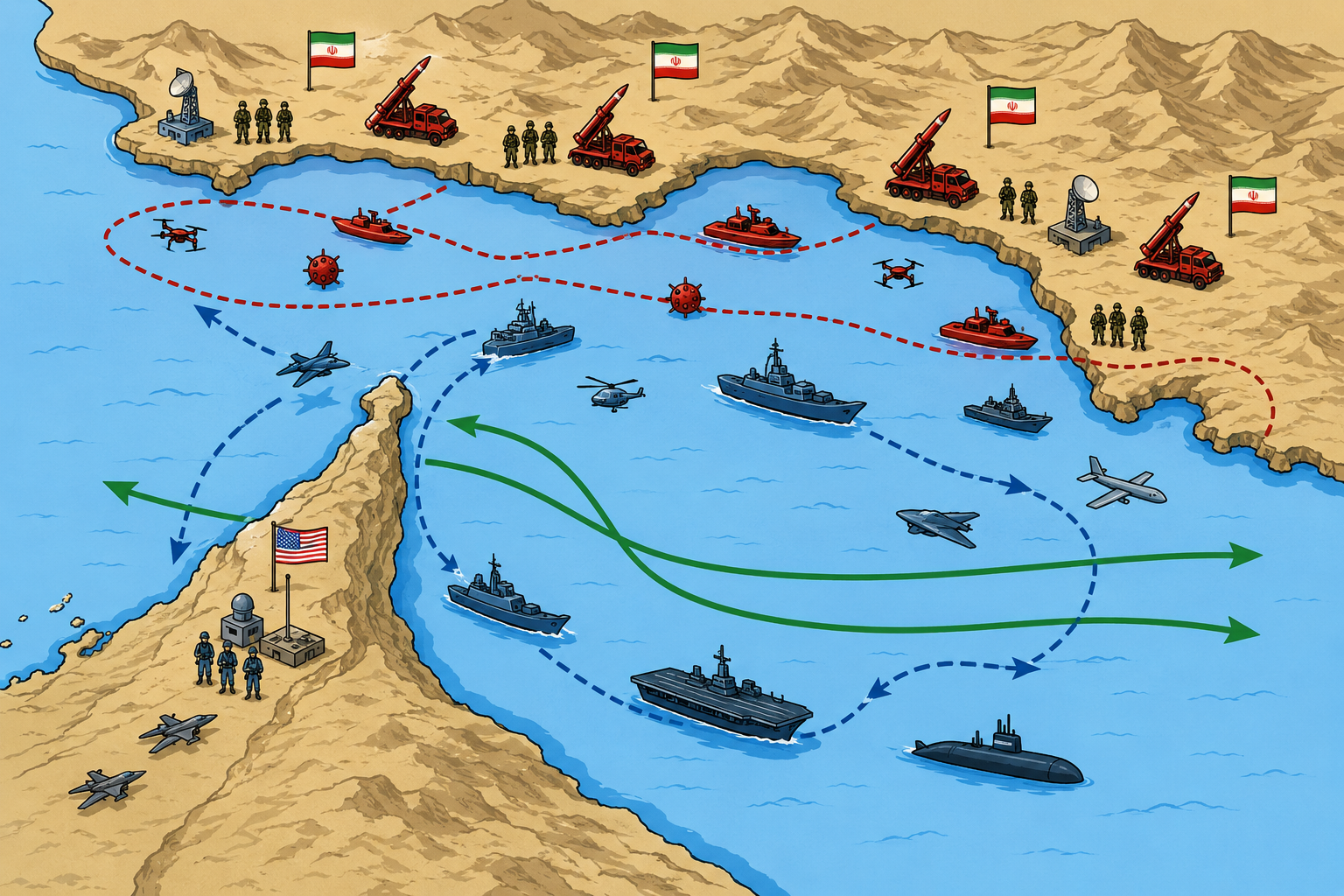
A Houthi official in Yemen has not ruled out the closure of the Bab al-Mandeb Strait, which connects the Red Sea and the Gulf of Aden, as part of the ongoing military escalation between Iran, the US and Israel, as war entered its second month.
The Houthi group launched missile strikes toward Israel on Saturday, the first by the Iran-backed Yemeni group since the US and Israel launched a joint offensive against Tehran last month.
“We are in joint coordination with our brothers in Iran, Lebanon, and Iraq,” Mohammed Mansour, deputy information minister in the Houthi-run government, told Al-Araby Television on Saturday.
He said the Houthis joined the conflict “to provide support to our brothers in Iran who are fighting epic battles” as well as the Lebanese group Hezbollah.
Mansour said the Houthis’ move to join the war “aims to increase pressure on Israel and the US.”
“Every step we take is carefully calculated to be effective and to increase the pressure on Israel and the US,” he said.
Yemen “bears a moral, religious, and humanitarian responsibility toward Iran, Hezbollah, and Iraq’s Popular Mobilization Forces,” the Houthi official said, describing the alliance as “primarily aiming to support Palestine.”
Mansour said the Houthi group has many options to pile pressure on Israel and the US amid the current war with Iran.
“The Red Sea, the Gulf of Aden, and Bab al-Mandab will be among the options,” he said.
The Red Sea is one of the world’s most frequently used sea routes for oil and fuel shipments.
“We have extensive experience in naval and land operations, and our previous intervention to support Gaza was one of the important surprises for the world,” the Houthi official said.
The Houthi group had launched missile and drone attacks on Israel and Red Sea shipping lanes in response to Israel’s deadly offensive on Gaza, which killed more than 72,000 people since October 2023.
Regarding the possible closure of the strategic strait or attacks on passing ships, Mansour said: “This depends on the Israeli and US escalation, and the American preparations for any ground movement.”
“The Yemeni leadership makes its decisions independently based on military and political assessments, taking into account that any step will be calculated and effective.”
Regional escalation has continued to flare since the US and Israel launched a joint offensive on Iran on Feb. 28, so far killing over 1,340 people, including then-Supreme Leader Ali Khamenei.
Iran has retaliated with drone and missile strikes targeting Israel, along with Jordan, Iraq, and Gulf countries hosting US military assets, causing casualties and damage to infrastructure while disrupting global markets and aviation. Anadolu
CrossFireArabia
The military spokesman for the Ansar Allah group in Yemen announced that the armed forces had carried out the “second military operation in the ‘Holy Jihad Battle,'” using a barrage of cruise missiles and drones targeting several vital and military sites belonging to the “Zionist enemy” in southern occupied Palestine.
In a statement issued, Saturday evening, Brigadier General Yahya Saree said that the operation coincided with “military operations carried out by our mujahideen brothers in Iran and Hezbollah in Lebanon, and achieved their objectives successfully, thanks to God.”
Brigadier General Saree affirmed that the armed forces would continue their military operations in the coming days until the enemy ceases its attacks and aggression.
CrossFireArabia
Israel’s Health Ministry said Wednesday that at least 5,165 people have been injured in Iranian attacks since late last month.
In a statement, the ministry said that 120 people were injured in attacks from Iran in the past 24 hours.
It, however, did not specify how many people are still hospitalized.
The US and Israel have maintained airstrikes on Iran since Feb. 28, killing so far over 1,340 people, including then-Supreme Leader Ali Khamenei.
Tehran has retaliated with drone and missile strikes targeting Israel, along with Jordan, Iraq, and Gulf countries hosting US military assets, causing casualties and damage to infrastructure while disrupting global markets and aviation according to Anadolu.