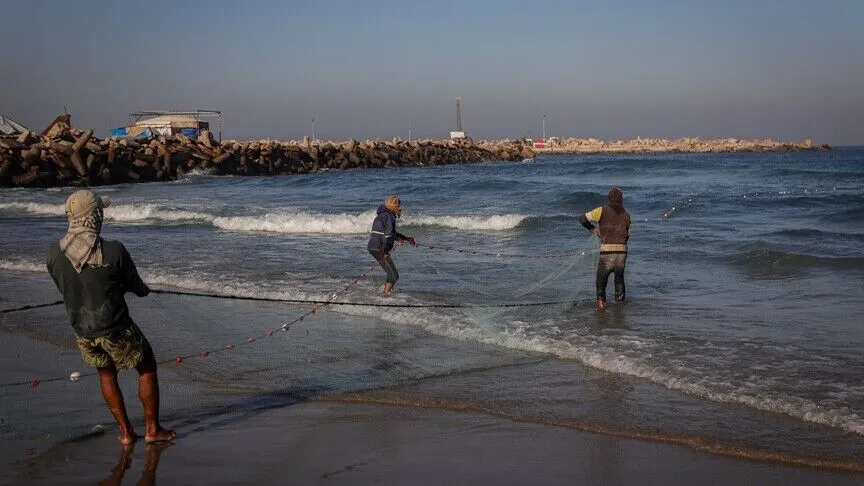
 Israel Vessels Fire at Three Fishermen in Gaza
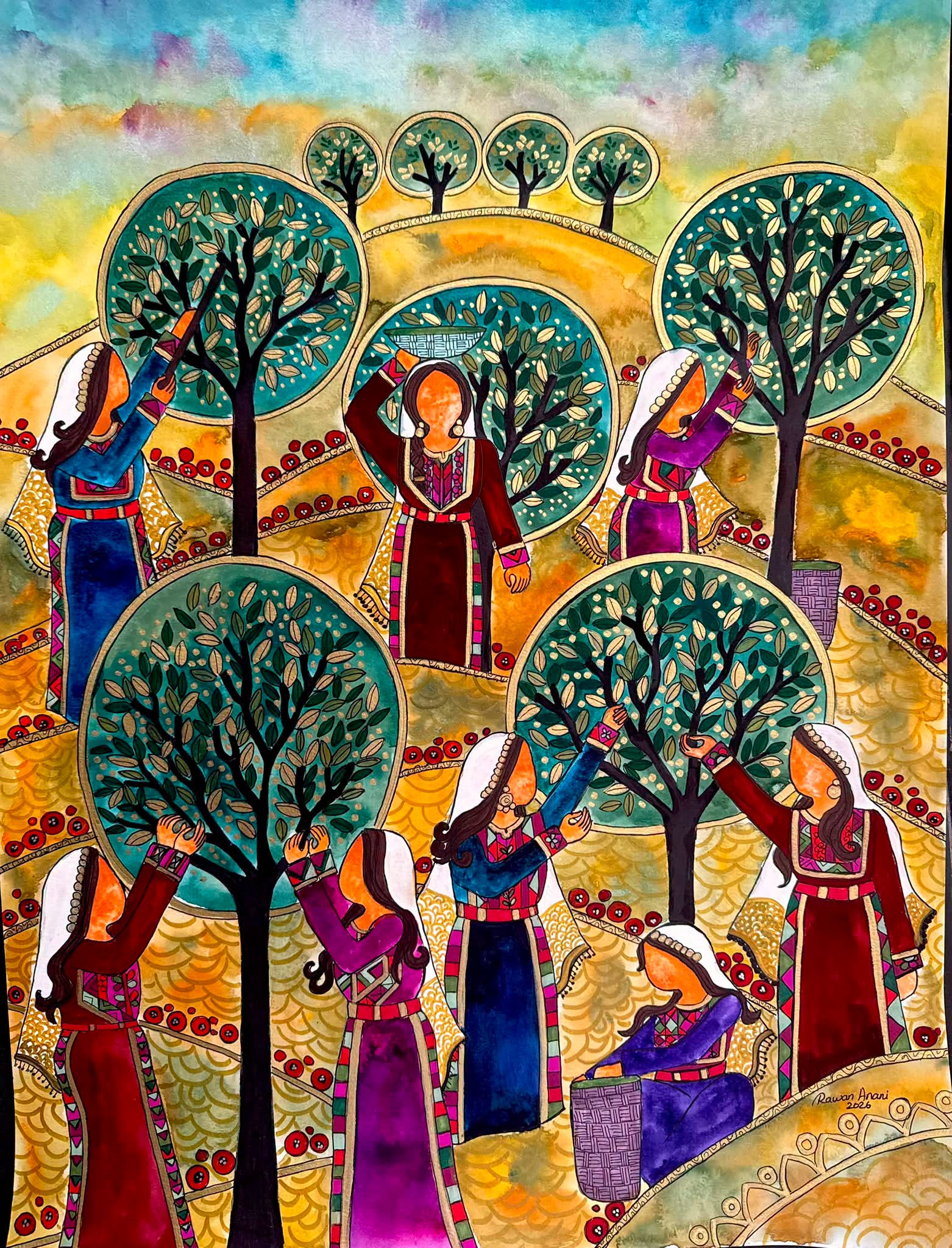 Palestine in the Olive Harvest
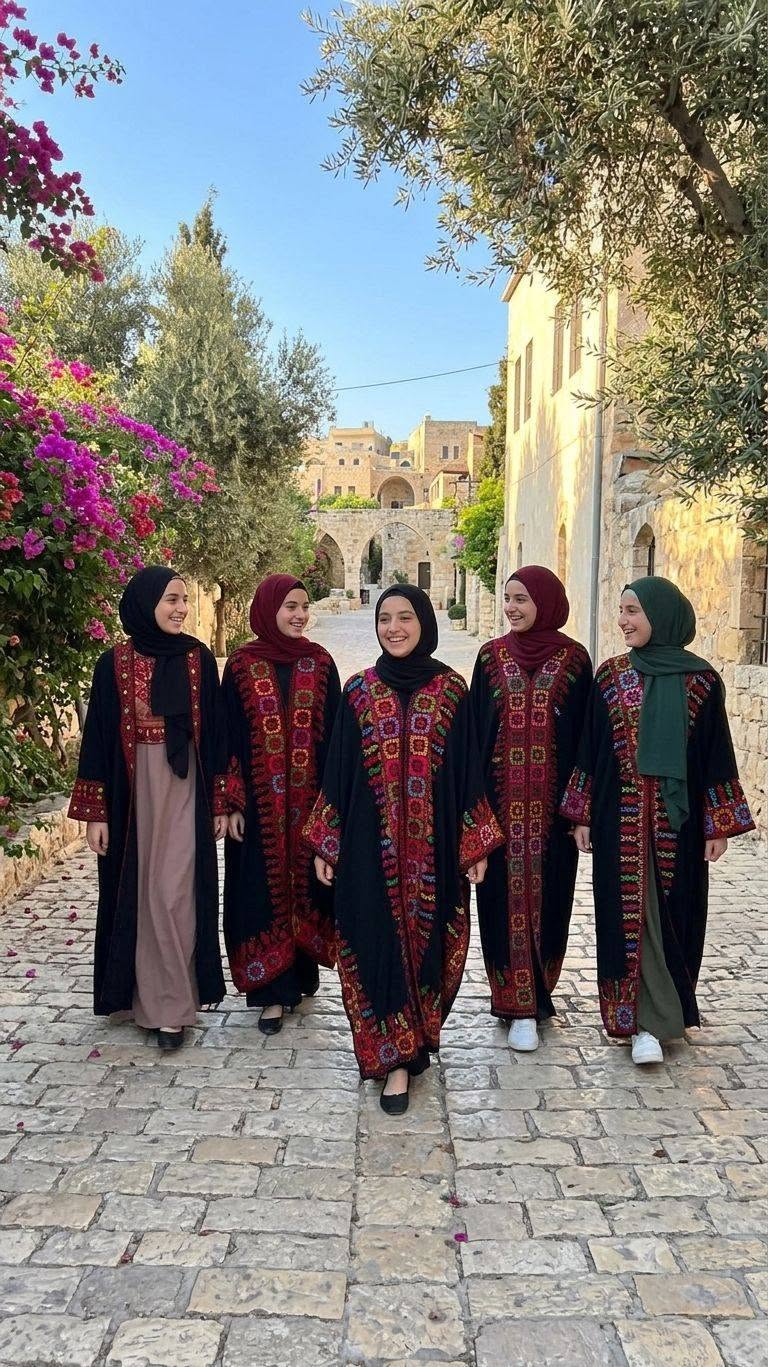 Smiles and Embroidery
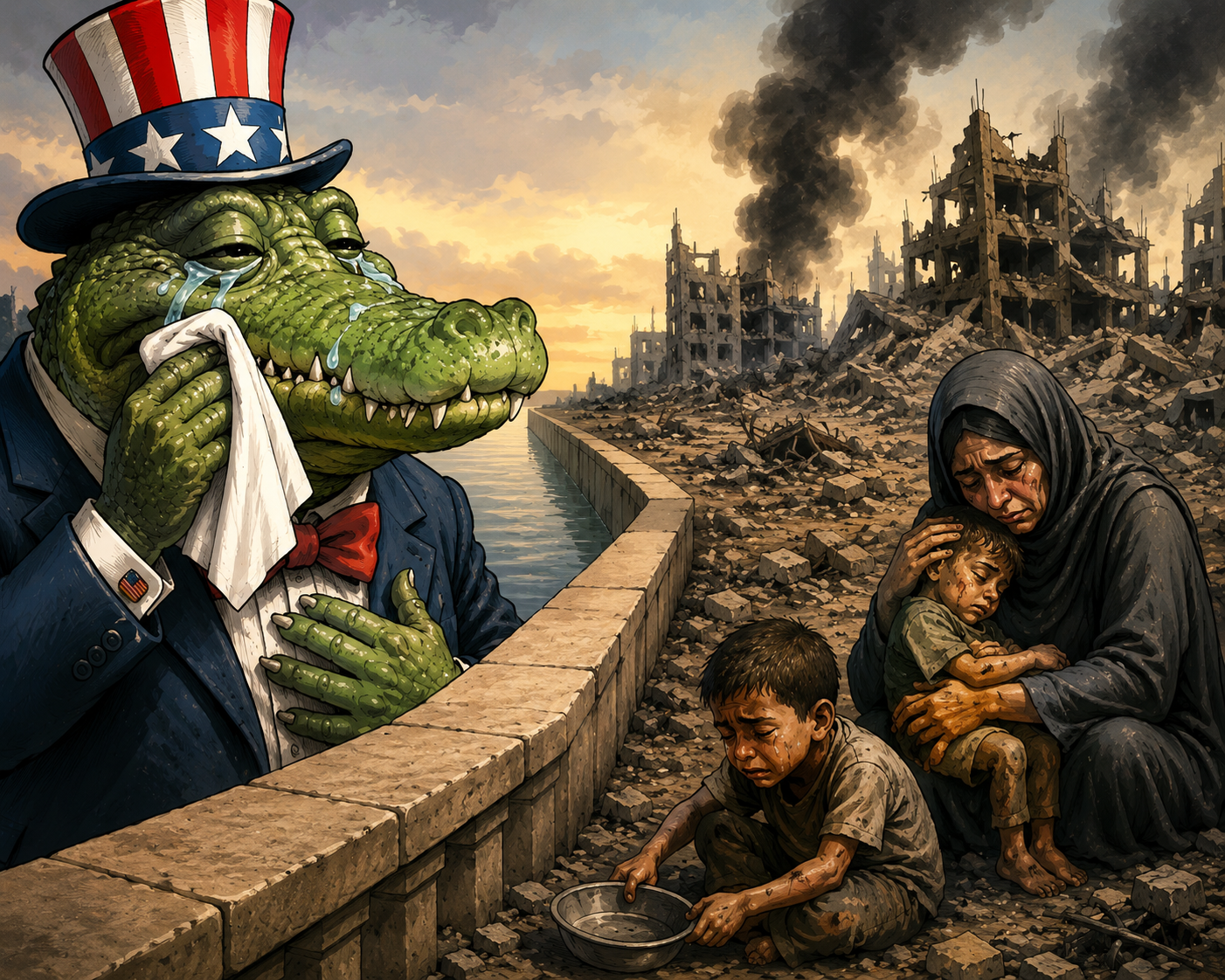 ‘No Need For Your Crocodile Tears’
 Reem Arkan’s ‘Red Homeland’


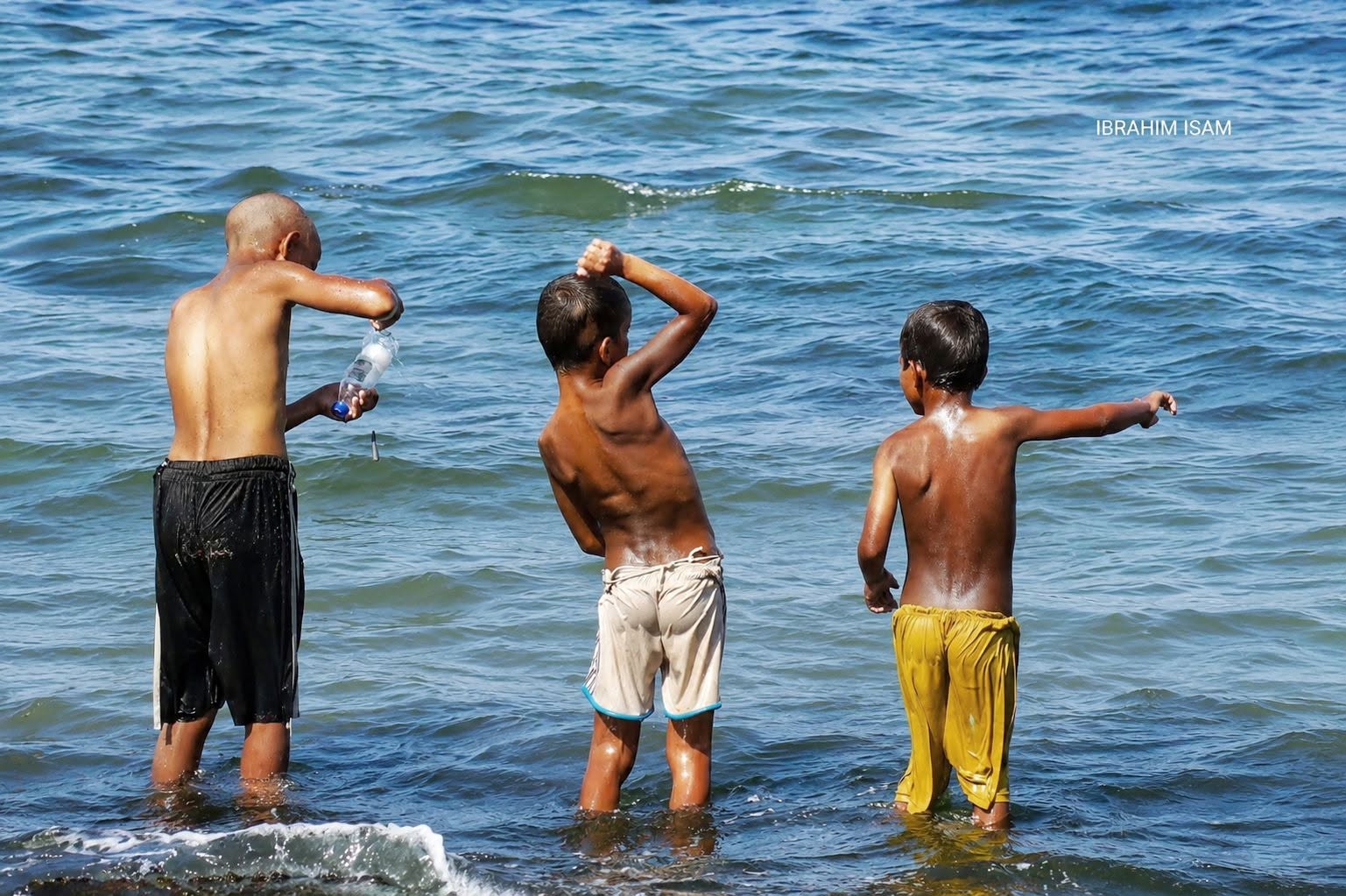
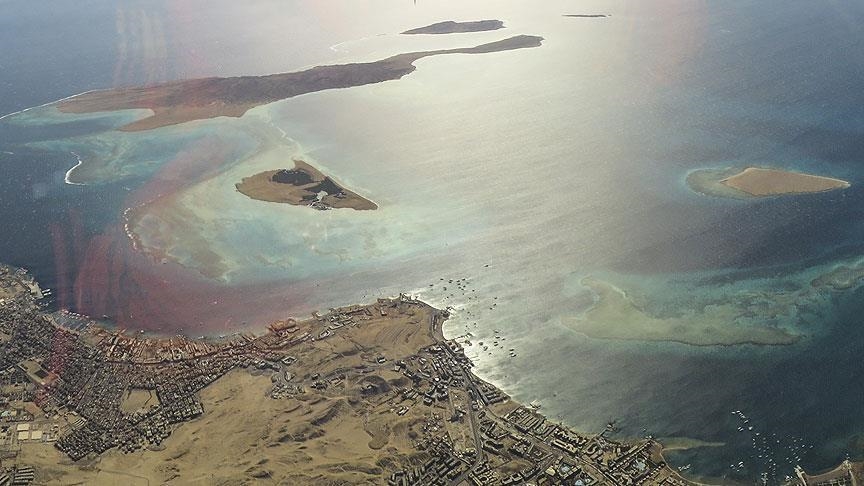
Israel Vessels Fire at Three Fishermen in Gaza
 CrossFireArabia
- August 14, 2026
 CrossFireArabia
 marwan
 HebaCrossFireArabiamarwanmarwanHebaCrossFireArabiamarwanmarwanCrossFireArabiamarwanHebaCrossFireArabiaCrossFireArabiaCrossFireArabiaHebamarwanCrossFireArabiamarwanHebaCrossFireArabiaHebamarwanmarwanCrossFireArabiamarwanmarwanmarwanmarwanmarwanmarwanmarwanmarwanmarwanCrossFireArabiaCrossFireArabiamarwanmarwanCrossFireArabiaCrossFireArabiamarwanCrossFireArabiamarwanHebaHebamarwanmarwanCrossFireArabiamarwanmarwanmarwanmarwanCrossFireArabiaCrossFireArabiamarwanmarwanmarwanCrossFireArabiamarwanmarwanmarwanmarwanmarwanCrossFireArabiamarwanmarwanmarwanmarwanCrossFireArabiamarwanmarwanmarwan
 Saleem Ayoub Quna
By Saleem Ayoub Quna
Nearly 2000 years ago, there lived a prosperous Empire in ‘Athens’ which dominated the whole region of ancient Greece, along the hundreds of islands in the Aegean Sea. It was situated approximately 200 kilometers away from another military strong city, an empire called ‘Sparta’.
The advisors of the Emperor of Athens started warning their leadership of the growing power of this relatively distant neighbor, which could pose an imminent threat to its supremacy, and even to the existence of their empire in Athens as well.
In one of the ancient Greek ‘think-tanks’ in Athens also, lived a general and philosopher, who was monitoring the evolution of relations between the two city states. His name was ‘Thucydides’. He foresaw disaster and advised his fellow Athenians to resist the temptation to go after the Spartans, in order to quell the possibility that their power might expand and grow bigger in the region, and threaten and challenge the actual supremacy of Athens.
He begged them not to fall to such an illusionary trap. Sparta seemingly was minding its own business and was not fully aware of Athens’ fears and phobia of the unknown.
‘Thucydides’ kept warning his own people about such eventuality, but to no avail. The war finally broke out and it was called the “Peloponnesian war” that lasted for nearly three decades. Its endgame was a humiliating defeat for Athens, and a decisive victory for Sparta.
In the first decade of this century, a certain Graham Allison, a professor of political science at Harvard School for International Studies, was studying and analyzing this pattern of hostile relations between nations, built on suspicion and mistrust.
Out of 16 wars in the world, big and small, he found out, 12 wars erupted between nations, precisely because of, not similar, but identical circumstances, where a certain nation would fear the rising power and influence of another nation, and decides to go to war to eliminate this imaginary threat, so the former would keep its clout and domination.
While studying and tracking back cases of war from modern times such as WWI and WWII and other older conflicts, and when he reached the “Peloponnesian War, 431-404 BC” in Greece, he came up with a simple conclusion that causes such wars between nations, which is the fear of a nation of another nation’s power and ill-intentions! And he brilliantly dubs it the “Thucydides Trap” thus emulating the first experienced and documented war of this kind in ancient Greece, nearly 2000 years ago!
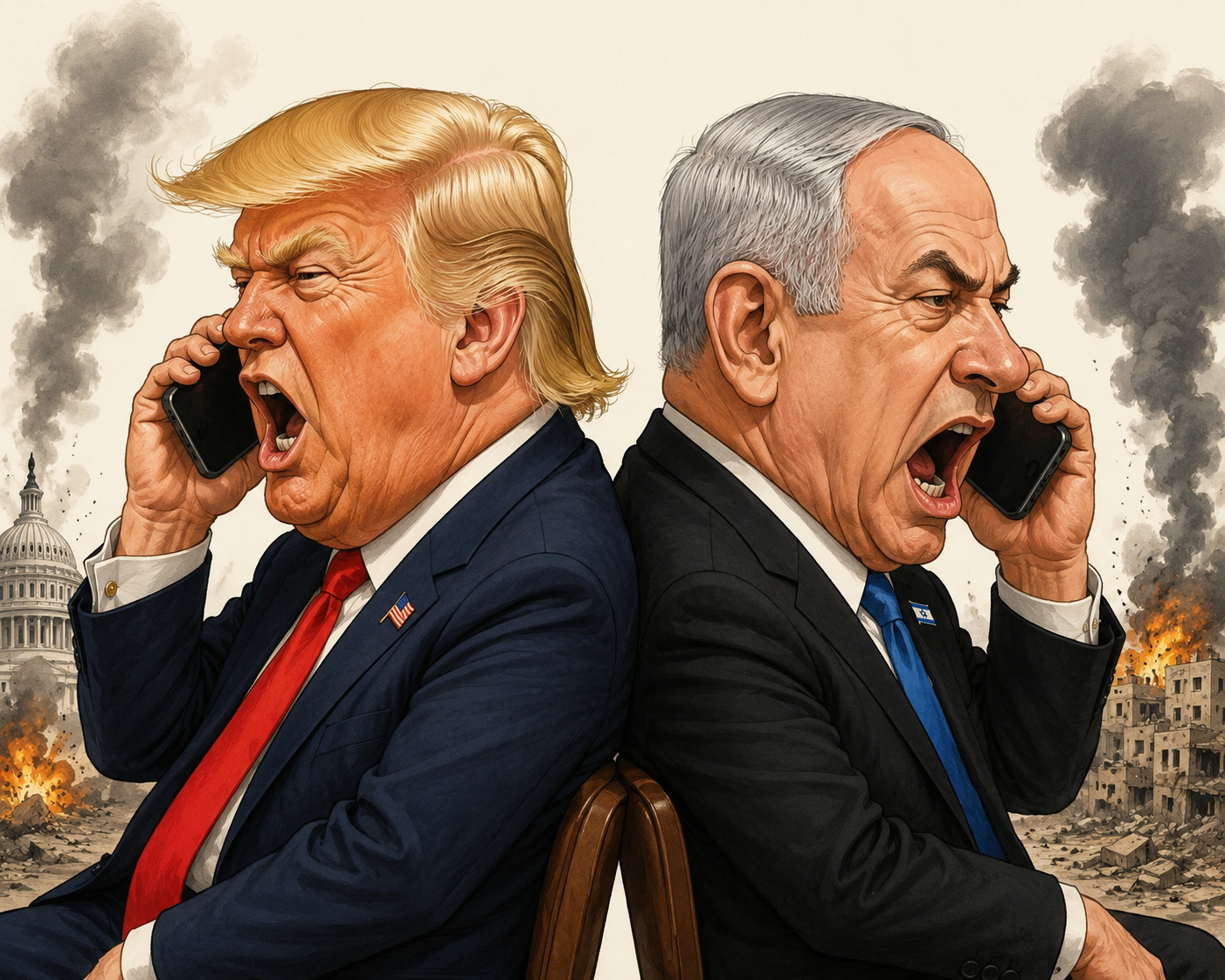
Now we come back to our present day and astonishingly hear Chinese President Xi Jinping warning his powerful visitor, US President Trump, and himself not to submit to the “Thucydides Trap” which many nations in the past did!
What is also amazing in this regard, is first, that the Chinese leader alluded to that ancient lesson which happened in Greece that lies thousands of miles away from China, and second, is how the smart and knowledgeable Xi Jinping’s speech writers, were as they inserted Graham Allison’s most famous political coinage in connection with today’s issues of war and peace!
In conclusion, I would like to list two questions and one footnote:
CrossFireArabia
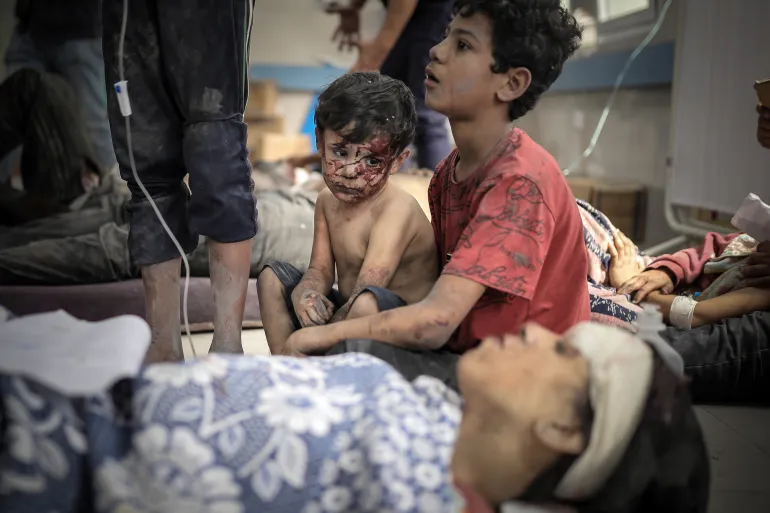
More than four children have been killed or injured every day on average in Lebanon in the first 25 days of a temporary ceasefire with families still unable to return to their homes, said Save the Children.
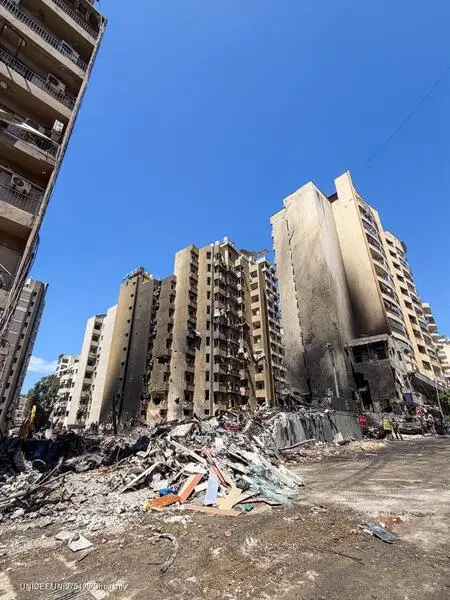
New data from Lebanon’s Ministry of Health on Tuesday showed that 22 children have been killed and 89 injured since the temporary ceasefire started on 17 April. This brings the number of children killed in Israeli strikes since renewed escalation in hostilities in Lebanon on 2 March to almost 200 with about 2,900 people killed.
The violence and renewed displacement orders have forced more than one million people – or one in six of the population – from their homes with many now living with relatives, in host communities or in collective shelters.
The number of families living in collective shelters has increased 5% since the conditional ceasefire due to renewed displacement orders by Israeli forces and as families return home to find destroyed houses and damaged farmland so move back the collective shelters. There are now 44,800 children among about 125,000 people in collective shelters.
Thousands of children have been living in collective shelters for over two months in overcrowded conditions with inadequate water, sanitation and hygiene facilities leading to reports of scabies and growing health concerns.
Parents are reporting widespread behavioural changes among children living in collective shelters due to a lack of routine and reduced school engagement including loss of appetite and trouble sleeping. Many children are struggling to continue learning with some schools used as collective shelters and also difficulties accessing online learning due to limited electricity, and poor connectivity.
Tala*, 10, has been living in a collective shelter after being displaced from southern Lebanon, said:
“I just want the war to end so I can go home to my village and sleep in my own bed. I really miss school, I want to see my teachers and be with my friends, and study and play again.”
Nora Ingdal, Save the Children’s Lebanon Country Director, said:
“This ‘so called’ ceasefire that still sees more than four children killed or injured every day is not a ceasefire for children. Attacks on civilians have not stopped – it has simply continued under another name. Colleagues have told me that the airstrikes feel more intense in some areas than they ever did before. Children are not safe until there is a permanent and definitive ceasefire with no violations.”
With further peace talks set to take place on Thursday to determine next steps between Lebanon and Israel, Save the Children is calling on the international community to urgently work toward a permanent and definitive ceasefire and ensure flexible and sustained funding to protect children and allow families to return home to resume their lives.
Save the Children has worked in Lebanon since 1953. In collaboration with partners and local authorities, we are distributing essential items in hard-to-reach areas in the south, provide psychosocial support for children, educate families and children about the risks of unexploded ordnance, ensure access to safe water and sanitation facilities, and distribute essential items for those displaced.
ENDS:
Sources:
Lebanon Ministry of Health
Israeli strikes have killed 380 in Lebanon since truce: Health ministry
Lebanon Ministry of Health
CrossFireArabia
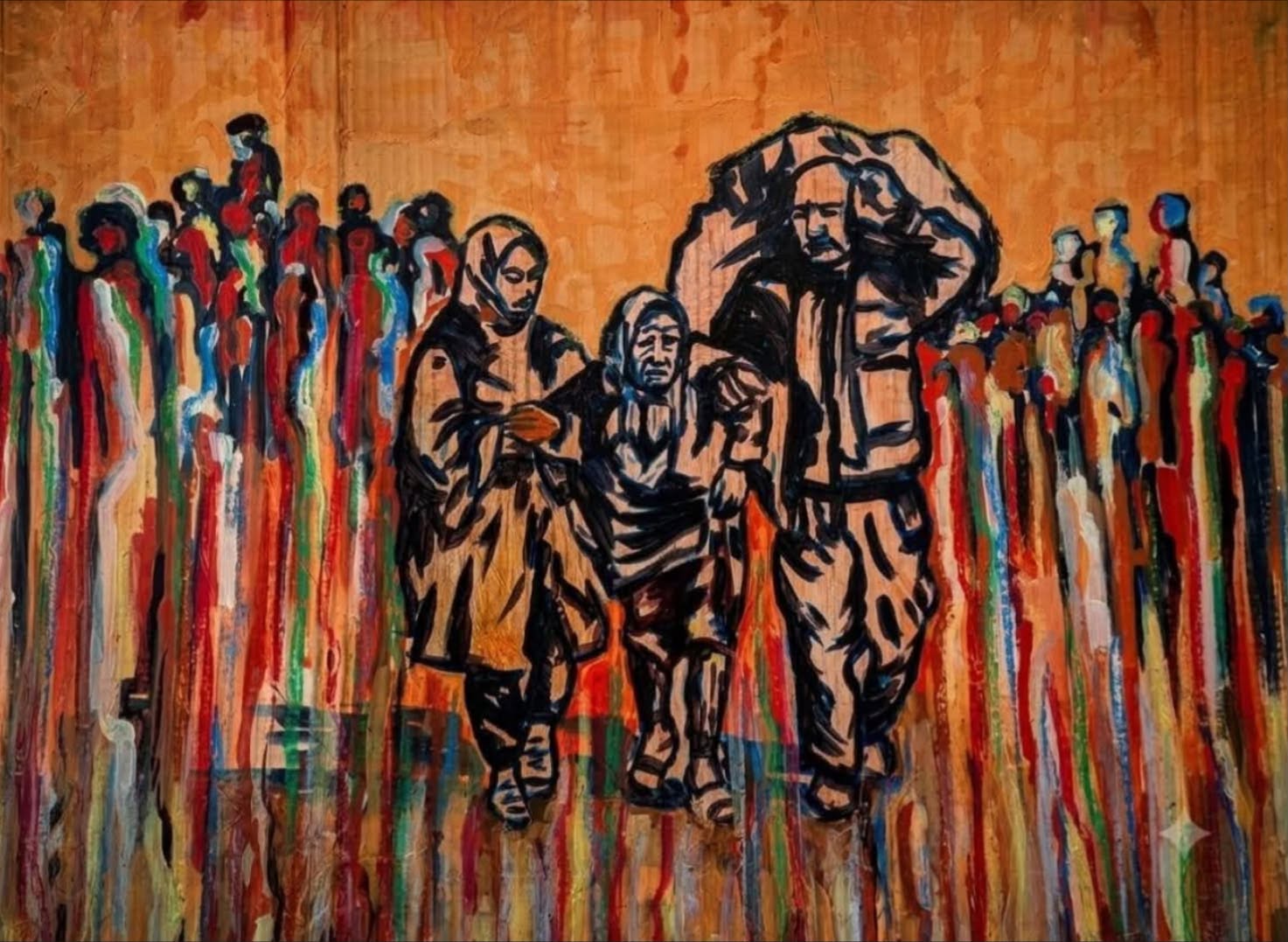
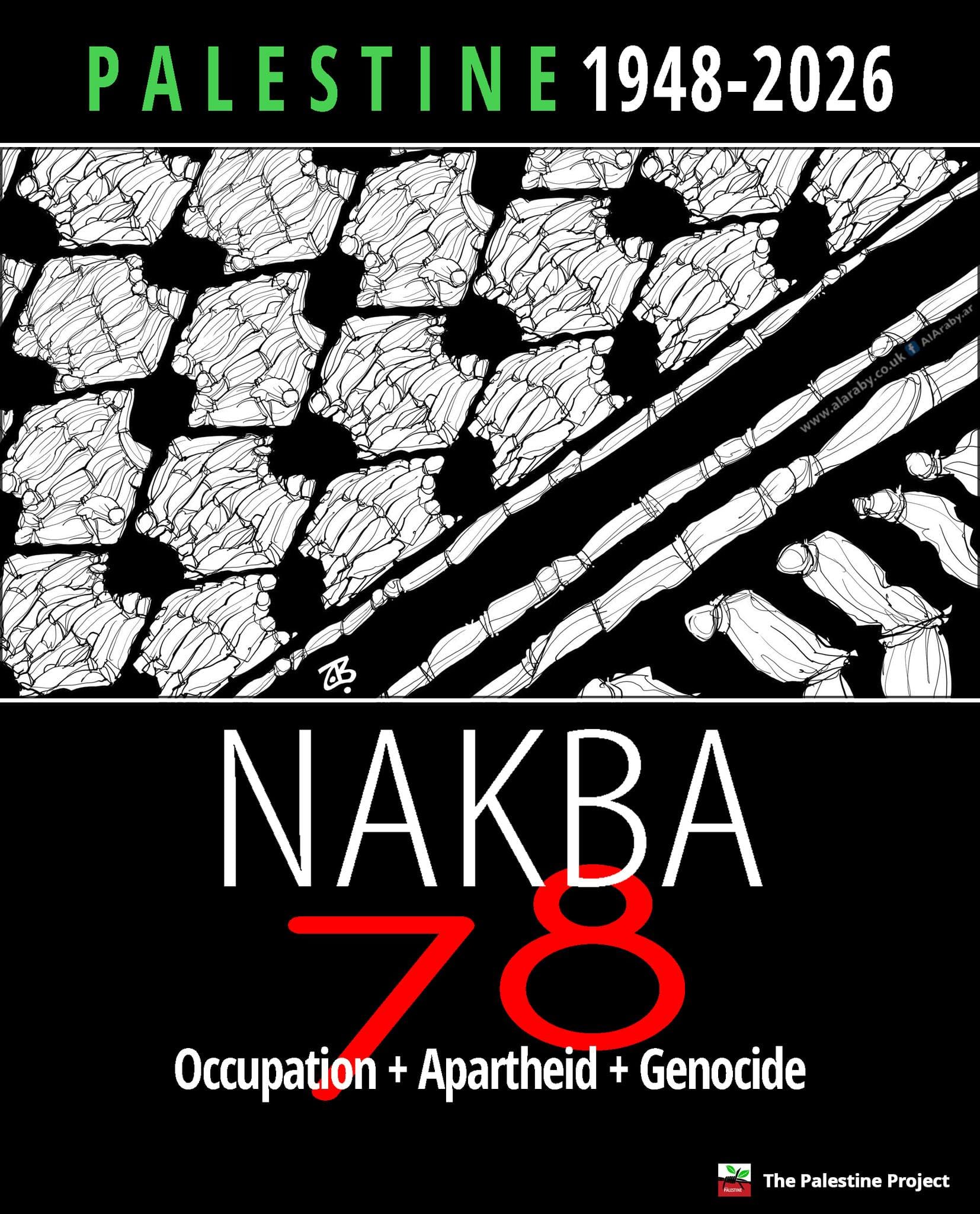
Dozens of Palestinian women at a displacement camp in central Gaza marked the 78th anniversary of the Nakba (Catastrophe) on Thursday, reliving scenes of displacement and loss they said continue to define Palestinian life decades after 1948.
Held at the Refaat Alareer camp in the Al-Zawaida area, the event linked memories of the historic Palestinian displacement with the reality of the ongoing Israeli war on Gaza, as participants said the suffering of exile and forced displacement had never truly ended.
The event was organized by the Sameer Project, a relief initiative led by Palestinians in the diaspora, and featured heritage performances, traditional dabke dancing and symbolic scenes highlighting Palestinian identity and the right of return.
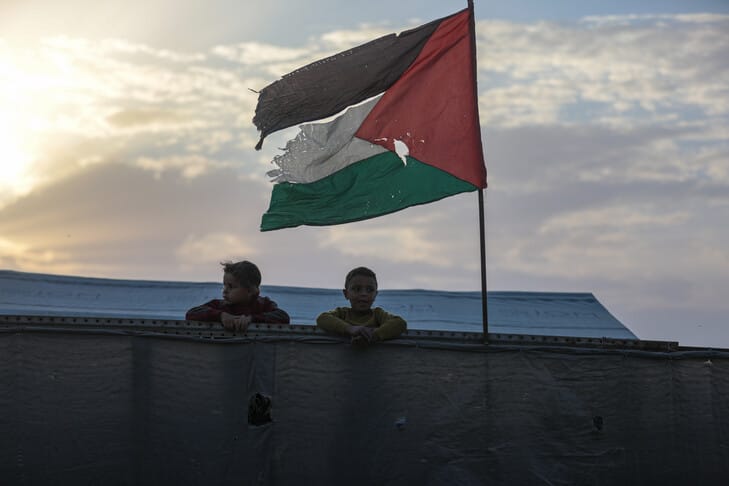
Women and children raised Palestinian flags, symbolic keys, and images reflecting displacement and attachment to the land. Several participants wore traditional Palestinian dresses and chanted songs and national hymns invoking Palestinian memory and what they described as an ongoing Nakba.
Palestinians commemorate the Nakba every year on May 15 through marches, exhibitions and public events in the Palestinian territories and around the world, calling for rights, including the return of millions of refugees.
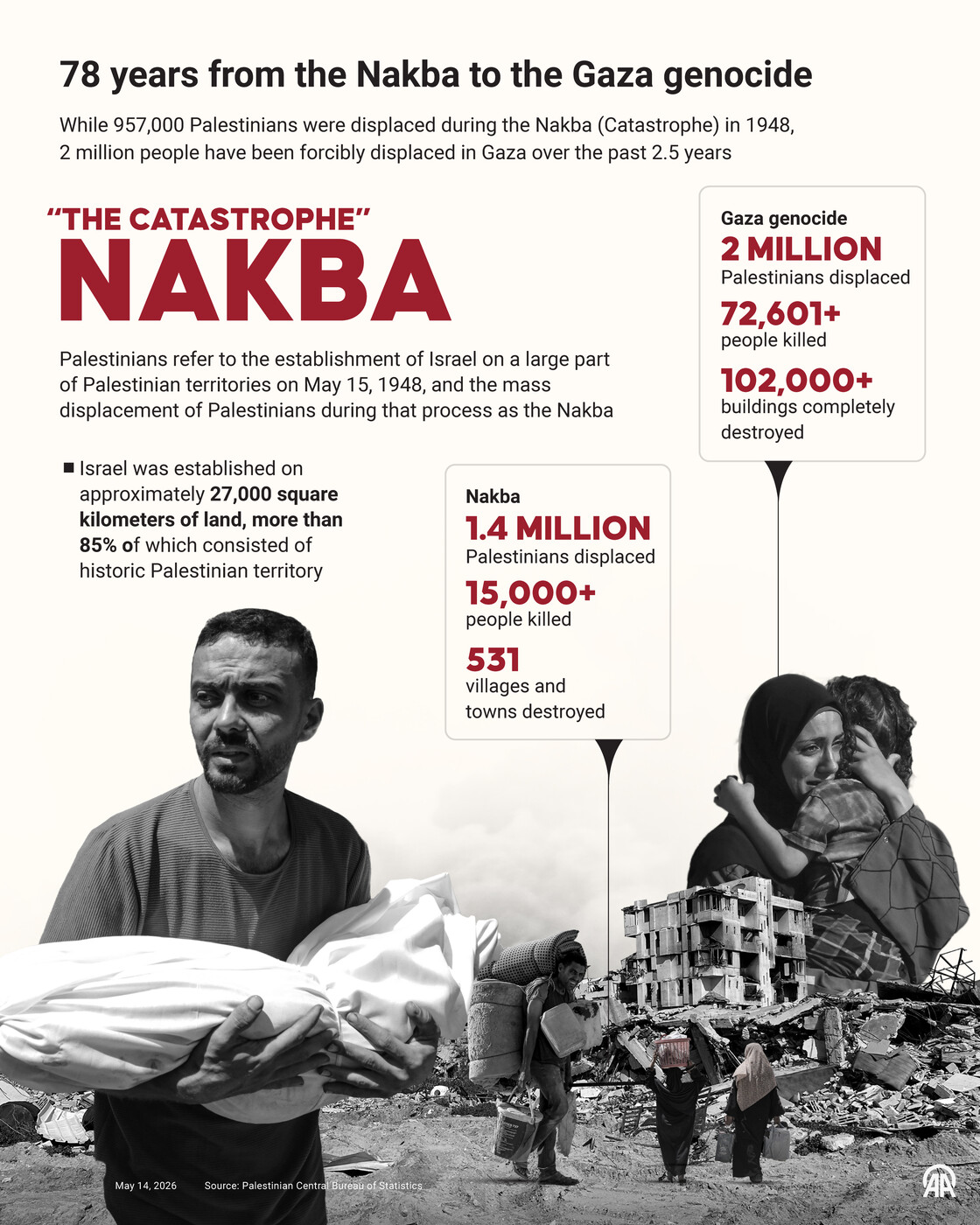
The Nakba refers to the mass displacement of Palestinians in 1948 during the events surrounding the creation of Israel, when hundreds of Palestinian towns and villages were emptied and their residents forced to flee.
Ibtisam Abu Muailiq, a displaced Palestinian now living in Al-Zawaida, said Palestinians are still living through the Nakba today.
The current war, she told Anadolu, had brought back scenes of displacement and tent life that previous generations described after the events of 1948.
“Our home was destroyed, and we lost loved ones, some killed and others still missing, but we remain steadfast on the land of Palestine,” she said.
She called on people around the world to show compassion toward Palestinians and support them amid their suffering.
For Umm Mohammed Abdullah, the Nakba never ended.
Palestinians, she said, have endured repeated cycles of hunger, thirst, displacement and loss but continue to hold on to their land.
“No matter how severe the suffering becomes, we will not leave our homeland,” she added.
Event coordinator Iman Al-Khatib said holding the event inside a displacement camp carried a message that Palestinians remain steadfast despite wars and catastrophes.
“We wanted to tell the world that Palestinians remain resilient and that the right of return will continue to live in the conscience of future generations,” she told Anadolu.
The Israeli army has killed more than 72,000 people, mostly women and children, and injured over 172,000 in a two-year war on the Gaza Strip since October 2023.
Despite a ceasefire that took effect on Oct. 10, 2025, the Israeli army has continued its attacks, killing at least 856 people and injuring 2,463 others, according to Gaza’s Health Ministry.