Three Israeli Soldiers Kill Themselves in Under 2 Weeks

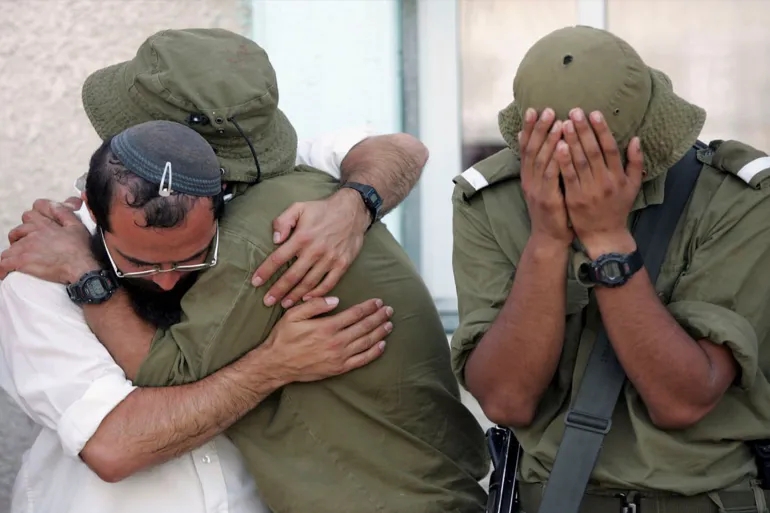
Three Israeli soldiers committed suicide in under two weeks after serving in the war Gaza.

This is a harrowing made increasingly so after Israel’s Channel 12 stated that an Israeli soldier took his life after serving in the war in Gaza that in now reaching its second year. 

Meanwhile the Israeli Haaretz daily stated that 15 Israeli soldiers have killed themselves since the beginning of 2025. 

This is an unprecedented for the Israeli army and well above in the previous years. For in 2024, 21 soldiers committed suicide after serving in the Gaza war which started soon after 7 October, 2023. 

The Israeli newspaper stated most of those that took their lives were reserve soldiers that entered the army recently and after the horrors they saw in the Gaza battlefield and which is increasingly affecting their psychological state of mind. 

The Israeli Institute for Security Affairs is warning the Israeli soldiers are facing the toughest battles in the different areas of Gaza and who are facing strenuous resistance not only from Hamas fighters but those from different Palestinian factions.

The Institute states the Israeli army in Gaza is facing the biggest crisis in human resources in its history and needs tens of thousands of extra soldiers because of the intensity of fighting on the Gaza battlefields.

Continue reading
Weaponizing Food in Gaza

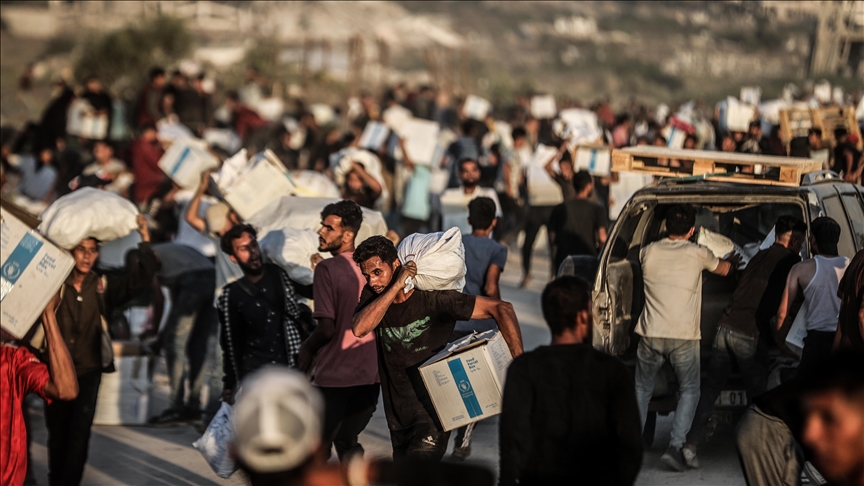
More than 130 international governmental agencies have issued a demand for the immediate end of the Gaza Humanitarian Foundation (GHF), the deadly US-Israeli mechanism for delivering food to starving Gaza. They called for a return to the Israel disrupted United Nations-led system which, combined international aid agencies with commercial supplies to serve the strip’s families who are struggling to survive Israel’s bombs, military ground offensive, and forced displacement.

It is impossible to see why an anti-humanitarian enterprise such as the GHF should, instead, attract $30 million in funding from the US which claims to be the global exemplar of morality and integrity. The GHF demonstrates, once again, that this is far from the truth. Since May 27, when GHF began operations, more than 550 people have been killed and over 4,000 wounded among the desperate thousands waiting for the delivery of food parcels at one or other of the four hubs, three in the south and one near the centre. UN relief agency UNRWA condemns GHF for being a vehicle for “weaponising” food aid.

GHF officials deny this accusation and dismiss reports of Israeli shootings and drone and tank attacks against Palestinians approaching militarised GHF hub zones. While killings of Palestinians have been reliably reported since day one, the US and Israel, which co-sponsor GHF, had shrugged off these reports until last week.

Israeli liberal daily Haaretz published statements from anonymous Israeli soldiers deployed near the hubs. According to Haaretz, Israeli officers and soldiers were ordered to fire on Palestinians “when no threat was present.” One soldier told Haaretz, “It’s a killing field. Where I was stationed between one and five people were killed every day. They’re treated like a hostile force – no crowd control measures, no tear gas – just live fire with everything imaginable: heavy machine guns, grenade launchers, mortars. .. Our form of communication is gunfire.” He added, “I’m not aware if a single instance of return fire. There is no enemy, no weapons.” There have been no Israeli casualties during distributions is proof positive of what he said.

Until Haaretz published its interviews, the Israeli military claimed falsely that troops fired in the air when Palestinians approached them. In response to the Haaretz reports, the military prosecutor demanded an investigation into possible war crimes. Israeli human rights organisations Yesh Din and B’Tselem have pointed out for decades that military investigations are rarely launched and even more rarely result in prosecutions of Israeli officers or soldiers. Consequently, the military enjoys impunity and continues to act with impunity.

The modus operandi of GHF centres also contributes to chaos and Palestinian deaths. Aid seekers are not informed which of the centres will open. Times vary for distributions which can last one hour or until all the prepacked parcels disappear. Palestinians have to turn up many hours early – usually in the dead of night – to reach the distribution centres. Those who succeed have been on the scene first. Most are fit young men who can survive the wait and the scrum which always eventuates the minute the distributions begin. Women, children and the elderly face exclusion, bullets or trampling.

The parcels, which contain rations, hygiene kits, and simple medicines, can weigh 40 kilograms and cannot be easily transported by one person. The bulky cardboard boxes often break, spilling their contents onto the ground. Fights ensue. Palestinians carry plastic bags when going to collect aid in order to return home with something if not an entire package. When a distribution ends, grenades emitting red smoke are fired by the Israeli army to order Palestinians to evacuate the area immediately.

Medecins San Frontiers/Doctors Without Borders has said GHF “must be dismantled.” It is “forcing Palestinians “to choose between starvation or risking their lives for minimal supplies.” MSF said, “Every day [its] teams see patients who been killed or wounded trying to get food at one of these sites.” MSF called on Israel to “lift the siege on food, fuel, medical and humanitarian supplies.”

The UN has refused to cooperate with GHF, after expressing doubts about its neutrality, accusing it of militarising relief and of contributing to the displacement of civilians, particularly those from the north who must travel long distances in the sweltering heat to access existential aid.

Before Israel imposed its March 2nd blockade on Gaza, the UNRWA, the UN children’s fund, and the World Food Programme had provided Gaza’s 2.3 million residents with their needs via 400 (not 4) distribution mechanisms where Palestinians had registered. They were notified by text or call when to collect their aid. There were no desperate crowds forming hours before aid distributions, no scrambles to receive parcels, and no Israeli shooters or tank commanders to fire on recipients. Food was treated as a right and its distribution did not cost lives or involve the Israeli military.

Michael Jansen contributed this piece to The Jordan Times

Continue reading
Gaza: A Death Trap For Israeli Soldiers

One Israeli soldier was killed and five others were wounded in three resistance operations in the Gaza Strip, Wednesday. The Israeli army later confirmed the death of another soldier, the Hebrew media reported.

The soldier, a member of the Egoz Unit was killed in a sniper attack in the Gaza Strip while four soldiers were seriously wounded when an explosive device exploded targeting a tank in the Gaza Strip.

The Israeli army also confirmed that another soldier, a sergeant from the 82nd Armored Battalion, was killed in battles north of the Gaza Strip. A tank commander and an armored corps soldier were also seriously wounded in the same operation.

An Egoz soldier was seriously wounded in a separate operation north of the Gaza Strip.

Some Israeli news outlets reported that several soldiers were wounded by RPG rockets, while military censorship still prevents publication and disclosure of the other two locations.

Earlier, the Israeli media reported the killing and wounding of soldiers today in “two difficult security incidents” in Gaza. Meanwhile, the Al-Quds Brigades, the military wing of the Islamic Jihad movement, announced it had carried out a complex operation Wednesday morning targeting dozens of soldiers in the Shuja’iyya neighborhood.

Complex Ambush

According to the details provided by the Brigades, dozens of soldiers and a convoy of occupation vehicles were targeted in the “Al-Huda Square,” east of the Shuja’iyya neighborhood in the Gaza Strip. The Brigades explained that the complex operation began with the detonation of a minefield by the invading vehicles, forcing soldiers and officers to frantically enter nearby houses.

It indicated that its fighters targeted the forces entrenched inside the houses with a guided missile, followed by an anti-fortification “TPG” shell. They then engaged them at very close range with light and medium weapons, killing and wounding the crews of the vehicles, as well as the targeted officers and soldiers.

In the same context, the Izz ad-Din al-Qassam Brigades, the military wing of the Islamic Resistance Movement (Hamas), announced it had targeted a Merkava tank, Tuesday, with an explosive device on an enemy supply line in the al-Zana area east of Khan Yunis.

Regarding the resistance’s operational mechanism and the heavy losses inflicted on the occupation over the past period, the Hadashot Bezaman news website reported that the resistance “penetrated the modus operandi” and movements of the occupation army in Gaza, enabling it to “violently strike soldiers and armored forces on the firing range.”

According to military analysts, the resistance is carrying out precise attrition operations against occupation forces at their positions inside the Gaza Strip, contributing to the fragmentation of the occupation’s combat capabilities and maintaining a constant state of depletion without a clear line of contact.

Continue reading
More Than 8000 Israelis Evacuated Because of Iranian Missiles

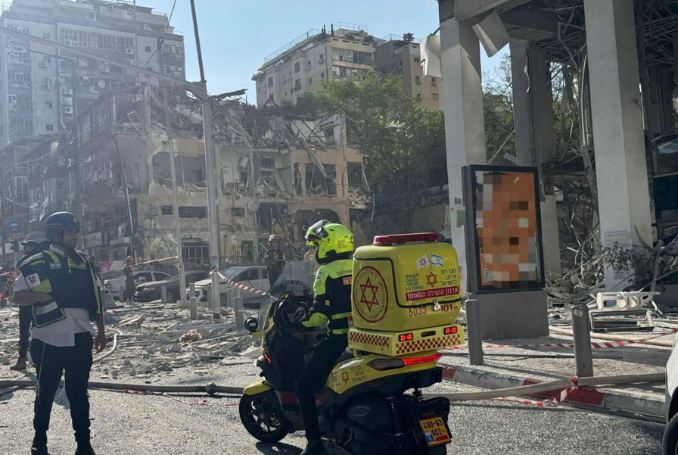
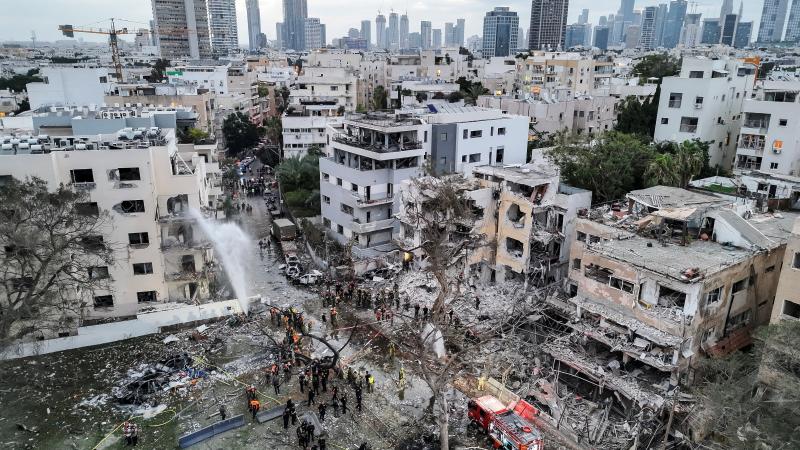
Since the onset of the war on Tehran, and which Israeli Prime Minister Benjamin Netanyahu begun on 13 June, 2025, more than 8000 Israelis were evacuated from their and sleeping in make-up shelters.

This was according to the Jewish daily Yedioth Ahronoth, Friday, citing the Property Tax Compensation Fund. It also noted that 30,000 claims have been submitted to the Fund for damages to buildings, vehicles, personal contents, or equipment caused by missile attacks, the daily said as the war enters its eight day.

The Israeli authorities have maintained that at least 25 people were killed and hundreds injured since then in Iranian missile attacks begun falling on different parts of the country.

Meanwhile, in Iran, 639 people have been killed and more than 1,300 wounded in the Israeli assault, according to Iranian media reports.

Continue reading
Deflecting Netanyahu’s Problems

By Jonathan Fenton-Harvey 

Just a day before launching airstrikes on Iran, Israeli Prime Minister Benjamin Netanyahu, facing bribery and fraud charges, narrowly survived a Knesset vote that could have collapsed his government. Alongside the legal charges, Netanyahu’s domestic popularity has plummeted over corruption, economic woes and failures to return Israeli hostages from Gaza. But for Netanyahu, the war offered more than military momentum: It has given him a temporary reprieve.

Within days, Israeli airstrikes reportedly weakened Iranian nuclear and military infrastructure, eliminated senior military figures, and killed hundreds of civilians. On X, Israeli Defense Minister Israel Katz claimed “civilians in Tehran will pay a collective price,” signaling a destructive intent. As Iran has hit back, firing missiles at Israeli infrastructure and cities, diplomacy over Iran’s nuclear program has all but collapsed.

Even if a ceasefire occurs, Israeli-Iranian tensions have escalated to near irreversibility as long as both the current Israeli and Iranian governments remain in power. Israel presents the assault on Iran as a necessary move to neutralize its nuclear ambitions, a claim repeated over the years, despite the lack of convincing evidence that Tehran was close to building a nuclear bomb. In reality, the war is driven more by Netanyahu’s personal survival than just Israel’s.

As with Israel’s prolonged onslaught on Gaza, this conflict appears designed to consolidate domestic support – attempting to rally the population around the image of an existential enemy – just as it did with Hamas and the Palestinians in Gaza. That same logic extended into Lebanon, where Israel’s assault weakened Tehran’s ally Hezbollah and coincided with a jump in public approval for Netanyahu’s Likud party. But with neither Gaza nor Lebanon yielding lasting political dividends, Iran has become the next catalyst in Netanyahu’s survival strategy.  

A fragile government

For Netanyahu, projecting external threats has not only been a means of consolidating power, but also unity. His government, already fragile, is also caught between deeply divergent factions – secular versus ultra-Orthodox, nationalist versus technocratic. This internal fragmentation of Israeli civil society raised the specter of a looming civil war, warned of even before the Gaza war. But Israel’s wars and the projection of external enemies aim to unify Israeli society, at least for now.

There is also the international dimension. Netanyahu and other officials are wanted by the International Criminal Court over war crimes in Gaza, while Western backers face domestic pressure to end arms sales to Israel. The Israeli initiated Iran conflict has provided Netanyahu with yet another political lifeline as Western governments have clearly aligned with Israel. The G7 and the EU have expressed support for Israel, while the US, UK, Germany and France had pledged to uphold Israel’s security.

Even though Western public opinion on Israel has shifted recently – including legal cases and political pressure – arms sales are still expected to continue, or even increase. Moreover, the focus on Iran has also taken away spotlight from Israel’s actions in Gaza, which continues to endure Israeli airstrikes and blockade-induced starvation.  

Shielded internationally

Before the escalation, US President Donald Trump, however, had taken an unexpected turn. His truce with Yemen’s Houthis and openness to renewed nuclear talks with Iran suggest a willingness to pursue diplomacy – even if it angers Israel. Trump appears caught between appeasing his pro-Israel support base and his America First-driven MAGA base – the latter of which prompted him to override Israeli objections in favor of US interests, namely economic engagement with Iran. Netanyahu is certainly banking on Trump siding with Israel in the event of a deeper escalation with Iran. Trump’s own “urging” of Iranians to leave Tehran signals an alignment with Tel Aviv, even if he may seek to continue keeping the door open for future diplomacy with Iran. Ultimately, the cost of Netanyahu’s bid to maintain his own grip on power is regional instability.

The war has bought Netanyahu time. Less ideologically hardline voices have resigned from his coalition government over failures in Gaza, allowing him to consolidate power around extremist figures like Bezalel Smotrich, Itamar Ben Gvir and Israel Katz. Yet this hardline government, which Netanyahu has fostered to maintain his own position, is further contributing to Israel’s diplomatic and economic isolation. That’ll undoubtedly add to the economic costs of the war on Gaza, which has cost around 10% of its GDP and scared foreign investors off, creating future fiscal instability in Israel.

However, the Netanyahu-led multi-front offensives in Syria, Lebanon, Yemen and now Iran also reflect a notable historic pattern: regimes tend to lash out when they feel increasingly threatened or cornered. Netanyahu’s calculus, partly driven by a sense that Israel is facing compounding global scrutiny for its military operations, may further harm its global image – even if Western governments continue to support Israel’s actions for the time being.

For his own political survival, Netanyahu will resist efforts to halt the violence, unless sustained international pressure forces Israel to halt its operations. Because he knows that, if he ends the wars, he’ll almost certainly face renewed calls for his indictment in Israel, or be unseated in the next Israeli elections, due by October 2026. As such, he has every incentive to prolong the violence unless international pressure forces a change in course. If Trump or other key powers push for de-escalation and accountability, it could shift the trajectory toward regional stability, especially as Iran weighs withdrawing from the Nuclear Non-Proliferation Treaty. Otherwise, Netanyahu’s own instincts risk plunging the region – and inadvertently Israel – into deeper regional instability that could ultimately harm Israel itself.  

The author is a researcher and journalist focusing on conflict and geopolitics in the Middle East and North Africa, primarily related to the Gulf region. He has contributed this article to Anadolu

Continue reading