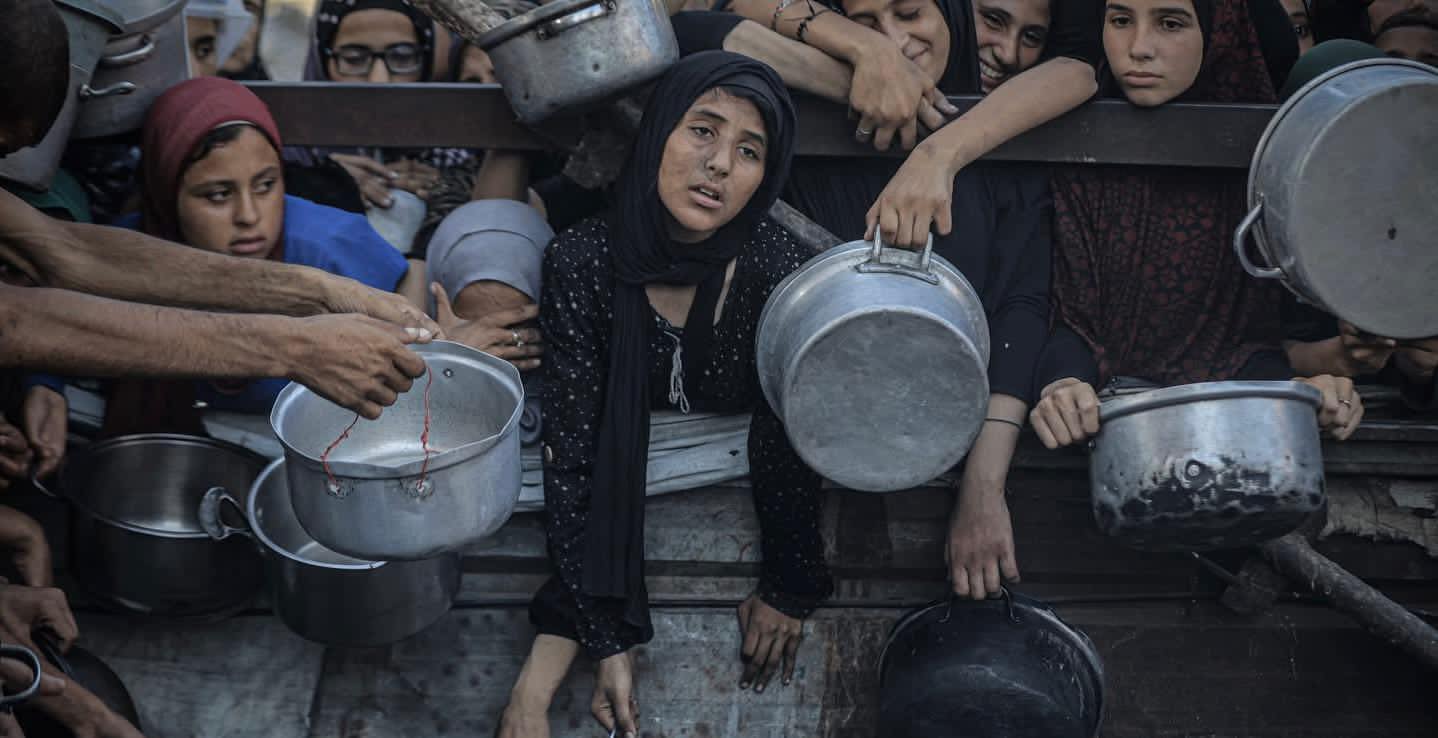
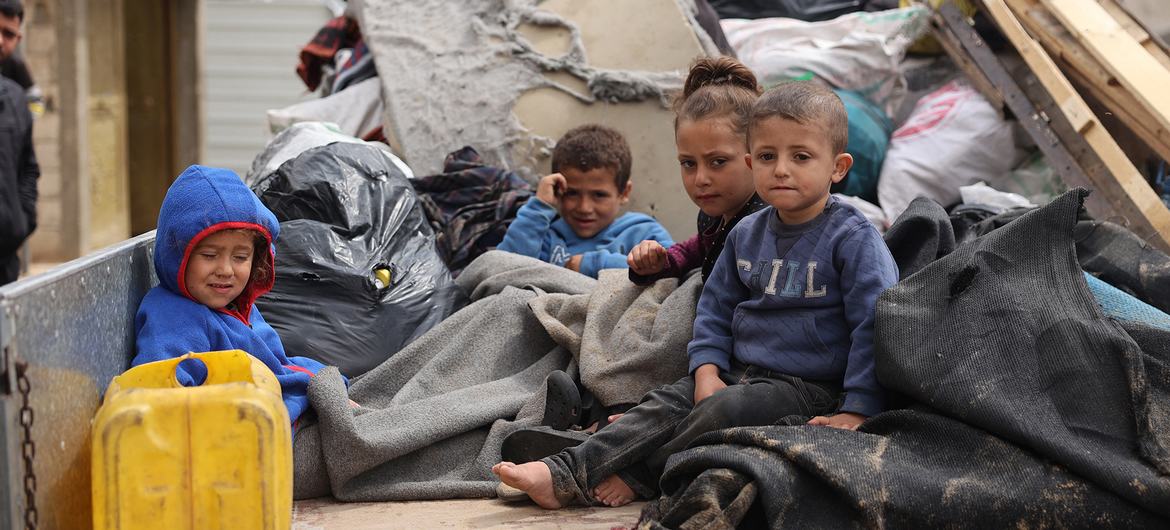
Nearly one person in three is not eating for days. Food aid is the only way for most people to access any food – as the cost of a one-kilogram bag of flour has surged to over USD100 in local markets.
Sameh described how people — sometimes 20,000 to 30,000 at a time — wait all day in the heat. When the gate opens, they surge forward, crashing through barbed wire, trampling over each other, trying to grab whatever they can from the aid.
I watched a video last week that I wish I couldn’t see: A small boy, no older than nine, crying over the body of his martyred mother in front of a journalist’s camera. His eyes were red, his shoulders shaking, dust still clinging to his face.
“She went out to bring us aid,” he said. “She never came back.”
That boy is Ahmed Zidan. And I haven’t been able to forget his face since. His mother had left that day just to get food. That’s all: A little flour, a few canned goods, if she got lucky. But she never returned. She was killed in western Rafah, surrounded by gunfire, panic, and chaos.
Ahmed’s mother was just trying to feed her children. But like so many others, she became a victim of what the world dares to call “The American humanitarian aid.”
Ahmed’s tearful face was shared on the news, across social media, and around the world. But for him, it wasn’t a story, it wasn’t content, it was the moment his world collapsed.
Don’t go, says Ahmad Zeidan holding his mother’s shoes after she was killed: it’s a lie, a lie | the Gaza Humanitarian Foundation is a firing squad pic.twitter.com/QwcU9udAZJ
When the first Gaza Humanitarian Foundation (GHF) site opened on May 26, 2025, it came with bold promises. It was billed as the solution of four centralized aid hubs, guarded by US private contractors, coordinated with Israeli oversight, and allegedly designed to bring order to the chaos of Gaza’s hunger crisis.
According to Israeli and US officials’ claims, aid was supposed to flow safely to the most vulnerable. But just two days later, tanks, tear gas, and bullets greeted the crowds who gathered in Rafah. Instead of food, they found death. So far, nearly 900 Palestinians have been killed and over 5,000 wounded recorded at aid sites. Mothers, children, and elders are all caught between hunger and bullets.
It’s hard to explain the feeling of being watched while trying to survive, of having your basic needs locked behind fences, guards, and guns. And with any wrong move, you could be shot.
They called it online “the real-life Squid Game.”
And honestly? They’re right. Because in Gaza, we run for food and get shot for it. Not for prize money, but for a bag of flour. It’s not an exaggeration; it’s the daily reality for the hungry in Gaza.
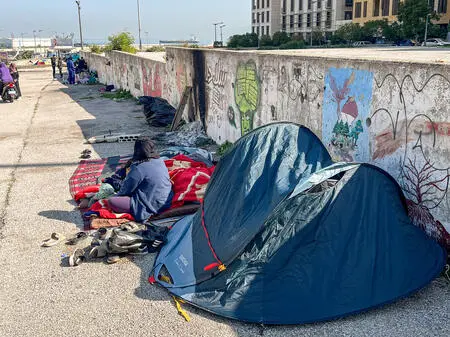
Israa is from Khan Yunis, but today she lives in a tent in Al-Mawasi, one of Gaza’s last so-called “safe zones.” Her family was forced to flee months ago. “We’ve lost our home,” she said, “but losing Abdullah… that broke something deeper.”
Abdullah was her cousin — 31 years old, an orphan, and a caretaker to his younger siblings. He lived with his younger brother and sister in the tent. The rest of the family is scattered, most of them are married and displaced in different parts of Gaza.
He used to work as a cleaner, even during the war, hired by Doctors Without Borders when everything else shut down. He was engaged to be married at the end of July. “His fiancée was sewing her wedding dress,” Israa told me. “Now, she’s burying his clothes.”
On July 3, 2025, Abdullah went to the American aid center in Khan Younis. He went there almost every day. “Not because he wanted to,” Israa said, “but because he had to. There was no other way to feed the family.”
That day, an Israeli artillery shell struck the crowd. Abdullah was killed instantly.
“It wasn’t random,” Israa said. “They were aiming at the people. He told us before he left, ‘If I don’t come back today, forgive me.’ It’s like he knew. Like he could feel it.”
When we heard the news, the family was shocked. “We couldn’t believe it. Even now, it doesn’t feel real. He had dreams. He wanted a family. He wanted peace.”
Why do people still go to these centers? Israa answered without hesitation: “Because people are starving. There’s no other choice. We know it’s dangerous. But what’s worse, dying slowly from hunger, or all at once from a bomb?”
I ask if there’s anything she wants to say to the world. She looked at me tired, but clear. “Tell them we are not numbers. Tell them Abdullah had dreams. A fiancée. A wedding date. A heart. He was human. We all are. But this world doesn’t treat us like that anymore.”
Sameh is 40, from Beit Lahia, now displaced in Al-Shati refugee camp. When I spoke to him, he didn’t start with anger. He started with exhaustion, the kind that comes from hunger, from fear, from waiting in line not for bread, but for a chance at it.
“They starved us for over 100 days,” Sameh told me. “No food was allowed in. Nothing. Then they opened these so-called American aid centers protected by Israeli soldiers and said, “It’s not food. It’s a trap.”
He was talking about the Gaza Humanitarian Foundation centers. Sameh made his way to the Wadi Gaza center near Netzarim in the middle of the strip. “It was like a playground surrounded by barbed wire, and the aid was inside. They open the gate at random. No one knows when. It could be in the morning or at night. A green flare means the center is open. Red means it’s closed. If it’s daytime, you hear a drone announce it. And that’s when the chaos begins.”
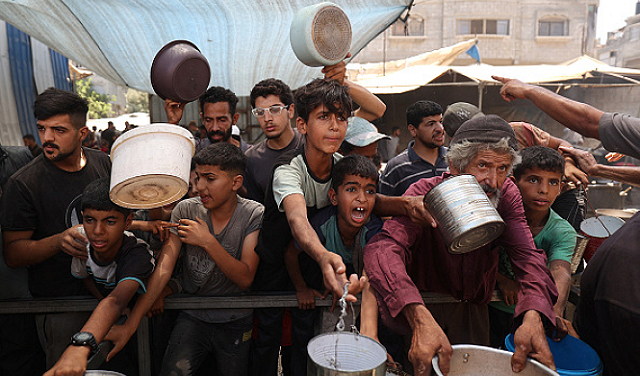
Sameh described how people — sometimes 20,000 to 30,000 at a time — wait all day in the heat. When the gate opens, they surge forward, crashing through barbed wire, trampling over each other, trying to grab whatever they can from the aid.
He said it never lasts more than ten minutes. “I’ve gone twice. The first time, I left with nothing. The second time, I found a few things on the ground — a kilo of lentils, a kilo of chickpeas, a kilo of peas, and some salt. That’s what I brought home to my kids.”
Sameh told me that only about 10% of these people actually get anything. Organized gangs always push to the front, looting the best items — flour, sugar, oil — and then reselling them at outrageous prices.
He said the Israeli army watches and lets it happen. In fact, it feels like they want it that way. “There’s no safety. No system. Just weapons, fear, and starvation. The gangs take what they want. The rest of us crawl on the ground like animals. That’s what they made us.”
Sameh has seen more than just hunger. “I saw a young man next to me get shot in the leg. He fell down and screamed, but no one could help him — they were too busy trying to grab food. Another time, a boy no older than 17 — he was right next to me — took a sniper bullet between the eyes. Dead. Just like that. Another guy next to him was hit in the chest.”
Sameh paused before adding something that shook me. “You know what? I’d rather die trying to feed my children than watch them die of hunger in front of me. I have no money. I can’t buy anything. If I don’t go, we starve. If I do go, I might not come back.”
He said Israel allows this violence to continue because it wants disorder. When trucks entered through Netzarim or Zikim in the north, he said, the tribes once organized a secure delivery to UN warehouses.
It worked — until Israel blocked it. “They don’t want dignity. They want panic,” he told me. “These centers are just a show. They open them so the world can say, ‘Look, Gaza is getting help.’ But what does that help even mean if we can’t reach it? If we have to risk our lives just to get a bag of flour? What kind of aid is this, if we can’t even survive the line to receive it?”
Sameh’s voice didn’t crack when he told me this. It hardened. Because in Gaza today, even hope feels like something we have to fight for.
Creating Monsters
Sabri is 23. He’s the oldest of five, and ever since his father died, he’s had no choice but to become everything — brother, provider, protector. “I walked from Al-Shati camp to Rafah,” he said. “I left at 4 in the afternoon. I didn’t get back until 3 the next day.”
Twenty-three hours. All of that — the walking, the waiting, the risk — for just three kilos of flour. But it’s not just the distance. It’s what you face when you get there.
Sabri told me the crowds are like groups. “At the front, there are gangs. They’re not like us. They come to steal the valuable stuff and throw the rest on the ground.”
Behind them, a few desperate people try to collect what’s left. And the ones who truly need the aid? They usually leave empty-handed. Sabri was one of them. “Some people don’t even go for food,” he told me. “They just collect the empty cardboard boxes to burn for fire.”
He said he was lucky this time. He got something. But that luck came with a price. “The shooting started in front of me. People were screaming and trying to cover. But I stayed. Because my brothers were hungry. What else could I do?”
Hunger doesn’t scare him anymore, not the way the silence at home does, when his siblings look at him with tired faces, waiting for food. “I didn’t care if I died. I just wanted to come back with something.”
Then, Sabri said something that stuck with me: “This war — this way of helping — it’s made monsters out of people. People kill each other for a sack of flour. That’s what they’ve done to us.”
He says that it’s normal now. Like that’s what life should be: risking death for food.
But it’s not normal. Nothing about this is.
It feels like a game, but we are not playing. What kind of help is this? Where feeding your family feels like breaking the law; where aid comes wrapped in barbed wire and guarded by snipers; Where people must risk their lives just to eat.
How did we get to a place where a single bag of flour can cost someone their life? Where hunger turns people fight each other, forget who they are — just to survive.
If the world truly wants to help Gaza, start by treating us like human beings.
We don’t need pity, we need protection; we need a future; we want to live, not die trying to eat.
We are not players in a game; we are not your footage; we are not actors in a show, we are not numbers on a screen.
At the end of Squid Game, the player 456 whispers: “We are not horses. We are humans. Humans are…”
He never finishes. Neither do we. Because in Gaza, we’re never given the chance.
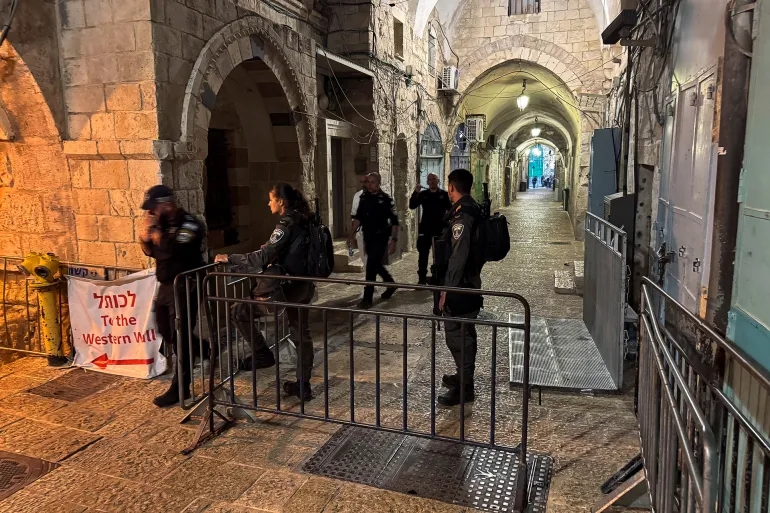
An Israeli political source familiar with negotiations on a ceasefire in the Gaza Strip said Saturday that Tel Aviv is, for the first time, conducting talks with Hamas on the possibility of ending the war, said a media report.
“This negotiation is different than the ones that brought about the previous deals,” said the source, according to the Haaretz newspaper.
“While the previous deals dealt with the release of the hostages … this deal touches on the issue of ending the war. Therefore, everything is interconnected. This is a very complex deal,” he said.
The source added that a proposed agreement includes a 60-day ceasefire during which 10 living Israeli hostages would be released, and intensive negotiations on ending the war would begin, according to Anadolu.
He said the talks “touches on issues of how the war will end or continue, what will happen in Gaza and how all the hostages will be returned. Within the framework of the deal, there is an entire clause that deals with issues to be discussed regarding the end of the war. Both parties can add topics, and they will be discussed within the 60-day cease-fire.”
The source claimed that “the Israeli delegation embarked to Doha with a broad scope of action and a satisfactory mandate. There is enough flexibility to reach an agreement, without compromising on issues such as Israel’s security needs.”
Israeli media outlets, including the public broadcaster, KAN, reported Friday that Israel is considering sending a second delegation to Doha if the Palestinian side agrees to discuss the deal’s details, amid mediation by Qatar, Egypt and the US.
The proposals reportedly include a 60-day ceasefire, during which 10 living hostages and 18 bodies would be released, with final negotiations on ending the war to resume during the truce.
Despite gaps on issues such as the mechanism for aid delivery and Israeli troop deployment, Israeli sources still see the deal as possible, according to the Israeli broadcaster.
US President Donald Trump announced late Friday that 10 hostages in Gaza would be released soon.
Trump, whose administration offers unconditional support for Israel in its war on Gaza, did not provide details.
During the last 21 months, multiple rounds of indirect negotiations have been held between Israel and the Palestine resistance group, Hamas, to reach a ceasefire and carry out prisoner exchanges.
Two partial agreements were reached in November 2023 and in January.
Israeli Prime Minister Benjamin Netanyahu, who is wanted by the International Criminal Court, avoided finalizing the latest agreement and resumed the war on March 18.
Hamas has repeatedly stated its willingness to release all Israeli hostages “in one batch” in exchange for ending the genocide and a full Israeli military withdrawal from Gaza.
Rejecting international calls for a ceasefire, the Israeli army has pursued a brutal offensive on Gaza since the end of 2023, killing nearly 59,000 Palestinians, most of them women and children.
The relentless bombardment has destroyed the enclave and led to food shortages and the spread of diseases.
Last November, the International Criminal Court issued arrest warrants for Netanyahu and his former Defense Minister Yoav Gallant for war crimes and crimes against humanity in Gaza.
Israel also faces a genocide case at the International Court of Justice for its war on the enclave.
The starving people of Gaza no longer count the days, but the hours, minutes before they collapse from hunger.
Hunger is ravaging more than 2.5 million people living in a small coastal area of Gaza subjected to a genocidal war for nearly two years.
The elderly say they never experienced such famine in their lives, not even in the wars of 1948-1967, when they ate dry bread which is currently not available.
Hanadi Ismail says: “It’s true the first famine in this war a year ago was very difficult, especially for us in the northern Gaza but there was a little flour, rice, and lentils. Now, there is nothing, and even if there is, we cannot buy it because of the high prices.”
Ismail, a mother of six, told Quds Press: “Yesterday, my children went to bed hungry, and I tried to comfort them. This morning, I cooked some lentils for them, but they weren’t full. I hope we would get some food in the coming hours.”
Ms. Ismail’s situation is similar to that of thousands of women who cannot provide for their children, while men are helpless due to the famine plaguing the besieged Gaza Strip.
Palestinian activists launched a campaign, Friday, against merchants who sell essential goods at exorbitant prices despite the fact that many of these markets were destroyed because of the Israeli genocide.
The Ministry of Health in the Gaza Strip warned on Friday of a worsening health disaster as a result of the escalating hunger crisis.
It confirmed in a press statement that hospitals and emergency departments are receiving unprecedented numbers of citizens of all ages suffering from severe stress caused by hunger and malnutrition.
It explained hundreds of patients whose bodies have became emasculated and are at risk of death because of the severe food shortage and the lack of any effective humanitarian solutions.
The director of Al-Shifa Hospital in Gaza has also confirmed that the medical staff deal daily with hundreds of cases showing severe symptoms of famine, most notably severe emaciation, loss of consciousness, poor concentration, and a sharp decline in vital functions.
These cases include children, women, and the elderly, and that a large number of patients suffer from temporary memory loss and general fatigue as a result of chronic hunger.
He added approximately 17,000 children in the Gaza Strip are suffering from severe malnutrition, amid a shortage of basic food supplies and the absence of ongoing aid, which could well to a complete health collapse.
Meanwhile, Suhaib al-Hams, director of the Kuwait Specialized Field Hospital in Mawasi Khan Younis, said the hospital is currently witnessing an unprecedented influx of displaced people there. “We are receiving cases suffering from extreme exhaustion and complete fatigue, along with signs of severe emaciation and acute malnutrition due to the prolonged lack of food.”
“We confirm that all the cases we are receiving now are in dire need of food before medicine, and we warn that hundreds of those whose bodies have completely emaciated are now threatened with death after their bodies have exceeded their ability to withstand.”
Al-Hams called on the international community and humanitarian organizations to take immediate and urgent action to stop the Palestinian bloodshed, fully open the crossings, provide essential food and medicine supplies, and ensure that humanitarian aid reaches those in need without any obstacles.
For its part, the Popular Front for the Liberation of Palestine (PFLP) warned of what it called an “imminent humanitarian catastrophe” in the coming hours.
In a press statement, the PFLP indicated that the coming hours could witness mass deaths of the most vulnerable groups, primarily children, the sick, and the elderly, amid the dangerous deterioration of the humanitarian situation in the Gaza Strip. This is a result of the escalating aggression and the continued systematic starvation policy practiced by the occupation, with American partnership, international silence, and the blatant complicity of the European Union.
The PFLP added: “Our steadfast people in Gaza do not need hollow speeches, but bold political positions that halts the comprehensive war of extermination, foremost among which is the immediate lifting of the blockade and holding the occupation accountable for its crimes against humanity.”
It held the European Union politically and morally responsible for the worsening famine, considering it a partner in the starvation crime being perpetrated against our people through its inaction and providing diplomatic cover for the occupation. We call on the countries of the European Union to stop their policy of camouflage and manipulation of public opinion and to abandon their blatant bias toward the occupation.
The Front stated: “Despite escalating warnings about the threat of famine and the use of food as a weapon against more than two million besieged Palestinians, the European Union has chosen to cover up the occupation’s crimes through false diplomatic promises that have not translated into any tangible steps. The recent bargaining between some EU countries and the occupation’s foreign minister clearly reflects the EU’s policy of deception and complicity.”
More Israeli soldiers are committing suicide than ever before. The answer for that is simple: They don’t want to be in Gaza.
But it’s tough luck! Their political masters led by Israeli Prime Minister Benjamin Netanyahu say they must continue to fight, even if they lose their life in order to beat Hamas and quash the Palestinian resistance but this is not happening.
The road is long and murderous for both sides.
Today, it is the Palestinian factions who are taking up the military, bloody fight. Since Israel’s war with Iran ended towards the end of June, Hamas and Islamic Jihad fighters stepped up their operations against Israeli soldiers in the different areas of Gaza. The military operations have become immense and with a sense of vigor in towns, cities, conurbations and neighborhoods the Israeli army said it had teeth-combed from any Palestinian fighters.
These operations, initially mainly involving sniping Israeli soldiers, but more importantly developed into ambushes, booby-trapping destroyed houses and bombs daringly carried by Palestine fighters and strung on Israeli tanks and troop carriers, are today stronger than ever happenings in this 21-month-war that started soon after 7 October, 2023.
Today, they stand as a symbol of resistance despite the utterances constantly made by Netanyahu and his Defense Minister Israel Katz who keep saying that the Israeli army is systematically dismantling Hamas and its military wing of fighters. But this is just fanciful imagination designed for the disoriented Israeli street that longer wants war but can’t muster enough courage to till Netanyahu and his extremist government to end the conflict.
After the war with Iran, Netanyahu stepped up his hawkish stances, mainly for domestic purposes, ie to stay in power and not go to jail regardless of what is happening on the Gaza war front and despite his peace claims for a ceasefire instigated by US president Donald Trump and the Israeli negotiating team sitting in the Qatari capital of Doha.
The team of men appear to be there as match-stick dolls waiting at the beck-and-call of Netanyahu and certainly not for the first time, and used time-and-again in this genocide and incessantly during the former Joe Biden administration era, which attempted to reach a ceasefire over the whole of 2024 but to no avail.
In this war Netanyahu had over-ridden all objectives and ultimatums to reach a peace deal and now being incessantly made by Trump, the last during his visit and the third since Trump entered the White House in January 2025. Today despite the character and push geared by Trump, Netanyahu’s will is still stronger and forceful.
But that may partly be because of the Zionist lobby in Washington that is today stronger than ever because of the purse-strings. Meanwhile Washington continues to be the financier of this genocide by providing Israel with mass weapons.
Netanyahu is on a crusade to end Hamas, and anyone who says ‘no’ to Israel. He is ignoring the voices of his top military men in the army that started to be made in the early days of this onslaught. And he continues to ignore them even today regardless of the fact the Israelis know that “you can’t beat Hamas and the other Palestinian factions” regardless of what literally was done to Gaza, turning it into rubble and eyesore wreckage.
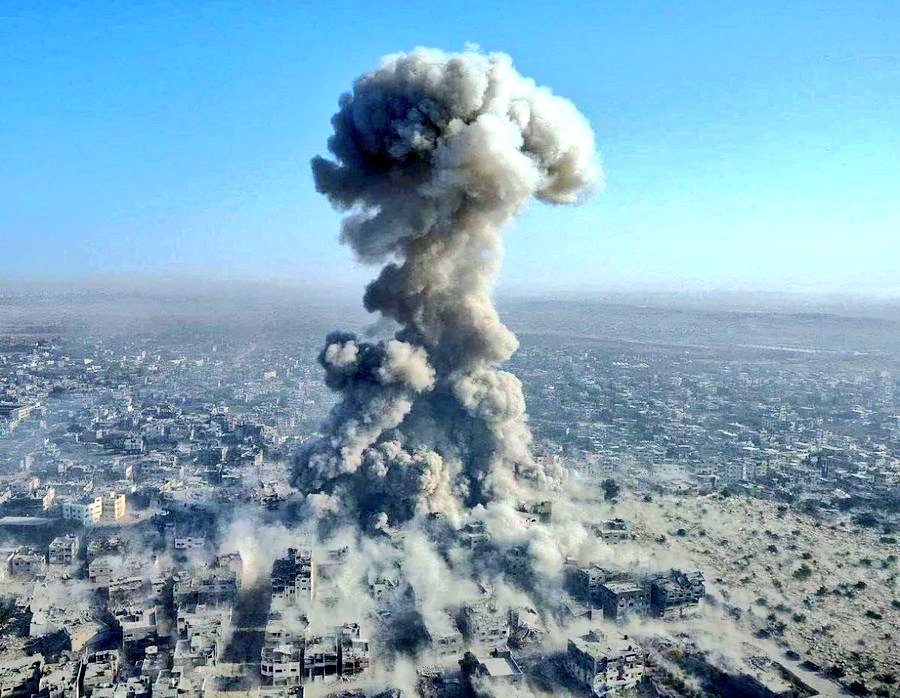
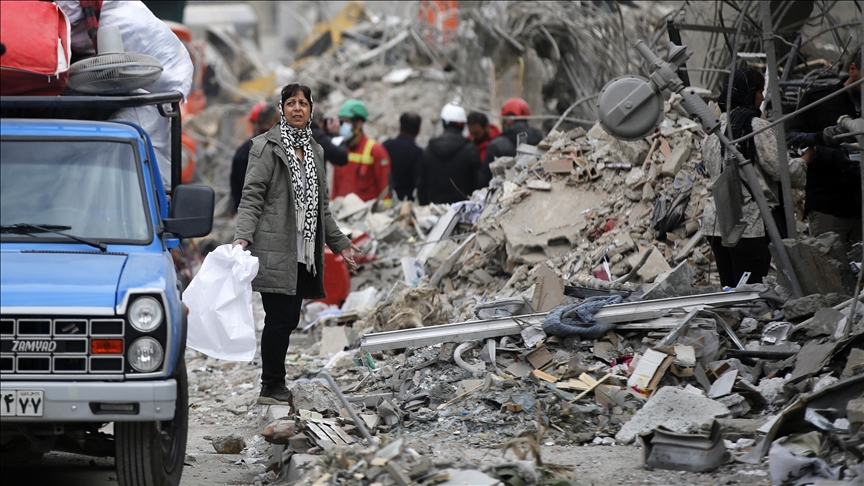
Figures are mind-boggling. 100,000 tons of TNT thrown on Gaza in this genocide creating huge mounts of rubble – an unbelievable 50 million tons of wreckage – that would take 15 years to clear-out through 100 trucks working full time. This is not to say anything about the human factor where more than 60,000 men, women and children were slaughtered at a very conservative estimate.
Despite the killing and destruction today, the Palestinian resistance groups and fighters are regrouping and thinking and conjuring up new armed strategies and think tanks to beat the Israeli army with. In turn, the army is barely standing up according to Israeli experts with the military in a flaccid state of command and action from the north to the south of the Gaza Strip and in areas that have been brought to the ground over late 2023, 3024 and 2025 with the Israeli force complaining that they have “run out of places” to bomb in Gaza.
In this genocide, the Israeli airforce and tanks repeatedly missiled and bombed areas – homes, schools hospitals in different stages in a sense of heightened vengence that was displayed time and again. There were no fighters here but ordinary civilians made to move countless times and turned into domestic refugees living in tents and ramshackled UNRWA schools.
The Israeli military top brass, including generals, majors and rank-and-file soldiers have long complained through protests and petitions but these have fallen on the deaf ears of many in the political echelons of power like Netanyahu who refused to listen to them.
Meanwhile the shocks of the Gaza battlefields continue to bite. Israeli soldiers are today desperately taking their lives because of the psychological tremors they have been subjected to Gaza. One of the soldiers who killed himself recently, three in less than a week and a half, was responsible for carrying the dead bodies of soldiers killed in Gaza and Israel’s last war on Lebanon. Before committing suicide he applied to be committed to a psychiatric ward but needed to wait. On the fatal day, he set his car on fire with him inside.
Israel’s army is falling apart at a soundbyte speed but nobody is listening. On 25 June seven Israeli soldiers were burned alive in their tank in southern Gaza, in an area where the Israeli army was supposed to be in total control. This was particularly gruesome since the army admitted it took time to identify their charred bodies.
Their death set the ball-rolling for more. Almost every since then there has been reported daily deaths of soldiers killed in a fierce war involving Palestinian fighters. Sometimes the numbers go up from one to five and more. This is not to say anything about those that are injured in direct clashes.
The Israelis are forced to admit this because of their helicopters that arrive at the scene to pick the dead and injured and take back to nearby Israeli hospitals which has become an all-too familiar sight in this genocide.

 CrossFireArabia